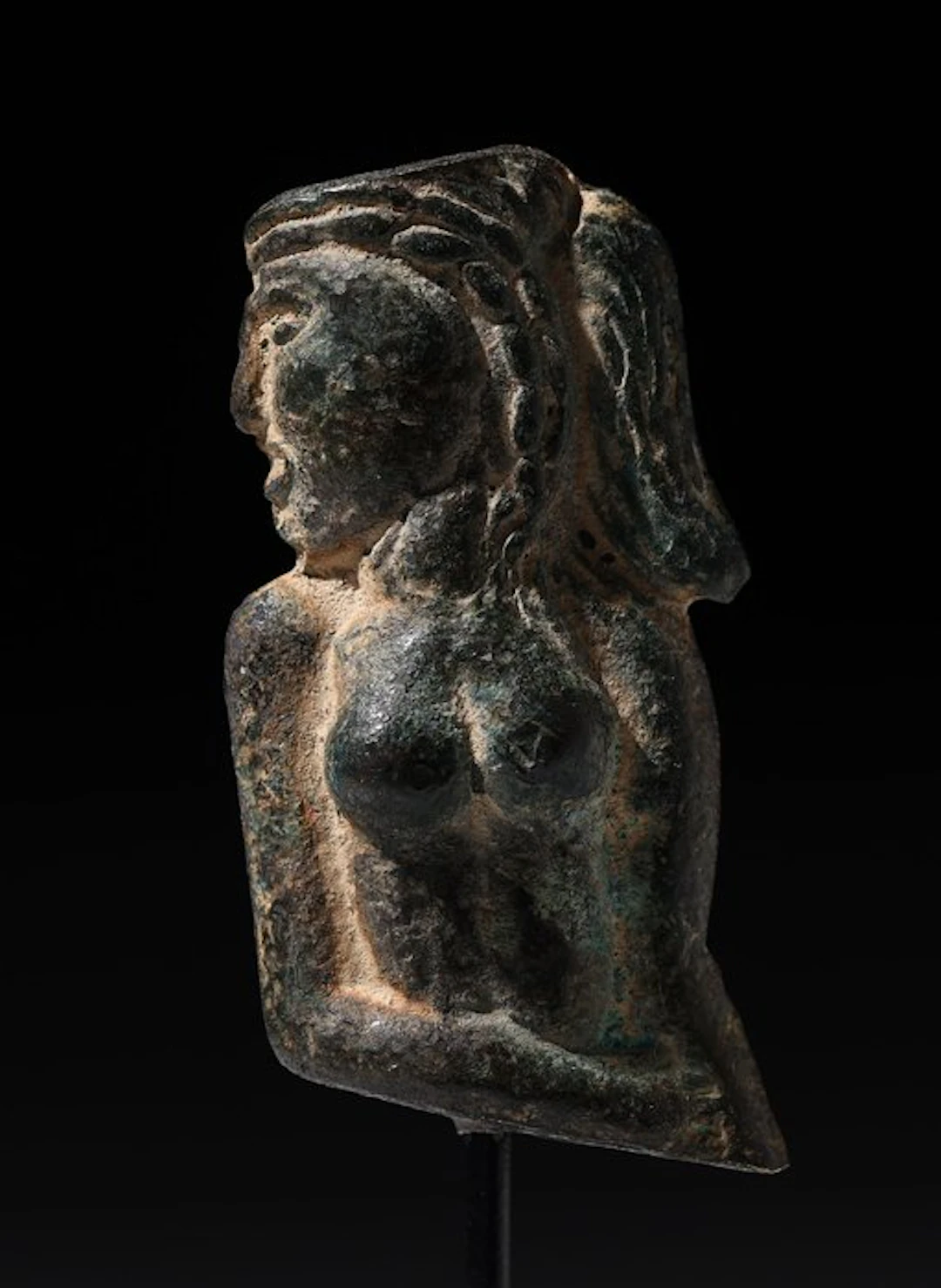
Replica of Etruscan Bronze Female figure - 5 cm
Replica of a female figure inspired by Etruscan art, evoking the small votive statues and human representations characteristic of this ancient preroman civilization of Italy. The piece shows the bare torso of a woman represented frontally, with the chest marked and the arms gathered on the lap. The head appears slightly turned to one side, a device that adds dynamism to the figure and suggests a serene and contemplative attitude. The hair falls in voluminous strands on both sides of the head, possibly covered by a stylized headdress or veil, an element frequently found in Etruscan female iconography. The body modeling presents simplified and robust features, with anatomy suggested through soft, compact volumes. This treatment responds to an aesthetic typical of archaic Etruscan art, where the depiction of the human body did not aim for absolute naturalism, but for a symbolic and stylized expression of the figure. The facial features, though schematic, reflect that tendency toward formal simplification that distinguishes many Etruscan sculptures, especially in small-format pieces. The surface of the work reproduces a dark patina with greenish and ochre nuances, evoking the look of ancient bronzes after centuries of oxidation. This finish imitates the visual characteristics of numerous archaeological pieces found in sanctuaries, necropolises, and votive deposits of ancient Etruria, a territory that encompassed regions of modern Tuscany, Umbria, and northern Latium. In these contexts, human figurines were offered as ex-votes to the deities, representing the donor or symbolizing requests related to fertility, health, or divine protection. The depiction of the naked female body also carries a strong symbolic charge within ancient Mediterranean cultures. In the Etruscan sphere, the female figure could be associated with ideas of fertility, prosperity, and family continuity. This type of iconography has parallels in numerous votive figurines found in Etruscan sanctuaries, where human representations—whether complete or fragmentary—constituted a form of ritual communication between worshippers and the divinities. Etruscan art, deeply influenced by Greek and Eastern traditions, nevertheless developed its own artistic language that would later influence the early development of Roman art. Etruscan sculptures, both in bronze and terracotta, stand out for their expressiveness and for their particular way of representing the human figure, halfway between archaic stylization and a progressive search for naturalism. There are formal parallels in the small votive sculptures preserved in institutions such as the National Archaeological Museum of Florence, the Vatican’s Museo Gregoriano Etrusco, or the National Archaeological Museum of Madrid, where numerous Etruscan bronzes and terracottas that depict human figures in similar postures are housed. These pieces allow a better understanding of the religious and cultural function of the figurines within the Etruscan world, as well as their subsequent influence on the development of Roman art. Collection MMD, Spai
Stima:€170
Vai all’astaVedi tutti gli oggetti diCatawikioArte Antica