lotto/medieval nUFFoTA 633223043 / In vendita
lotto/medieval nUFFoTA 633223043
In venditaRisultati d’asta
lotto/medieval nUFFoTA 633223043
In venditaRisultati d’asta
Porta la tua asta ai collezionisti di tutto il mondo!
Pubblica oraPorta la tua asta ai collezionisti di tutto il mondo!
Pubblica oraIscrivendoti, accetti la politica sulla privacy. Annulla l'iscrizione in qualsiasi momento.
Barnebys HQ
Brahegatan 10
BOX 5038
114 37 Stockholm
Tutte le aste / Arte Antica / Medieval

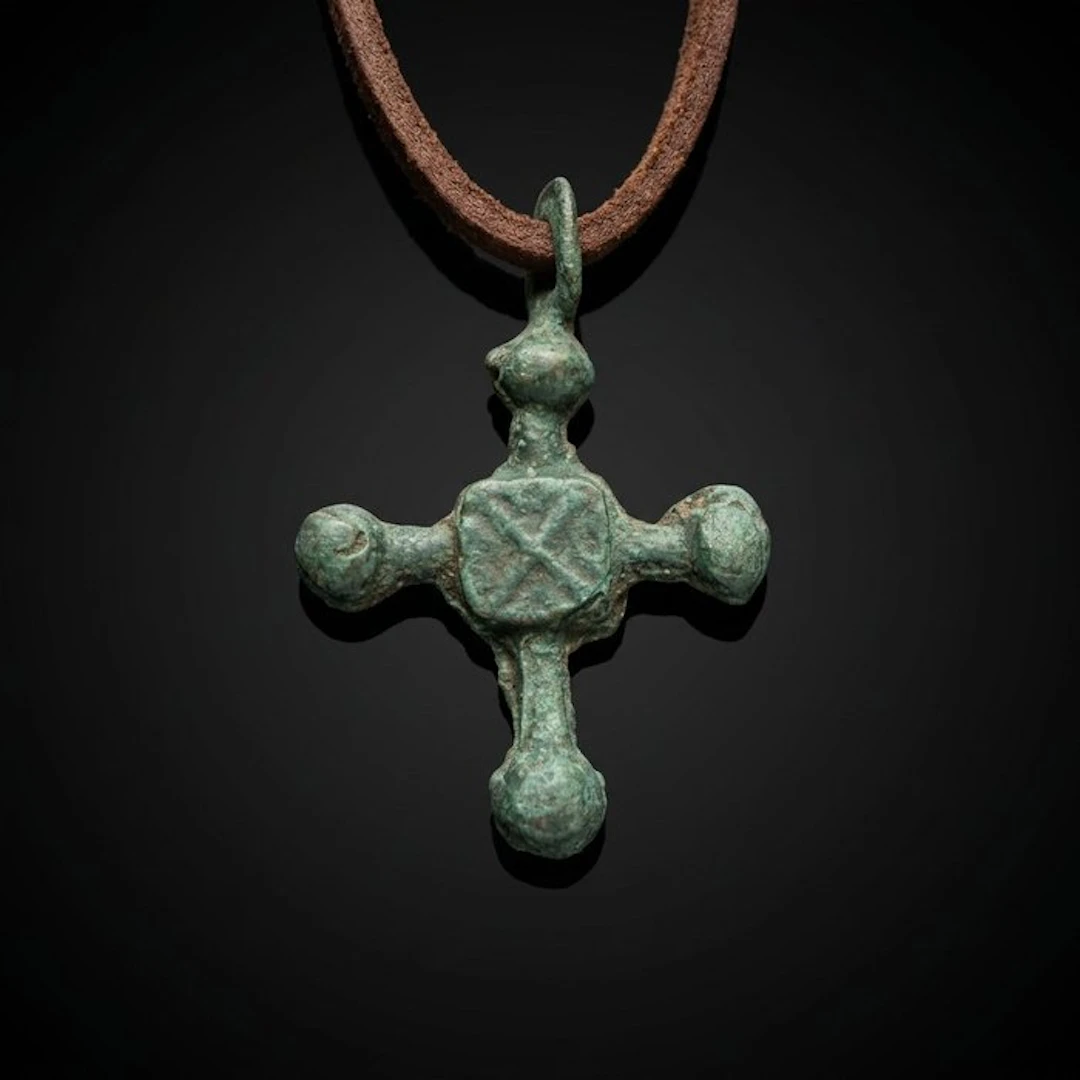
A distinctive medieval Byzantine-tradition bronze pectoral cross, dating approximately to the 11th–13th century, the age of the Crusades and a period of intense interaction throughout the Christian eastern Mediterranean. The defining feature of this example is the clearly visible second cross depicted within the central field of the larger cross. The craftsman therefore created an intriguing composition in which the principal Christian symbol appears twice: first in the overall shape of the pendant and again within its very centre. The cross measures 27 × 19 mm and weighs 1.84 g. Cross within a Cross The centre of the pendant forms an expanded field containing a clearly incised smaller cross with diagonally arranged arms. This simple detail gives the object an unusually strong visual identity. The symbol exists on two levels: the pendant itself is a cross, while its heart carries another cross. For a medieval Christian, such repetition could reinforce the devotional character of the object, although the precise personal meaning intended by its original owner can no longer be established. Distinctive Rounded Terminals The construction differs considerably from that of a simple straight-armed cross. Three principal arms terminate in prominent rounded, almost globular ends, giving the small pendant a surprisingly substantial and sculptural appearance. The upper section is particularly distinctive. Above the central field rises an elongated element with a pronounced moulded feature, continuing into the original suspension loop. Although only 27 mm in size, the object has the appearance of a carefully conceived piece of personal devotional jewelry. Byzantium in the Crusader Era The 11th–13th centuries were among the most eventful periods of medieval history. Constantinople remained a major centre of Eastern Christianity, while Byzantine territories stood at the crossroads of trade, pilgrimage and military movement. Within this world, small pectoral crosses occupied a very different place from ordinary ornaments. They were objects of personal devotion. Worn directly upon the body, they could accompany their owners through everyday life, travel and pilgrimage, serving as a permanent physical expression of Christian identity. A Personal Object Across Eight Centuries Small devotional objects possess a particular historical intimacy. Monumental churches tell us about institutions, rulers and empires. A pectoral cross brings us closer to the individual. This example was small enough to remain constantly close to its owner. Today the bronze retains an attractive natural green archaeological patina, accompanied by darker earthy areas, mineral deposits and characteristic traces of age. Importantly, the principal features remain clearly visible: the central cross motif, three rounded terminals and original suspension loop are all preserved. Details Culture: Byzantine / Medieval Christian Historical Context: Crusader Era Dating: 11th–13th Century Object: Pectoral Cross / Christian Devotional Pendant Material: Bronze Dimensions: 27 × 19 mm Weight: 1.84 g Decoration: Additional cross motif within the central field Features: Prominent rounded terminals, moulded upper section and original suspension loop Condition: Authentic archaeological condition with natural green patina, mineral deposits and characteristic age-related wear. The central symbolism and overall silhouette remain clearly preserved. Provenance: Acquired on the European antiquities market. From a private collection. Shipping: European Union only. Leather cord included. A Double Symbol of Faith The most compelling feature of this object lies at its centre. The medieval craftsman did not simply create a pendant in the shape of a cross. He placed another cross at the heart of the first. The result is a miniature devotional object in which Christianity's central symbol is repeated within itself. The identity of its original owner has disappeared from history. Whether it belonged to a Byzantine resident, traveller or pilgrim cannot now be known. What remains, some eight centuries later, is the personal object that was once worn close to that individual. A rare Byzantine bronze pectoral cross of the Crusader era, distinguished by its striking “Cross within a Cross” composition — an appealing piece for collections of Byzantine antiquities and medieval Christian devotional objects.
Stima:€150
Vai all’astaVedi tutti gli oggetti diCatawikioArte Antica
Stima:
€150
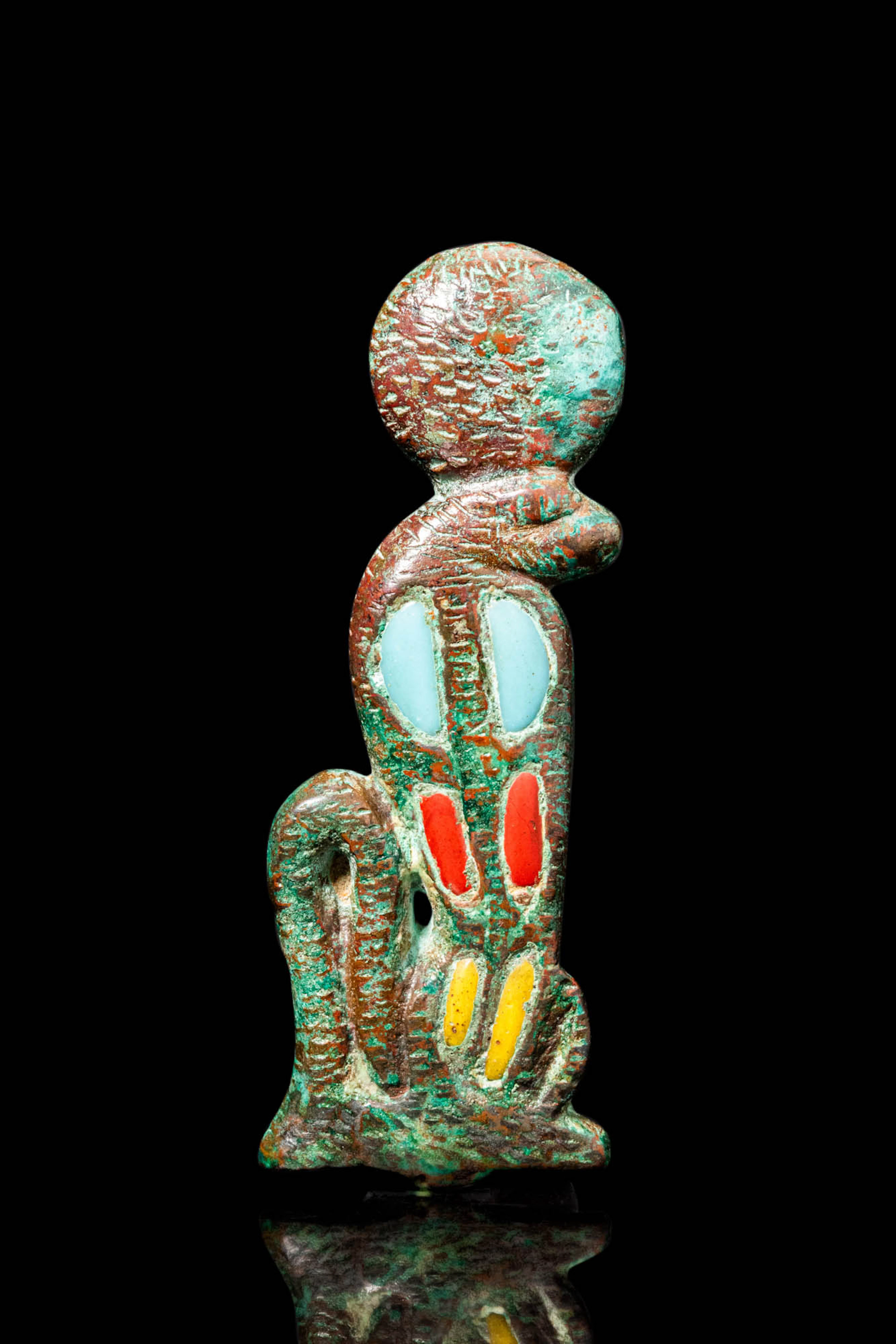
EGYPTIAN BRONZE INLAID APPLIQUE OF URAEUS - MUSEUM EXHIBITED
06/21/2026

€1,623.13
Stima: €1,154.78
Porta la tua asta ai collezionisti di tutto il mondo!
Pubblica ora€275