


Tutte le aste / Arte Antica / Western Asiatic Bronze Ornamental Pin with Openwork...

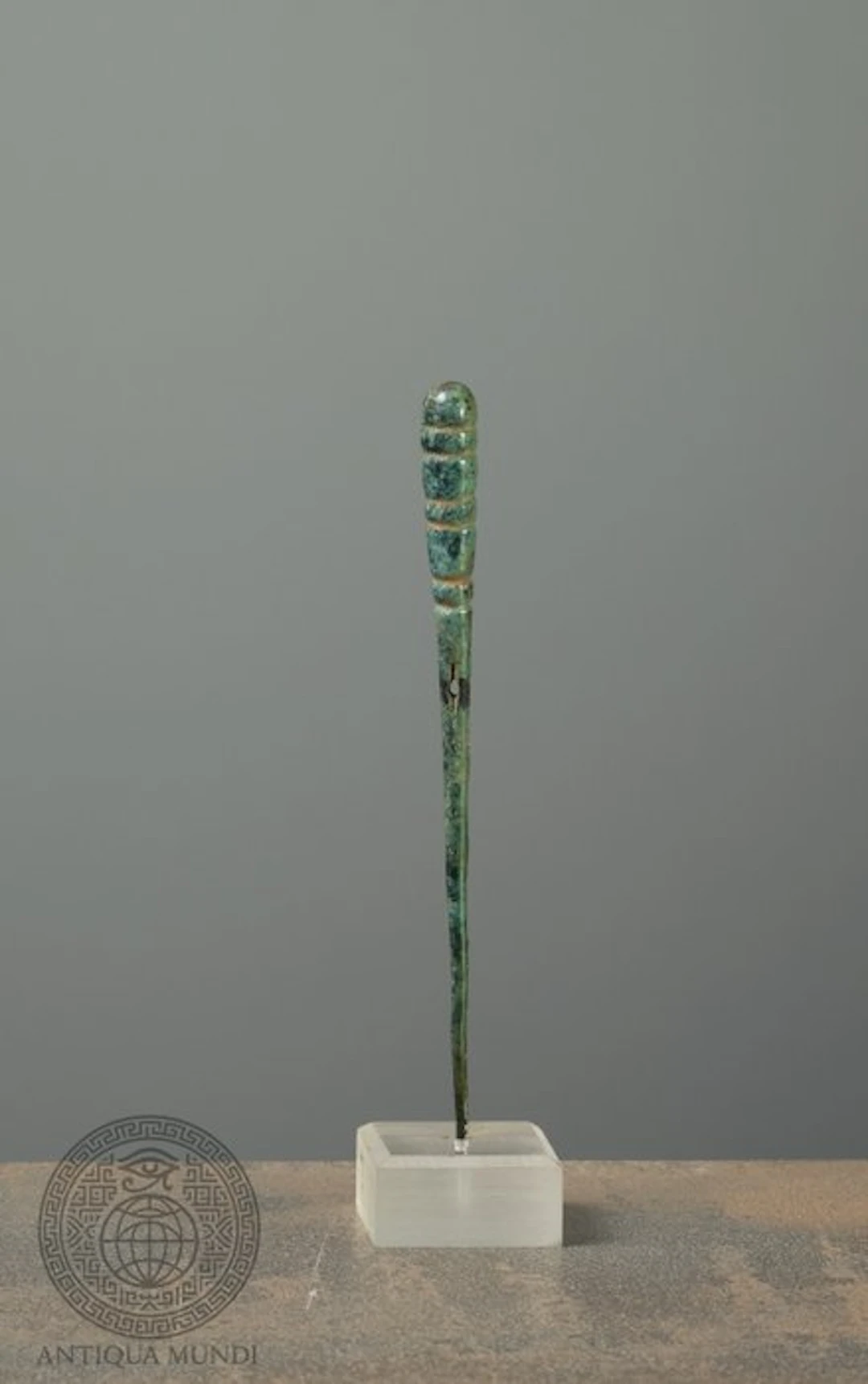
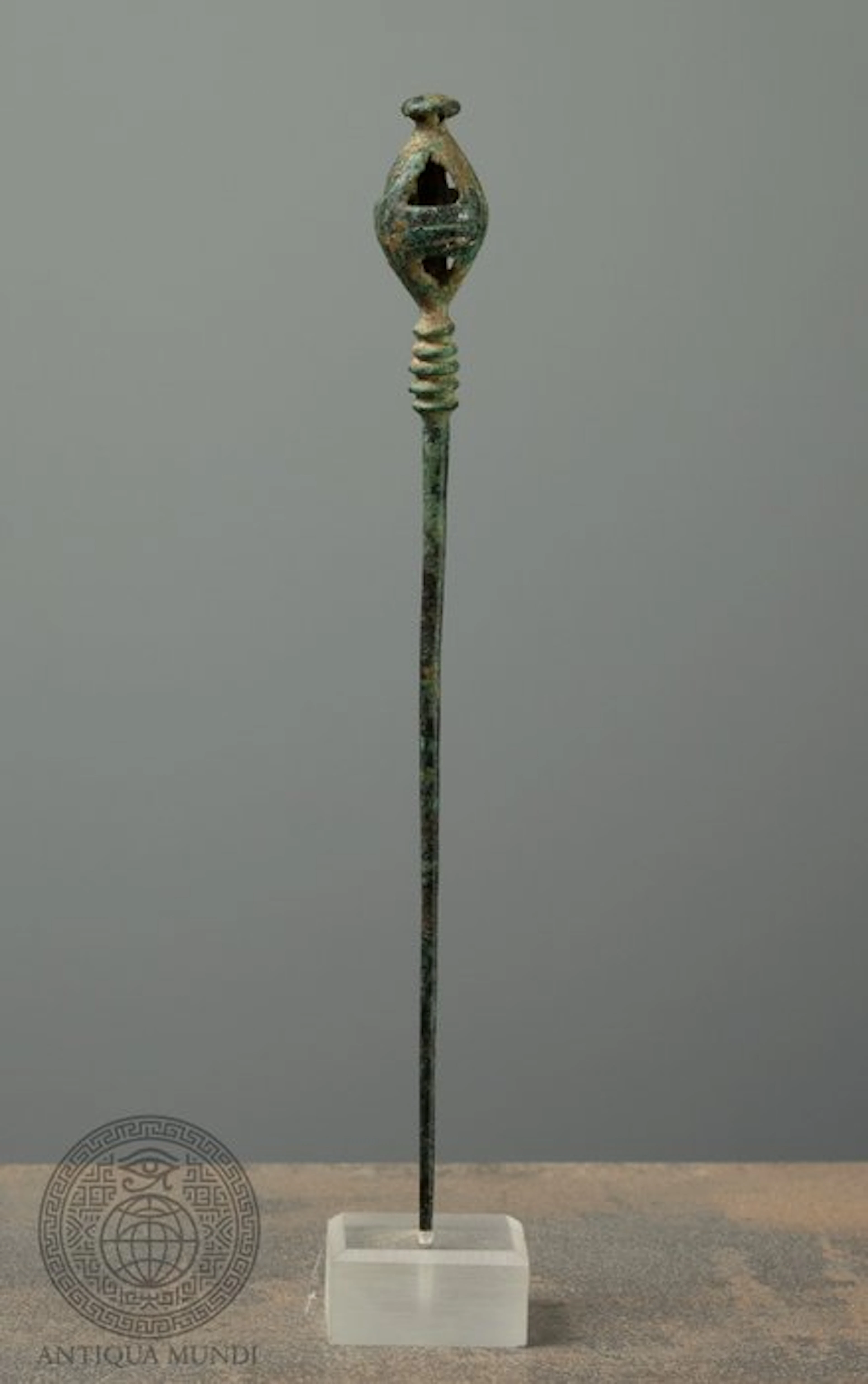
An ancient Luristan bronze dress pin with an elaborately moulded knob finial, attributed to the Iron Age metalworking tradition of Western Iran. The pin features a long, slender shaft surmounted by a carefully articulated finial consisting of several cylindrical and rounded elements. The uppermost section terminates in a smoothly rounded, hemispherical knob. Below it, a succession of raised circular mouldings, projecting collars and narrow constrictions creates a distinctive geometric profile. The varying proportions of these elements give the finial an attractive architectural appearance. Below the decorative head, the bronze continues into a long, slender shaft tapering towards its lower end. A small elongated opening is visible in the upper part of the shaft. Perforations on ancient dress pins could sometimes accommodate securing cords or other fastening arrangements, although the original purpose of this particular opening cannot be established with certainty. Cultural Context and Dating Bronze dress pins and ornamental pins are among the characteristic personal accessories associated with the Iron Age cultures of Luristan, in the Zagros Mountains of Western Iran. During the late 2nd and early 1st millennium BC, the region developed a distinctive bronze-working tradition encompassing weapons, horse equipment, personal ornaments and ceremonial objects. Dress pins served practical and decorative purposes, including the fastening of garments and the adornment of clothing. Their finials were frequently embellished with moulded rings, geometric projections and occasionally figural decoration. The present example is distinguished by its carefully profiled knob finial and elongated shaft. On typological grounds, an attribution to the Luristan Iron Age tradition, probably circa 900–600 BC, is proposed. A more precise dating cannot be established without archaeological context. Condition Ancient condition with characteristic green patination. The bronze displays a pronounced green to dark green patina, with areas of brown corrosion, earthy deposits and surface irregularities. The elaborately moulded finial remains well defined, with its projecting rings and cylindrical sections clearly preserved. An elongated opening with irregular edges is visible in the upper shaft. The shaft shows age-related wear, localised corrosion and minor irregularities. Possible adhesive residues may be present on the object. Please examine all photographs carefully, as they form an integral part of the condition description. Provenance Formerly in the Madeleine & Erich Dammann Collection, Germany. Acquired during the collectors’ extensive travels between 1950 and 1970. The collection is documented in Germany by 1970 through historical photographs of the family residence and subsequently remained in continuous family ownership. The objects were acquired privately during the collectors’ travels. As was customary for private purchases made at local markets during the 1950s and 1960s, purchase receipts or invoices were generally neither issued nor requested. Historical photographs and biographical documentation relating to the Dammann Collection are available and support the long-standing provenance of the collection.
Stima:€450
Vai all’astaVedi tutti gli oggetti diCatawikioArte Antica
Stima:
€450
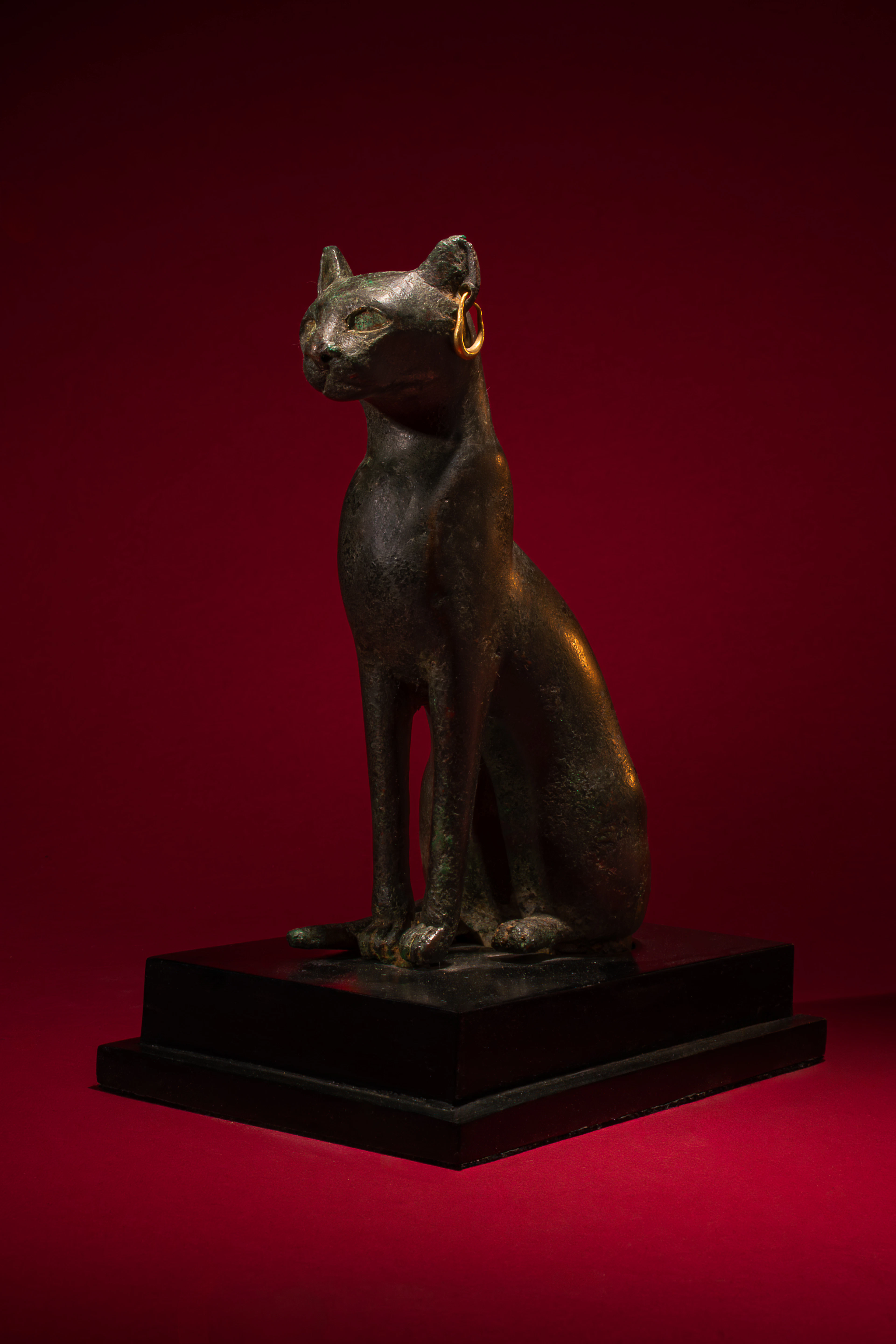
RARE EGYPTIAN BRONZE CAT STATUETTE WITH GOLD EARRINGS - LARGE SIZE
06/21/2026

€25,506.4
Stima: €23,095.64
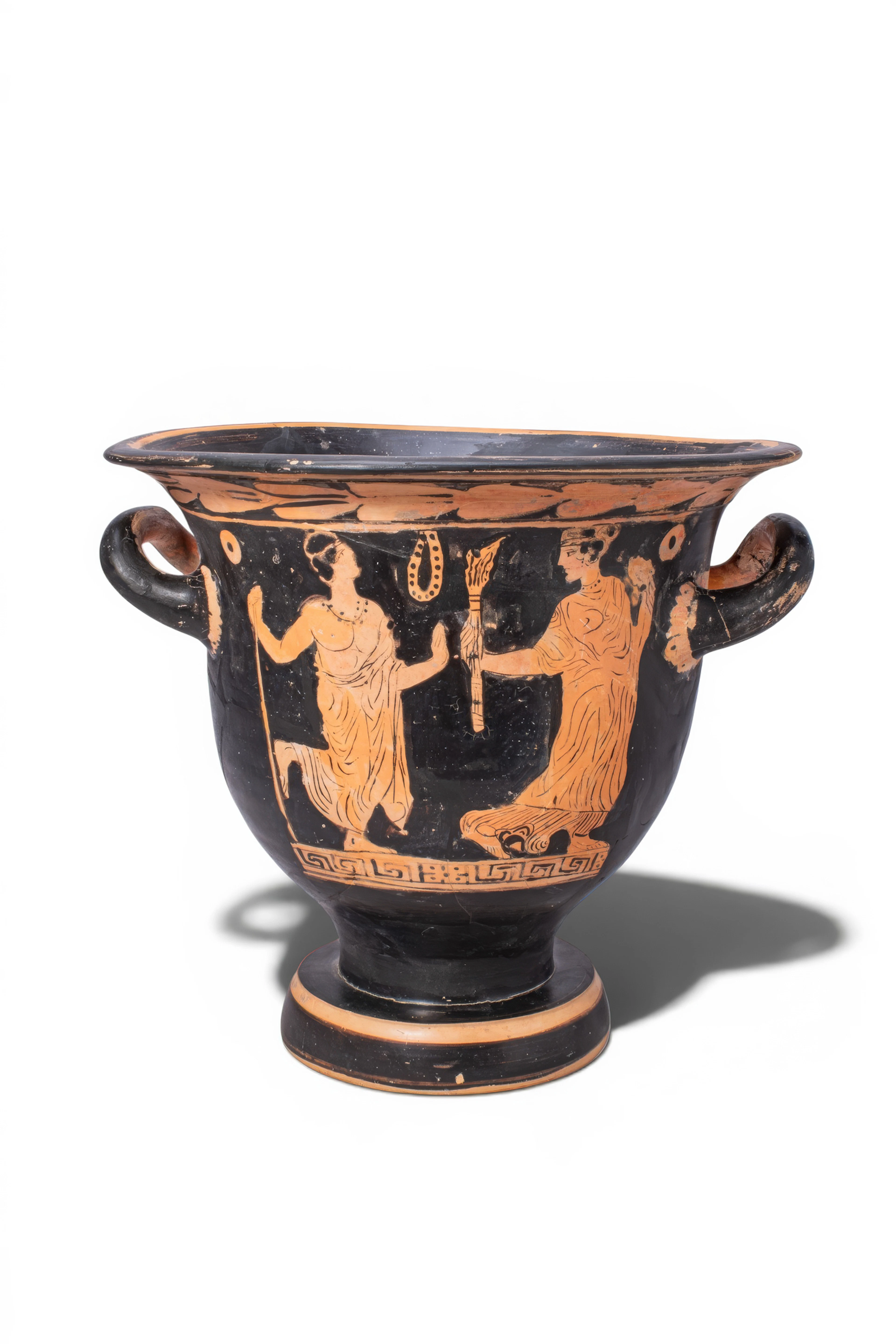
APULIAN RED-FIGURE BELL KRATER WITH KOMASTOS AND MAENAD - TL TESTED
06/21/2026
€3,014.39
Stima: €2,304.2
Porta la tua asta ai collezionisti di tutto il mondo!
Pubblica oraIscrivendoti, accetti la politica sulla privacy. Annulla l'iscrizione in qualsiasi momento.
Barnebys HQ
Brahegatan 10
BOX 5038
114 37 Stockholm
