
Tutte le aste / Mobili, Design & Specchi / Walking stick (3) - Wood

Walking stick (3) - Wood
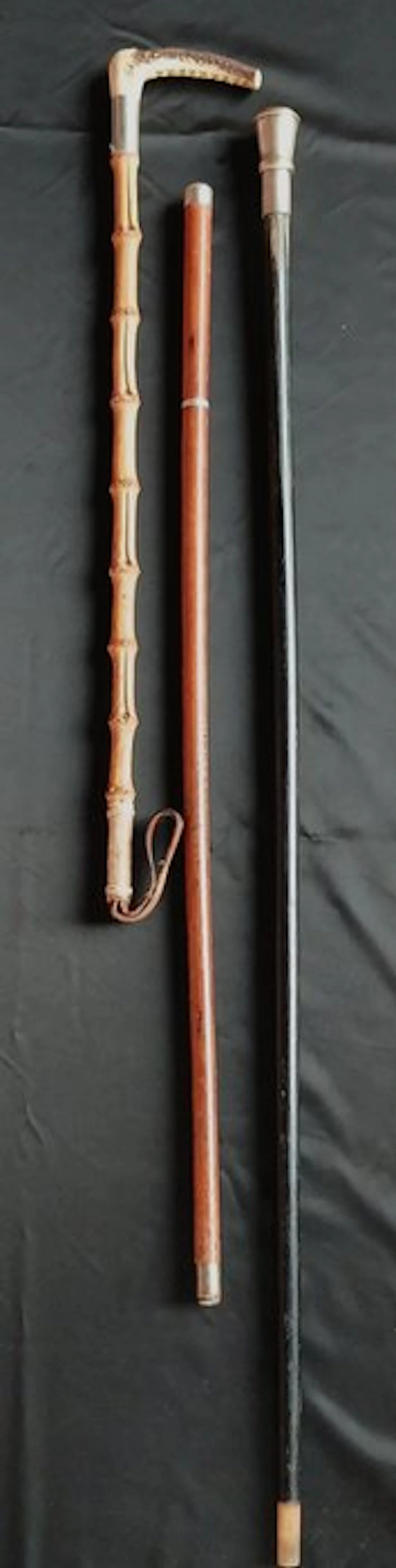
Three walking/antique canes. Left cane: presented for hiking/hunting. The cane features a curved L-shaped handle in genuine horn/antler (deer or roe deer) with incisions/slits to ease grip and prevent finger slippage. The metal band/collar bearing the inscription "NICKEL SILVER" indicates that the ferrule (the metal connector collar) is made of nickel-silver (also called German silver or argentan). This is an alloy of copper, nickel, and zinc that mimics the appearance and brightness of silver without containing pure silver. It was and is widely used in the production of walking canes to ensure oxidation resistance and structural robustness at affordable costs, serving both as a structural reinforcement at the joint and as a decorative element. At the base there is an interlaced coating (in cord or string) with a felt or leather wrist strap (dragon’s-head/hand strap). The worked shaft is modeled with nodes reminiscent of bamboo or reed. Produced in the late Victorian to early Edwardian United Kingdom period (approximately 1890–1920) or somewhere between the late Victorian and Edwardian era. Length: 61 cm. Central cane: a walking cane in ebony-stained beech wood with a cylindrical/rounded dome knob handle. The top knob features splayed incised engraving with geometric and vegetal or phytomorphic wave motifs, plated in silver. Below there is a second ferrule or silver-plated metal ring that rims the shaft. The circular hole beneath the incised metal ferrule carried a dragon’s-head/ wrist strap. Era: late 19th century – early 20th century (1880–1920). This minimalist yet refined design with incised metal finishes was typical of late Victorian, Umbertine, or Belle Époque walking canes in the United Kingdom. Condition: slightly curved. Length: 75 cm. Right cane: a walking cane in ebony-stained beech wood with a trumpet-shaped cylindrical/metallic flare knob plated in silver. On the top cap of the knob is engraved a monogram with intertwined cursive letters (likely the letters "S" and "H"), topped or surrounded by festoon/garland motifs. Tip: The bottom end closes with a lighter-colored tip (bone, light horn). Estimate: late 19th century – first half of the 20th century (approximately 1880–1940) produced in the United Kingdom. This type of canes, elegant and refined, was intended for daily formal use by the upper middle class and was mainly produced in Western Europe (United Kingdom, France, Germany) or the United States. Length: 95 cm.
Stima:€1
Vai all’astaVedi tutti gli oggetti diCatawikioMobili, Design & Specchi
Stima:
€1
Oggetti simili

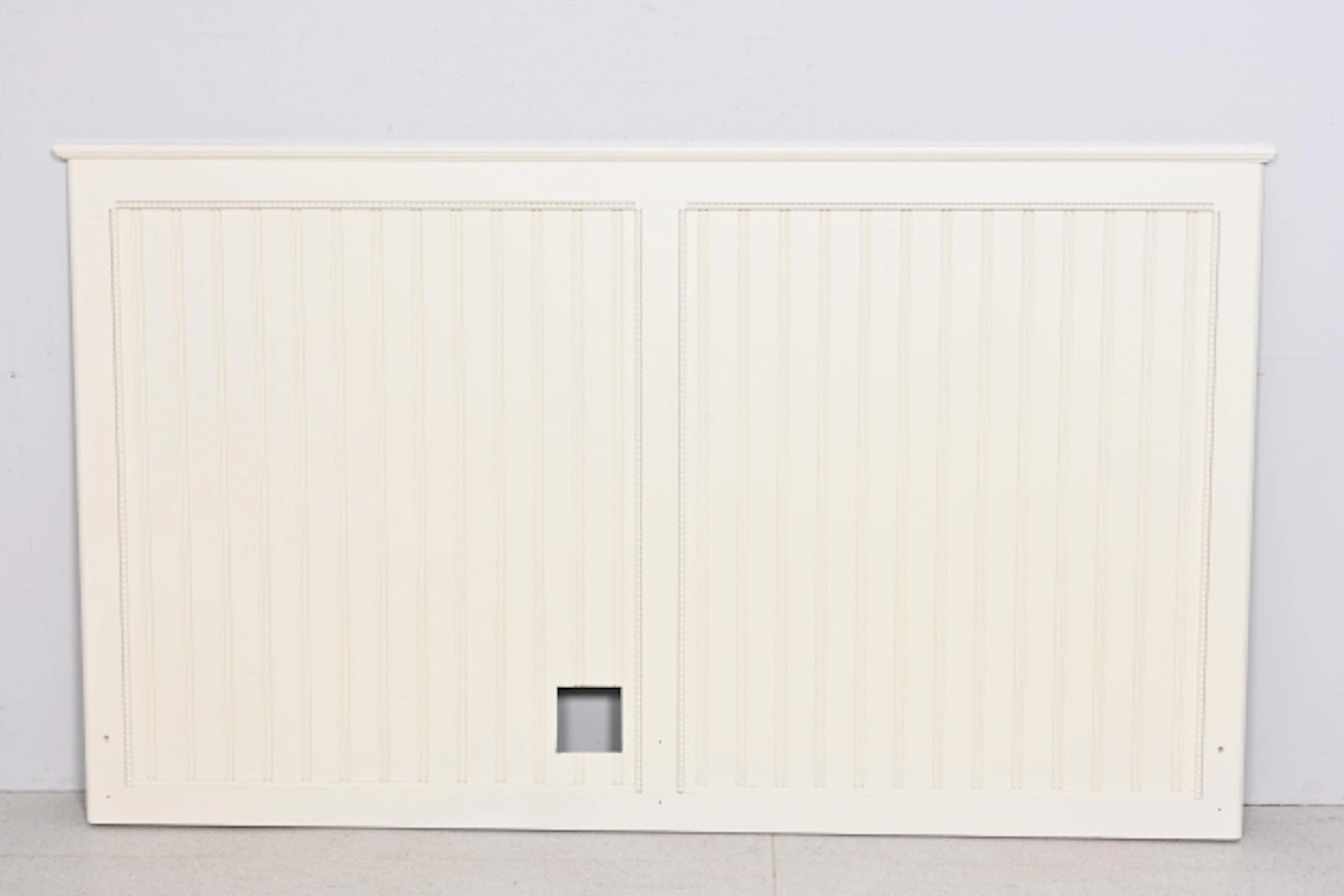
Risultati d’asta per oggetti simili
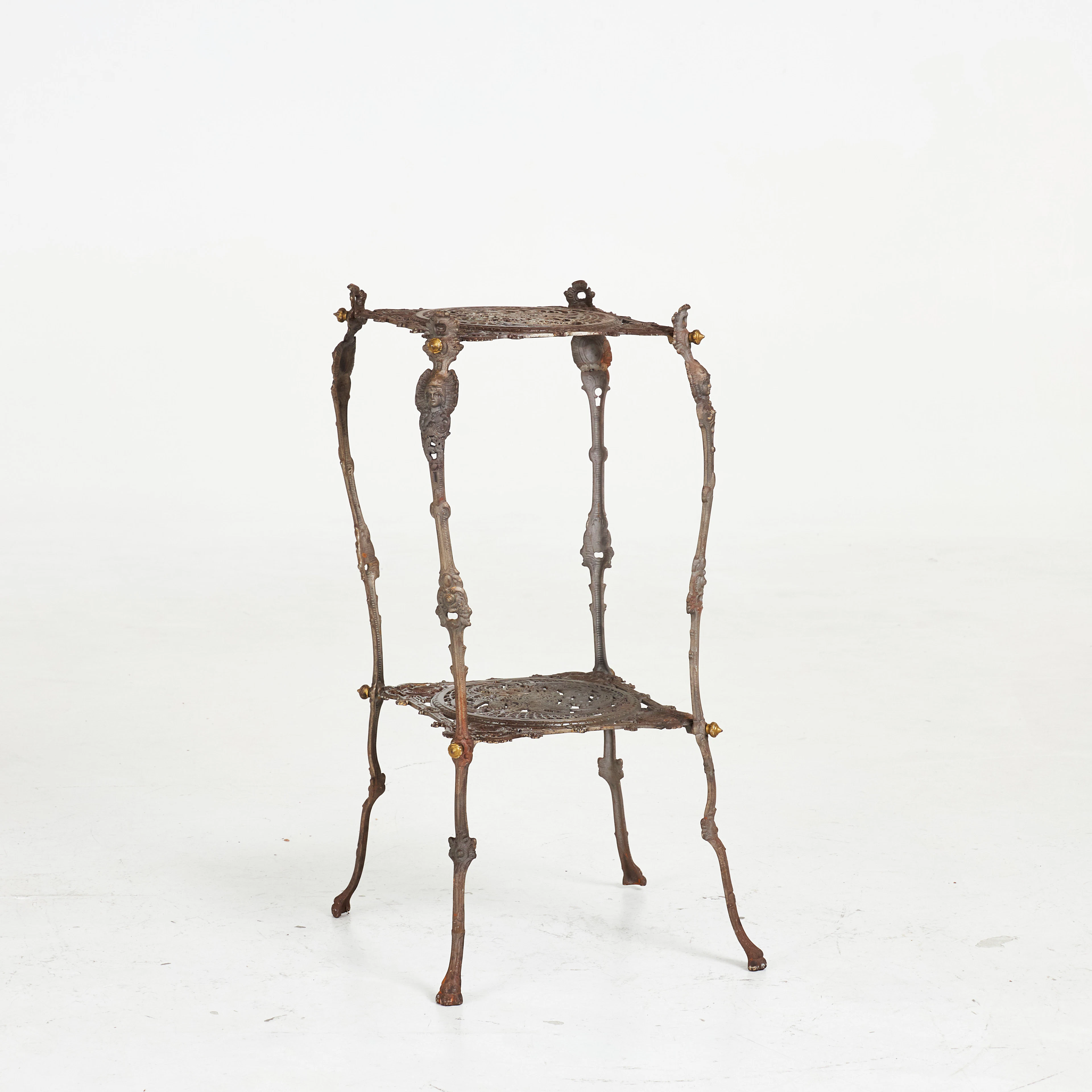
PIEDESTAL. Gjuten i zink och aluminium, genombruten dekor, 1900 tal.
10/11/2026
€98.19
Stima: €160.66
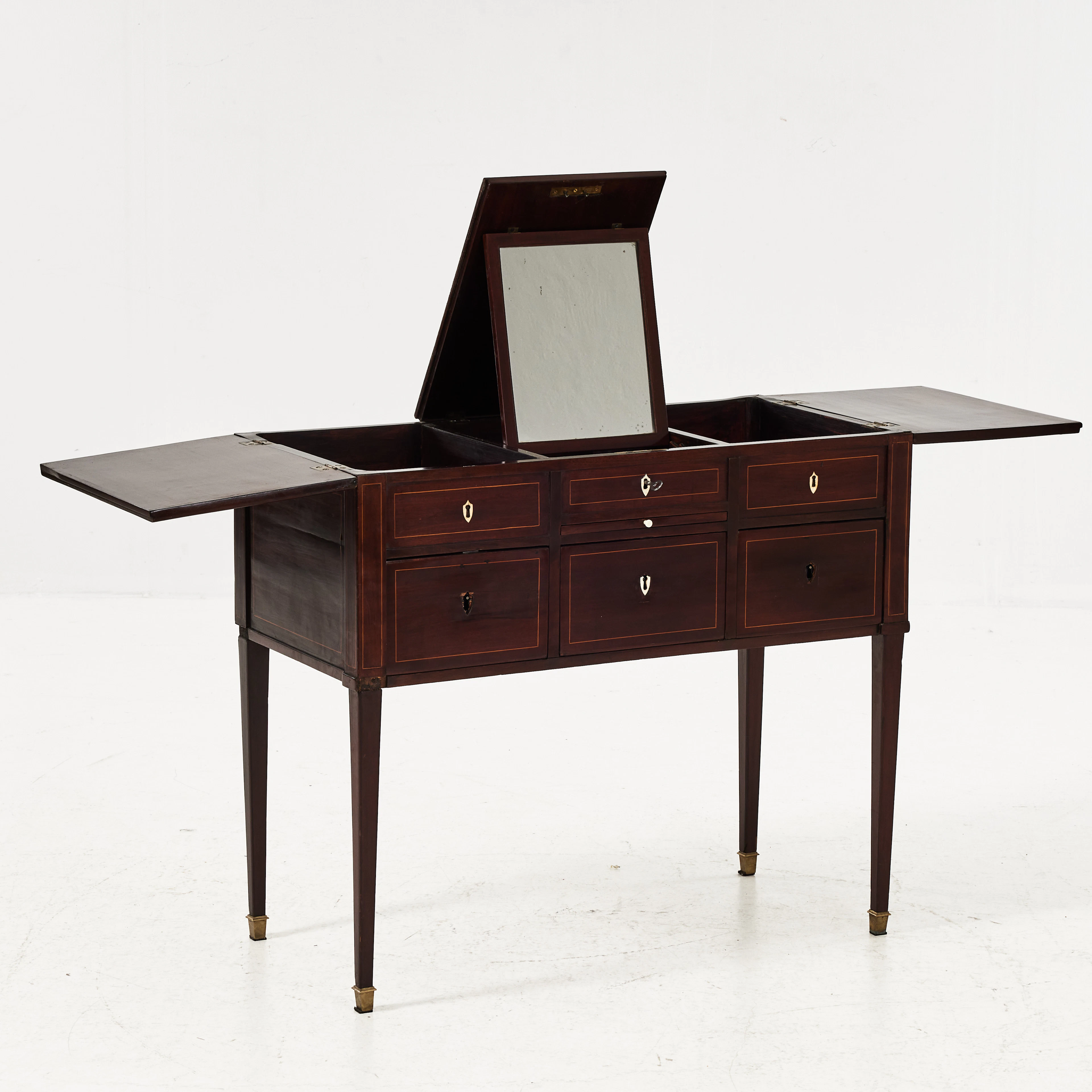
POUDREUSE, 1800-tal, fanerad i mahogny, nyckelskyltar i ben.
10/11/2026
€91.5
Stima: €178.51
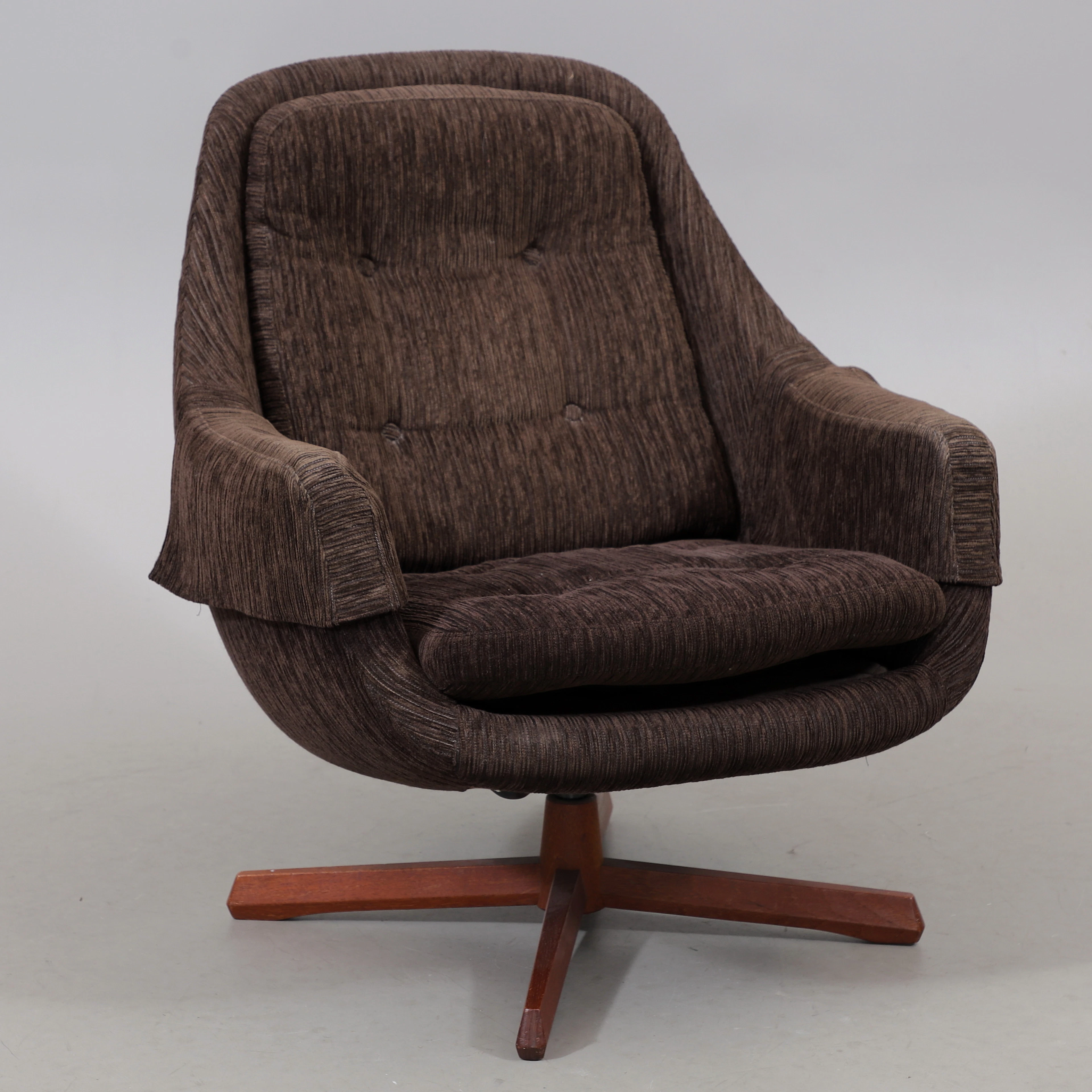
FÅTÖLJ, ”Tillberg”, manchester/teak, AB Westbergs Möbler 1960-tal.
10/11/2026
€178.53
Stima: €71.4
Porta la tua asta ai collezionisti di tutto il mondo!
Pubblica ora