
Tutte le aste / Arte Asiatica / Sasanian Garnet Intaglio Seal with Zebu Bull

Sasanian Garnet Intaglio Seal with Zebu Bull
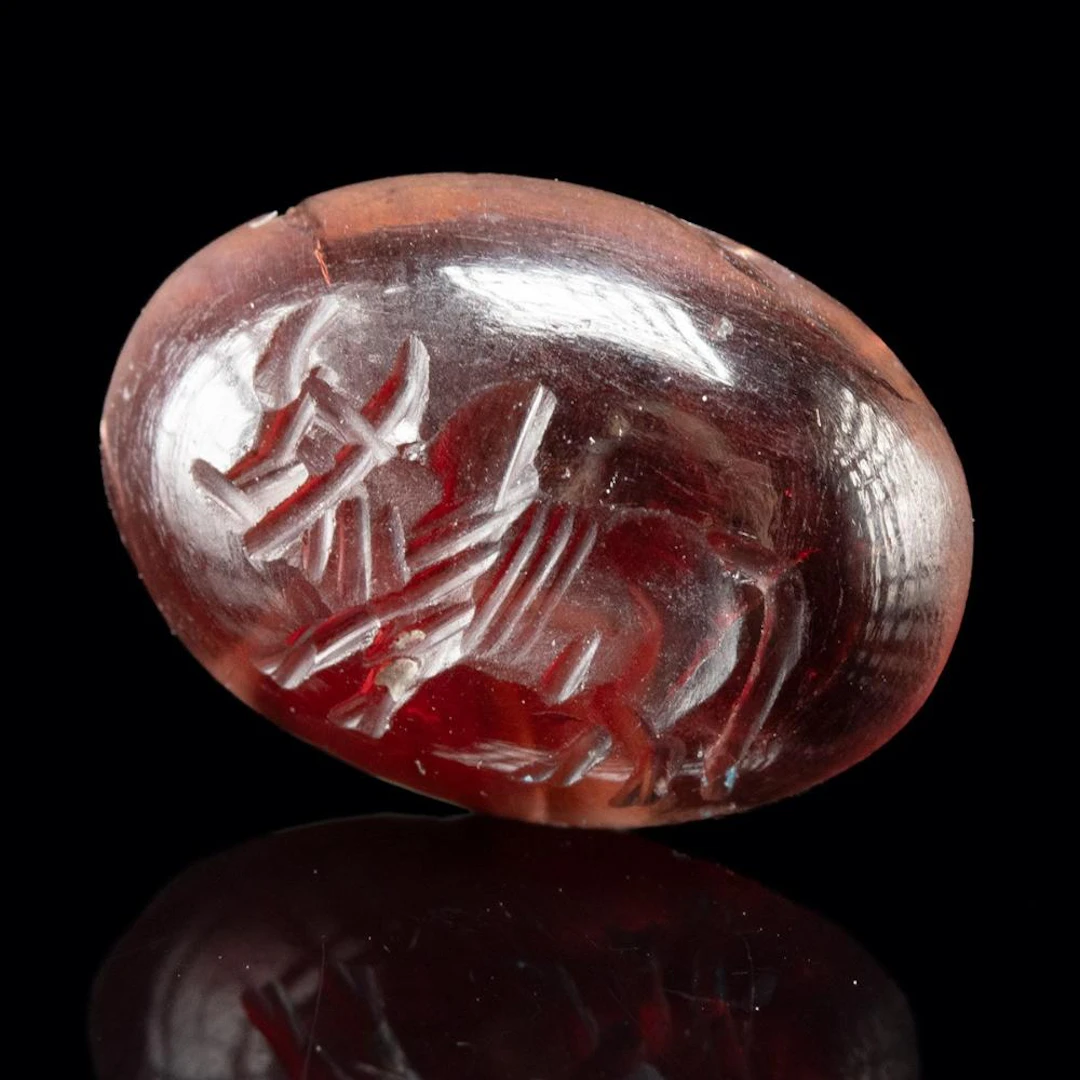
Near East, Persia, Sasanian Empire. A miniature oval seal stone of deep wine-red garnet. Its face is gently convex and its back is hollowed into a shallow concave dish. The engraving on the curved face shows a zebu bull walking in profile. The cutter built the heavy shoulder hump, deep chest, and hanging dewlap from a few quick drill and wheel strokes, and a band across the barrel may be a girth or saddle cloth. Thinning the stone from behind lets more light pass through the dark garnet, so the cut lines glow against the wine-colored ground. Pressed into clay or wax, the seal leaves a raised bull walking the other way. It was probably made to be set in a ring and used to authenticate documents, close goods, and mark its owner's identity. Sasanian glyptic art, the engraving of seal stones, survives in very large numbers. It was a working tool as much as a form of adornment. Officials, priests, merchants, and private owners pressed their seals into clay bullae to close letters, sacks, and storerooms. Garnet, carnelian, chalcedony, and jasper were the preferred stones. The zebu, the humped cattle of South Asia, is one of the most common animals on these seals. Its frequent appearance reflects the empire's close commercial and cultural ties with the Indian subcontinent. Garnets cut with a convex face and a hollowed back belong to a wider late antique taste for this stone, which was valued for its saturated red when thinned enough to let light through. Item # 205523
Stima:€267.75
Vai all’astaVedi tutti gli oggetti diArtemis Fine ArtsoArte Asiatica
Stima:
€267.75
Oggetti simili

Risultati d’asta per oggetti simili

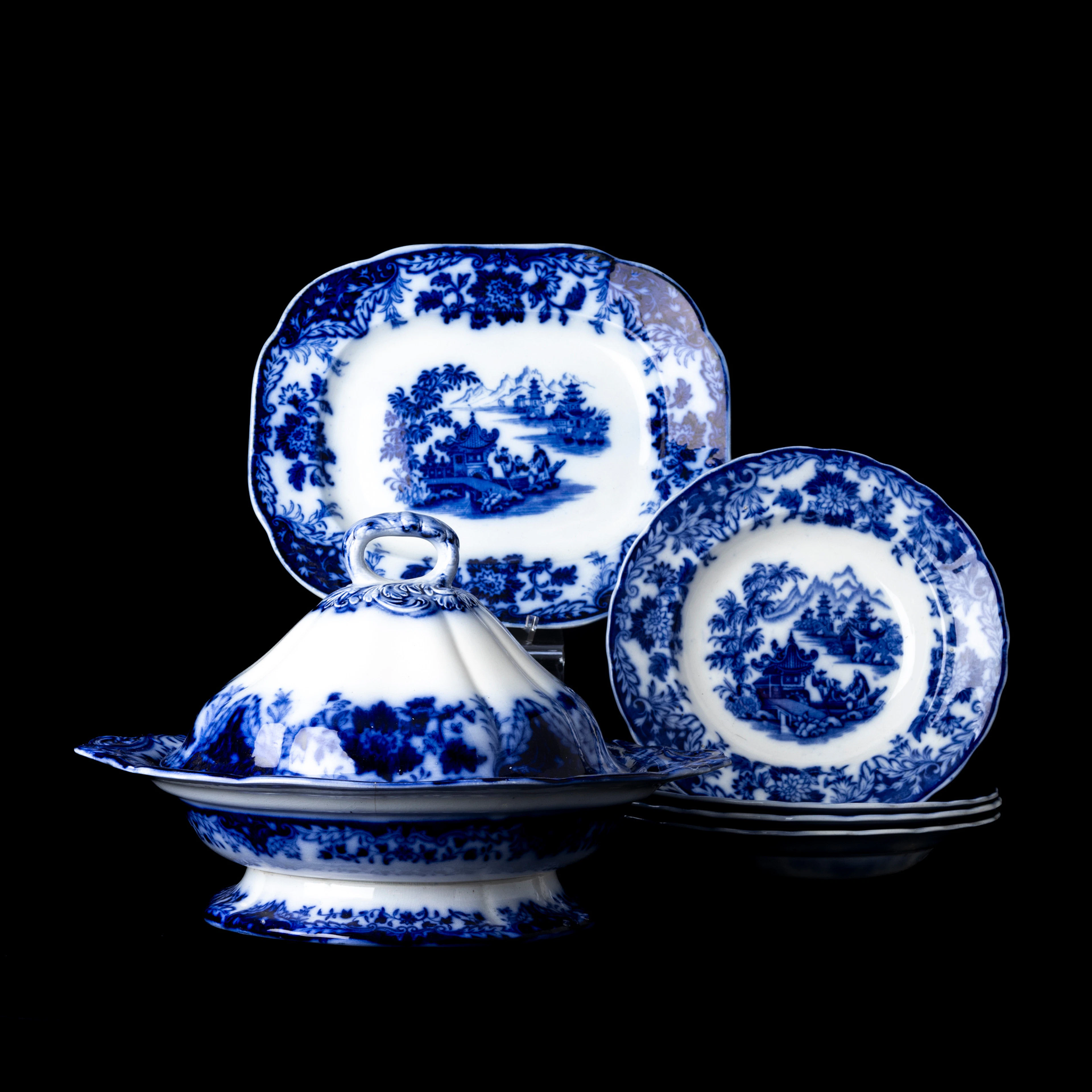
RÖRSTRAND, 6 delar, flintgods, flytande blått, 1800-talets andra hälft.
10/09/2026
€31.24
Stima: €71.55
Porta la tua asta ai collezionisti di tutto il mondo!
Pubblica ora