Rainbow Iridescent Cleoniceras Ammonite Natural...
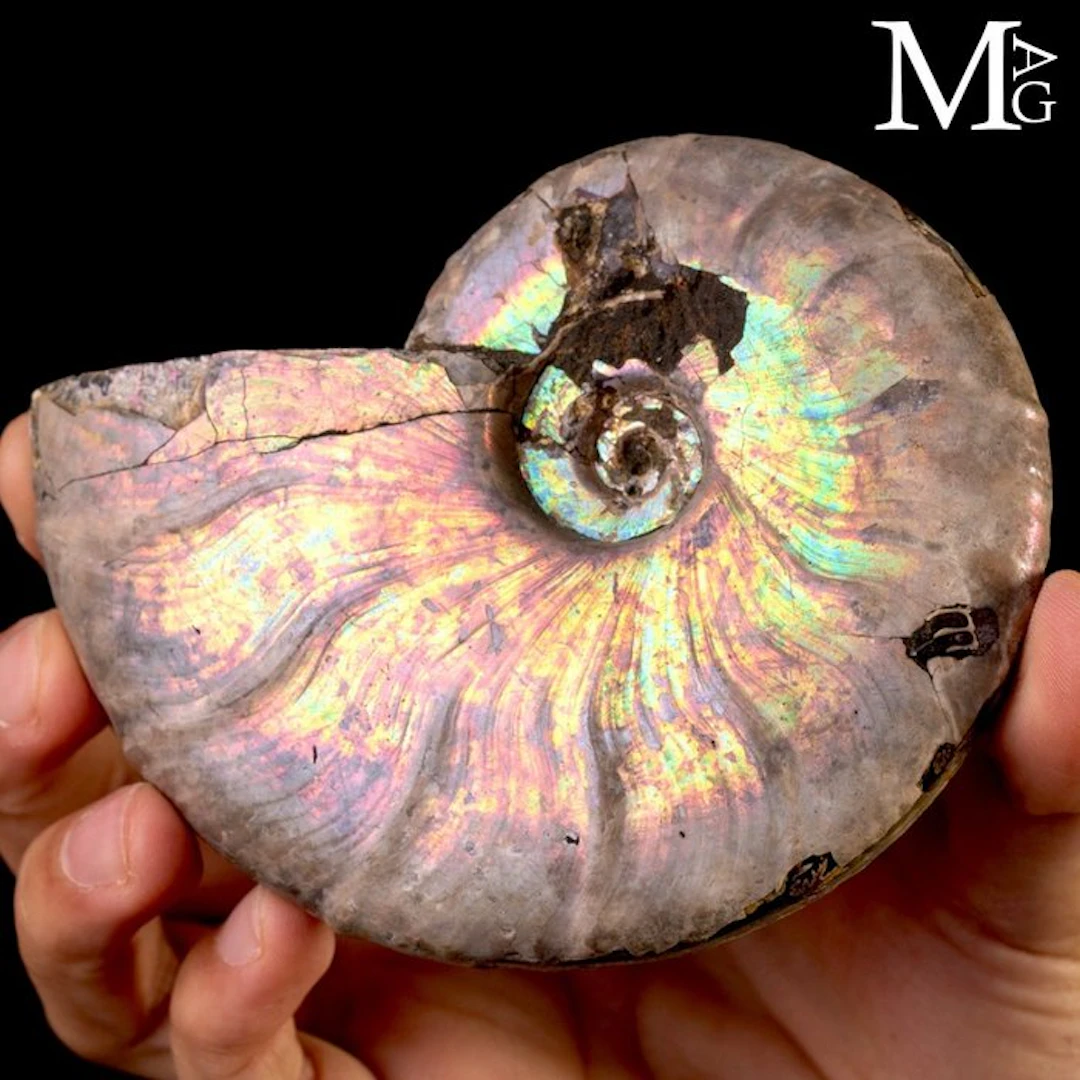
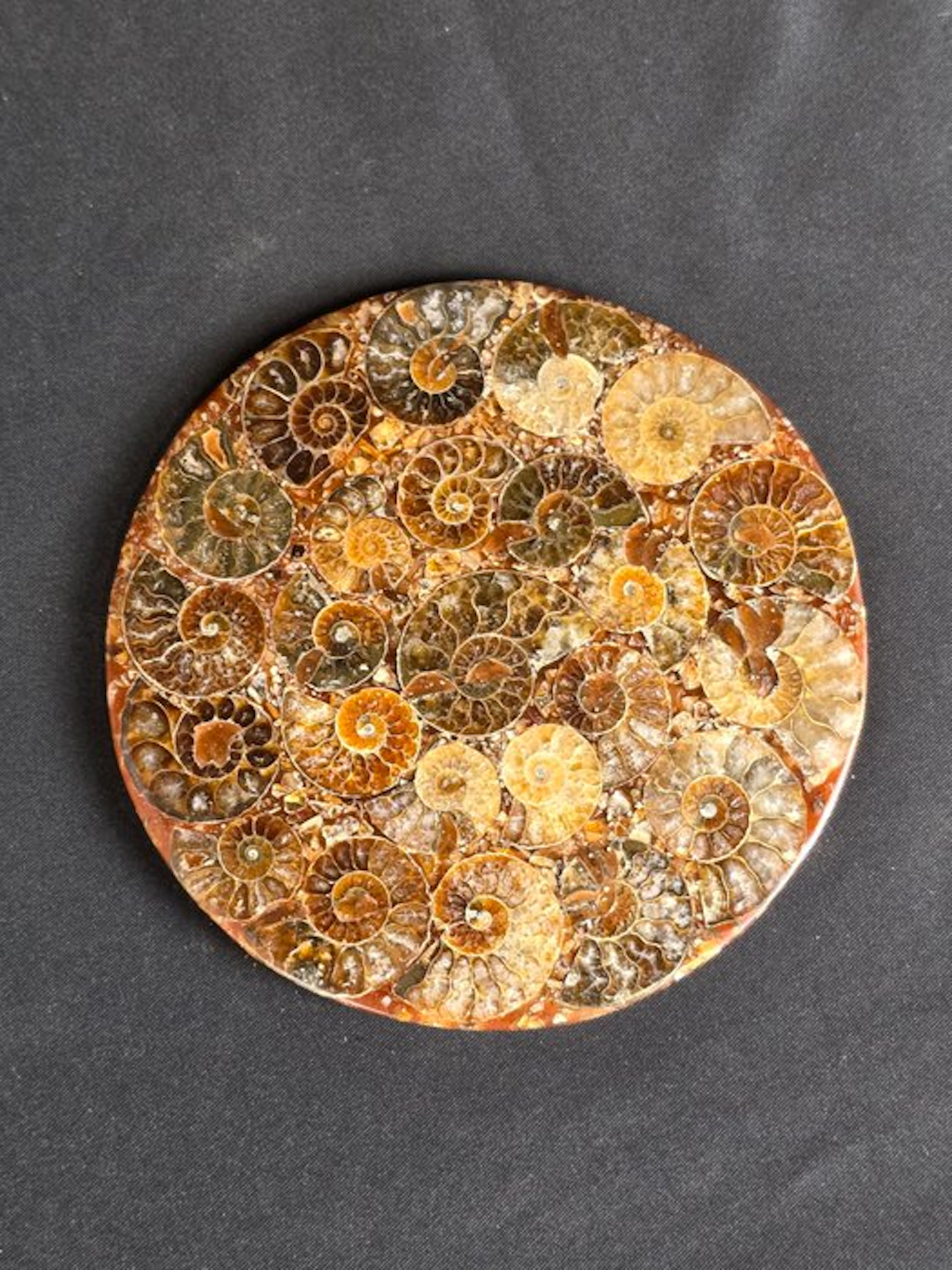
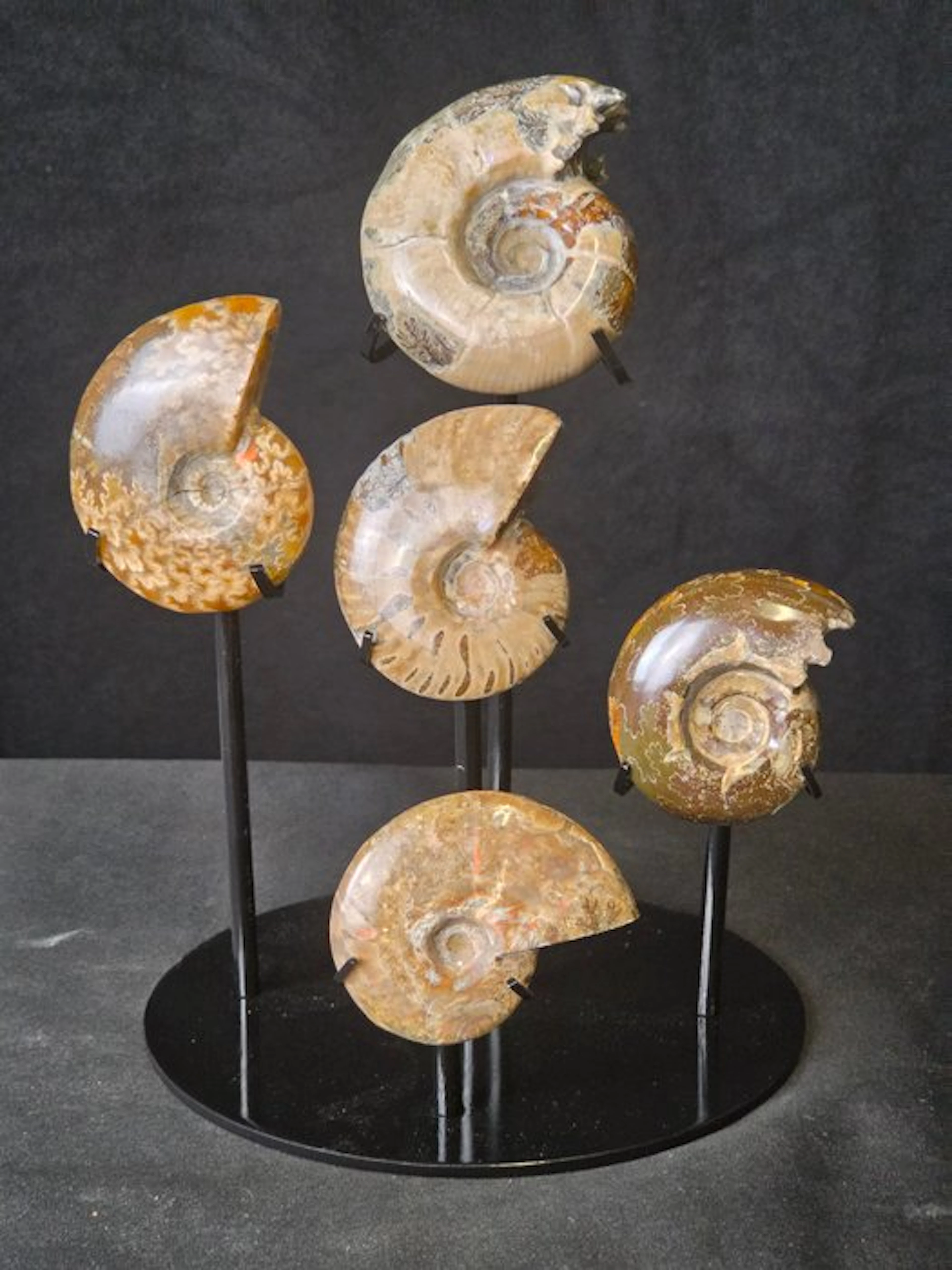
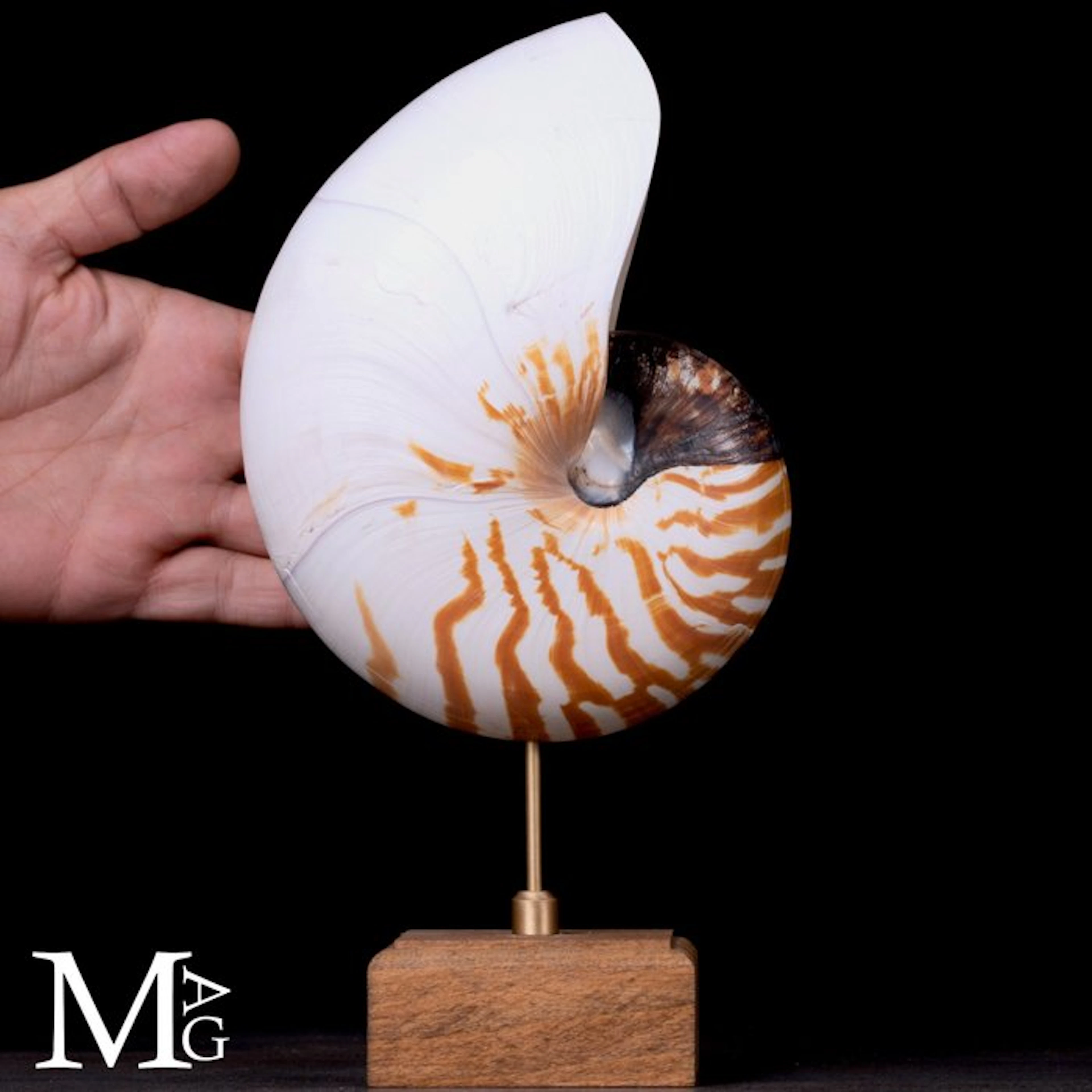
A specimen with an iridescent mother-of-pearl shell preserved — We present a remarkable fossil ammonite belonging to the genus Cleoniceras, from the famous Madagascar deposits. This fossil, dating from the Early Cretaceous, stands out for the spectacular preservation of its external shell in mother-of-pearl, displaying an intense and vibrant iridescence. The specimen immediately captures the eye with its chromatic play, turning a paleontological find into a true natural gem. The ammonite develops in a classic logarithmic spiral, an iconic shape of nature’s geometric perfection. The photographs document the surface meticulously, where large portions of the original shell have been preserved. Under light, this surface comes alive with flashes of color ranging from emerald green to golden yellow, from vivid pink to peacock blue. This phenomenon, known as opalescence or “fire,” is due to the diffraction of light through the microscopic layers of aragonite that make up the mother-of-pearl. Thin sutural lines typical of the genus Cleoniceras can also be observed, peeking through the iridescent surface, adding complexity and scientific interest. The fractures visible on the shell are not defects but authentic testimonies of the long, complex fossilization process that lasted millions of years. The extraordinary iridescence of this fossil is not artificial alteration but a rare and valuable taphonomic feature. During fossilization, the aragonite shell of the mother-of-pearl managed to remain intact, without recrystallizing into calcite (a more stable mineral but non-iridescent). This exceptional preservation process is typical of some Upper Cretaceous marine deposits in Madagascar, which allowed these ancient cephalopods to reach us in all their original chromatic splendor. The visual effect is comparable to that of the most precious organic gems, such as noble opal or pearl. Ammonites of the genus Cleoniceras thrived in the oceans about 110 million years ago, during the Albian stage of the Early Cretaceous. They were marine predators with an external shell divided into chambers that could be filled or emptied of gas to control their buoyancy, in a manner similar to the modern Nautilus. At the time of their death, the shells settled on the sea floor, where they were buried by sediments. Over eons, minerals in the environment mineralized the structure, turning it into a durable fossil that preserved its form and, in fortunate cases like this one, its surface microstructure. This Cleoniceras specimen represents a highly valuable addition to any natural history collection. It is not merely a scientific document of life past but also an object of indisputable aesthetic beauty. Its generous size and exceptional chromaticity make it a perfect display piece, ideal for enriching a modern Wunderkammer, a professional study, or a library. Its ability to interact with light makes it a dynamic and fascinating focal point, a silent dialogue between the geometry of nature and the physics of light, encapsulated in a fragment of deep time.
Stima:€190
Vai all’astaVedi tutti gli oggetti diCatawikioEtnografia