




OCT 8 | 3:00 PM

Porta la tua asta ai collezionisti di tutto il mondo!
Pubblica oraIscrivendoti, accetti la politica sulla privacy. Annulla l'iscrizione in qualsiasi momento.
Barnebys HQ
Brahegatan 10
BOX 5038
114 37 Stockholm
Tutte le aste / Etnografia / Pristine Clypeaster Rosaceus Sea Urchin with Delicate...

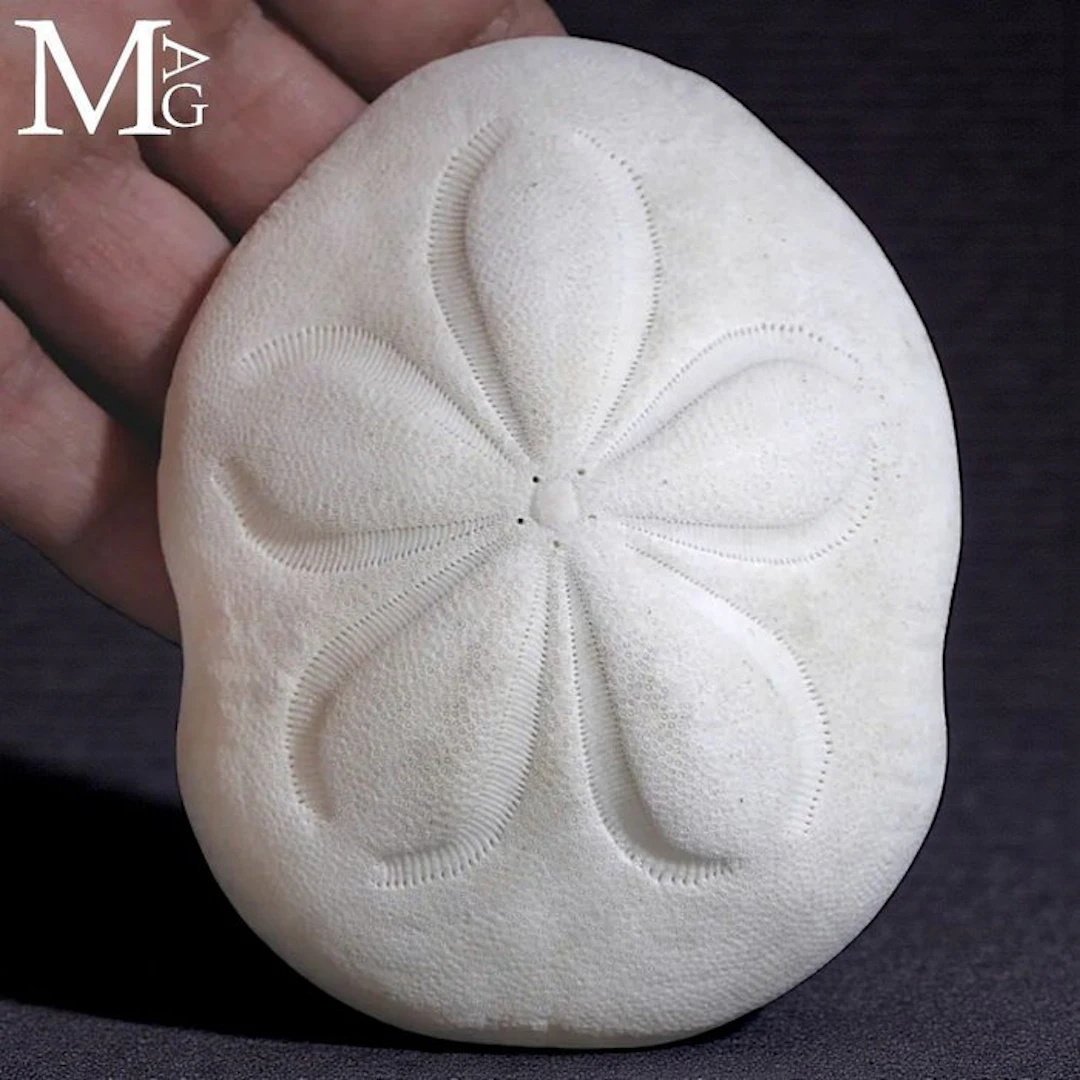
Perfect Pentaradial Symmetry in a Natural Shell — an exceptional specimen of Clypeaster rosaceus, a marine echinoderm from the tropical waters of the Caribbean, commonly known as the “cookie cushion” or “fat sand dollar” for its distinctive shape. This shell, technically an endoskeletal test, stands out for its considerable size and superb state of preservation, which has kept intact every nuance of its complex biological architecture. Its presence is sculptural, a natural object that immediately evokes the serene beauty of the sandy seabeds from which it comes. The aboral (upper) surface immediately captures attention with its hypnotic five-petal design, a manifestation of the pentaradial symmetry typical of echinoderms. This figure, the “petaloid,” is composed of five ambulacral areas finely perforated. Through these pores, the animal extended delicate pedicellariae, tubular appendages used for respiration. The entire shell surface, an opaque ivory white with a nearly chalky texture, is finely dotted with countless small tubercles. These were the anchor points for a dense covering of short, movable spines that the animal used to move and bury itself. The oral (lower) surface, flatter, reveals the center of the organism’s life. Exactly at the center opens the peristome, the mouth opening, from which five shallow grooves radiate. These channels, known as food grooves, were functional for directing nutritive particles (detritus) toward the mouth, an efficient feeding system for a detritivorous animal. Observing this structure allows us to understand the perfect adaptation of Clypeaster to its ecological role on the sea floor. The test’s itself structure is a masterpiece of bioengineering. It is composed of a multitude of small calcite (calcium carbonate) plates fused together in a three-dimensional mosaic configuration called an “stereoma.” This porous microstructure gives the shell notable structural strength while maintaining surprising lightness. Although this specimen is recent, the genus Clypeaster has a long fossil history, and similar shells are found in sedimentary deposits millions of years old, making these organisms important witnesses to the evolution of marine life over time. For its geometric perfection and organic origin, this specimen transcends a simple zoological find to become a highly fascinating collector’s item. It embodies the spirit of the Wunderkammer (Cabinet of Curiosities) of the Renaissance, where art and nature, science and wonder converged. Its pure, minimal aesthetics make it an extraordinarily elegant decorative piece, capable of pairing with modern interiors or adding a refined, cultured touch to a study or library. It is a fragment of the ocean, a natural form that does not require any alteration to express its beauty. In short, owning a specimen like this means safeguarding a testament to evolutionary complexity and the mathematical beauty that governs the natural world. Its size and state of preservation make it a standout piece for any natural history collector or for anyone who appreciates the intrinsic design of objects created by nature itself. Technical details Name: Clypeaster rosaceus Classification: Echinodermata, Echinoidea Origin: Caribbean Size: 106 x 83 x 32 mm Weight: 70 g Conditions: Natural specimen in excellent state of preservation. Not restored.
Stima:€150
Vai all’astaVedi tutti gli oggetti diCatawikioEtnografia
Stima:
€150
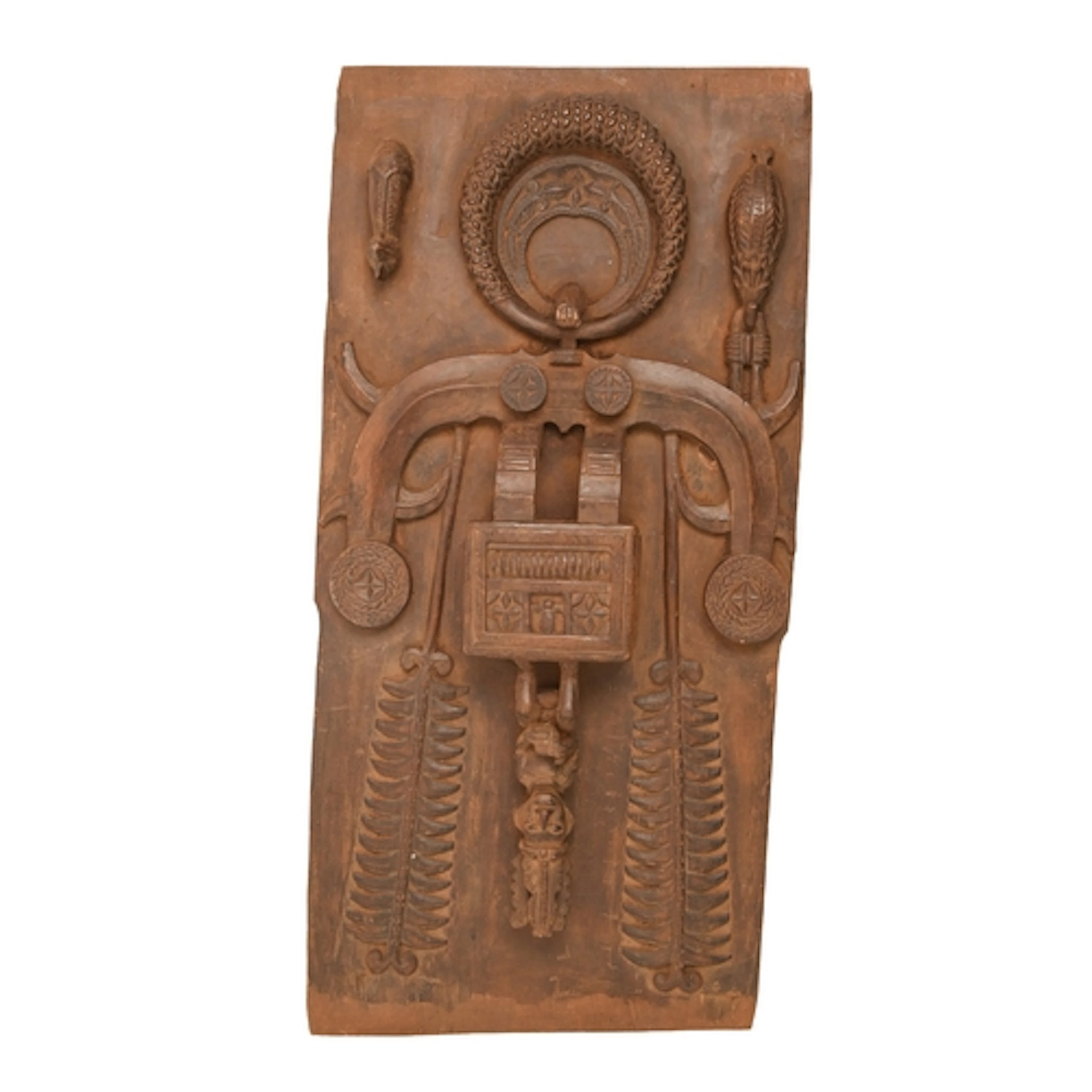
An Indonesian carved wooden ancestor sculpture, Adu Zatua, O...
10/06/2026

€165.16
Stima: €233.23
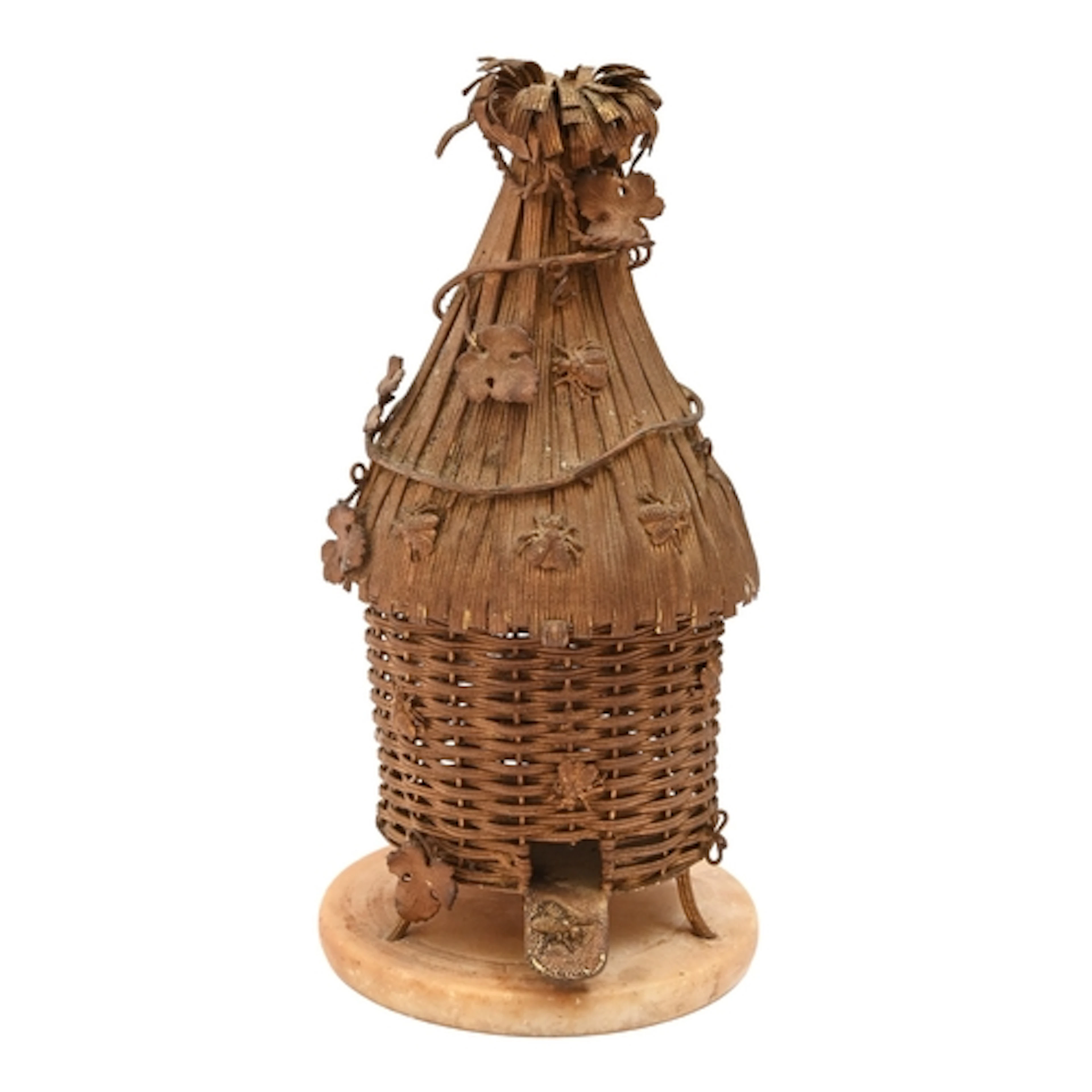
A French gilt wirework box in the form of a bee skep, second...
10/06/2026
€141.57
Stima: €174.92
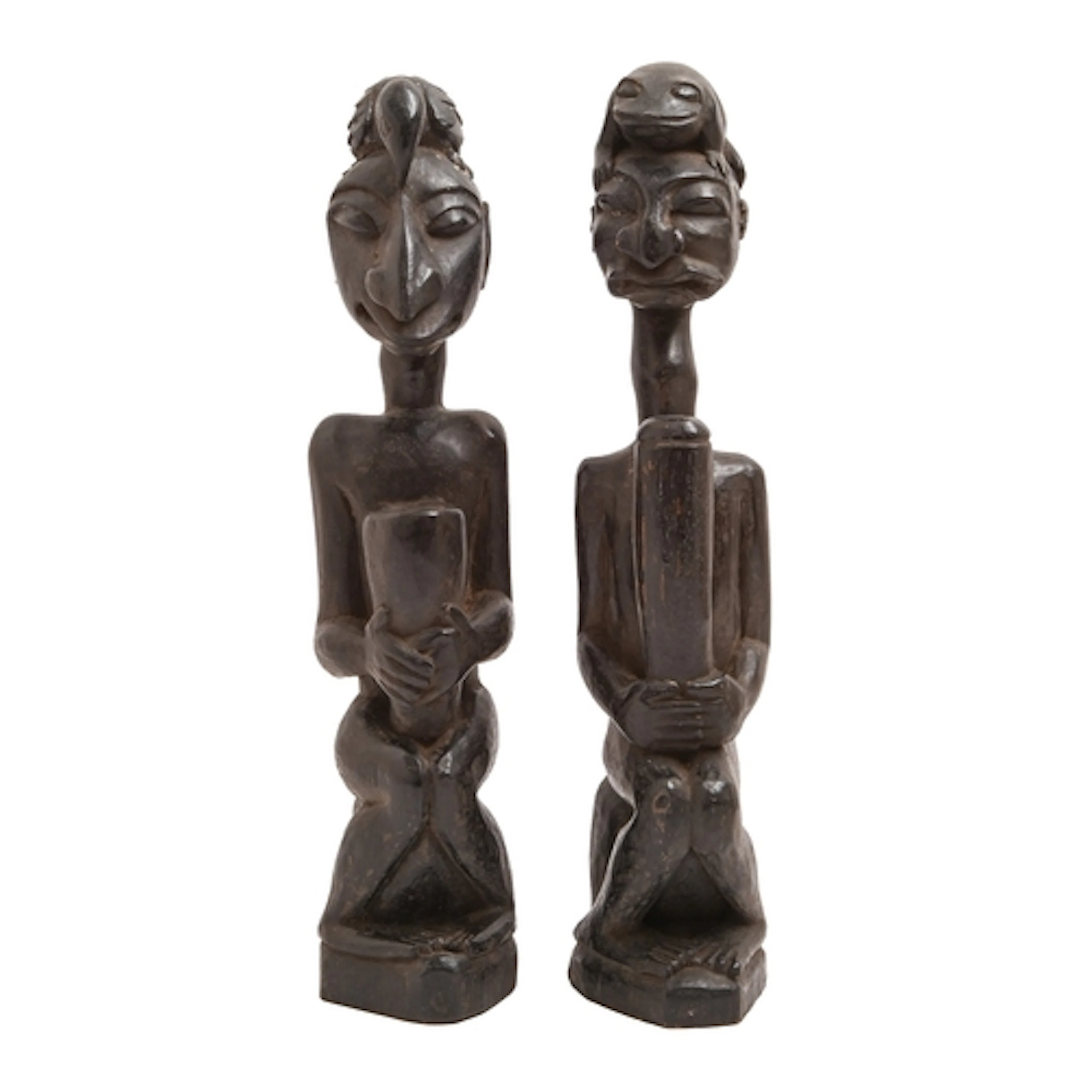
Tribal Art. Two carved blackwood figures, East Africa, 20th ...
10/06/2026
€82.58
Stima: €116.61
OCT 8 | 3:00 PM
Porta la tua asta ai collezionisti di tutto il mondo!
Pubblica ora