
Tutte le aste / Arte, Pittura e Arti Grafiche / Pablo Picasso (after) - Mujer en un sillón (Françoise...

Pablo Picasso (after) - Mujer en un sillón (Françoise...
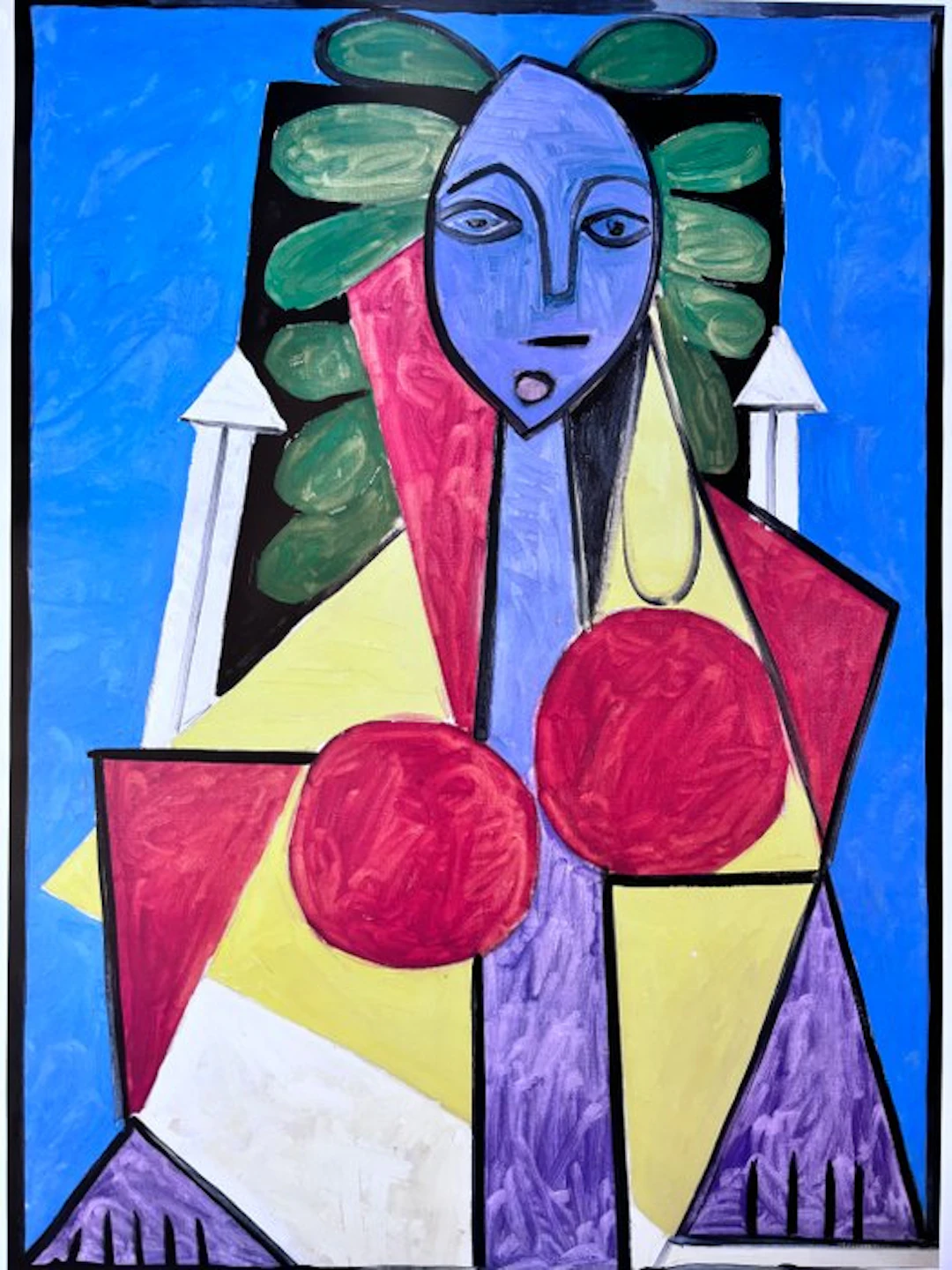
Offset Lithograph Pablo Picasso / Woman in an Armchair (Françoise Gilot) / Paris. 15 June 1946. Copyright @ VEGAP 2008 / Succession Picasso, Paris, Published by @ Museo Picasso Málaga. Original poster Pablo Picasso / Woman in an Armchair (Françoise Gilot) / Paris. 15 June 1946. About the artist: Pablo Ruiz Picasso, the archetype of “the artist,” genius, lively, womanizer... creator of styles, a legend in his own lifetime (which he helped to forge) and, without a doubt, one of the greatest artists in history. He left his mark on each of his many periods, from blue, pink, and black and white to the cubism he invented, then surrealism, abstraction... and because of this immeasurable talent and his enormous output, we are looking at the most famous artist in the history of art. Picasso remains relevant because he was the central figure of all 20th-century art, an experimental artist but one linked to the past and with a body of work that continually admits new interpretations. He was perhaps also the most influential artist. Contemporary art is what it is thanks to (or because of) him. We cannot speak of a conventional biography. He stamped his life on his canvases, and between him and his friends, the cultural elite of the 20th century, they created their own life, their own legend. Biographical details seem irrelevant in the face of the grandeur of his work, although it is riddled with myths, from the puff of smoke that gave life to a newborn artist to the theft of the Mona Lisa in 1911. We cannot speak of a specific style. His stylistic freedom allowed him to move from one style to another without transition. His genius was the main material of his art: in just seconds he could create a masterpiece. He represented the most physical branch of contemporary art, the need to paint, to create in a material form. He was also a celebrity: fame and financial success, but also artistic recognition. And this translated into an endless list of lovers, wives, models... His connection between sex and art is evident. It is estimated that Picasso produced some 13,500 paintings and designs, 100,000 prints or engravings, 34,000 book illustrations, and 300 sculptures or ceramics, as well as having the largest number of museums named after him (“Picasso Museums”). About the artwork: “This stylized portrait of Françoise Gilot (born in 1921) differs markedly from Picasso’s abstract treatments of his models in other periods. Although the painting’s primary elements include circles and right-angled and isosceles triangles, the overall image is not abstract. The careful arrangement of two triangles ensures that almost all of them appear intact, and the sense of continuity thus achieved creates an effect of natural harmony. The figure’s beauty is evident in the clarity of these well-defined forms. Françoise would write that when she told Picasso that Henri Matisse also wanted to paint her portrait, he replied, “Matisse isn’t the only one capable of painting you with green hair.” From that moment on, “her hair took the shape of a leaf, and once he did that, the portrait took the form of a symbolic floral motif. He rendered her breasts with the same curved rhythm.” As simple as nature itself, Françoise appears like the corolla of a flower with a mane of leaves. Unassuming yet regal, she is depicted seated with the pride of a lioness and the majesty of an ancient Egyptian statue. The straight lines of her bulky, rough triangular arms seem sculpted into the canvas. The triangular hands evoke the imposing stone claws of a sphinx. The treatment recalls the hands in a series of portraits of Dora Maar […] from October and November 1941. The complementary colors—the violet-blue of the background and the orange-yellow of the figure—reinforce one another, and their juxtaposition accentuates the sharp definition already imposed by the geometric composition of the woman’s body. In contrast to the thick application of pigment on the cheeks and forehead, and on the back of the chair framing the head, these light brushstrokes leave parts of the canvas exposed. Although her features can be traced back to earlier works created during the German occupation, Françoise’s presence in Picasso’s oeuvre did not become established until April 1946, and is generally associated with the Vallauris period, 1947, and 1954.” Size: 58 x 61 cm. All posters have been selected by art lovers for art lovers. Collector's item. This item is shipped certified with a tracking number and carefully protected.
Stima:€150
Vai all’astaVedi tutti gli oggetti diCatawikioArte, Pittura e Arti Grafiche
Stima:
€150
Oggetti simili


Risultati d’asta per oggetti simili
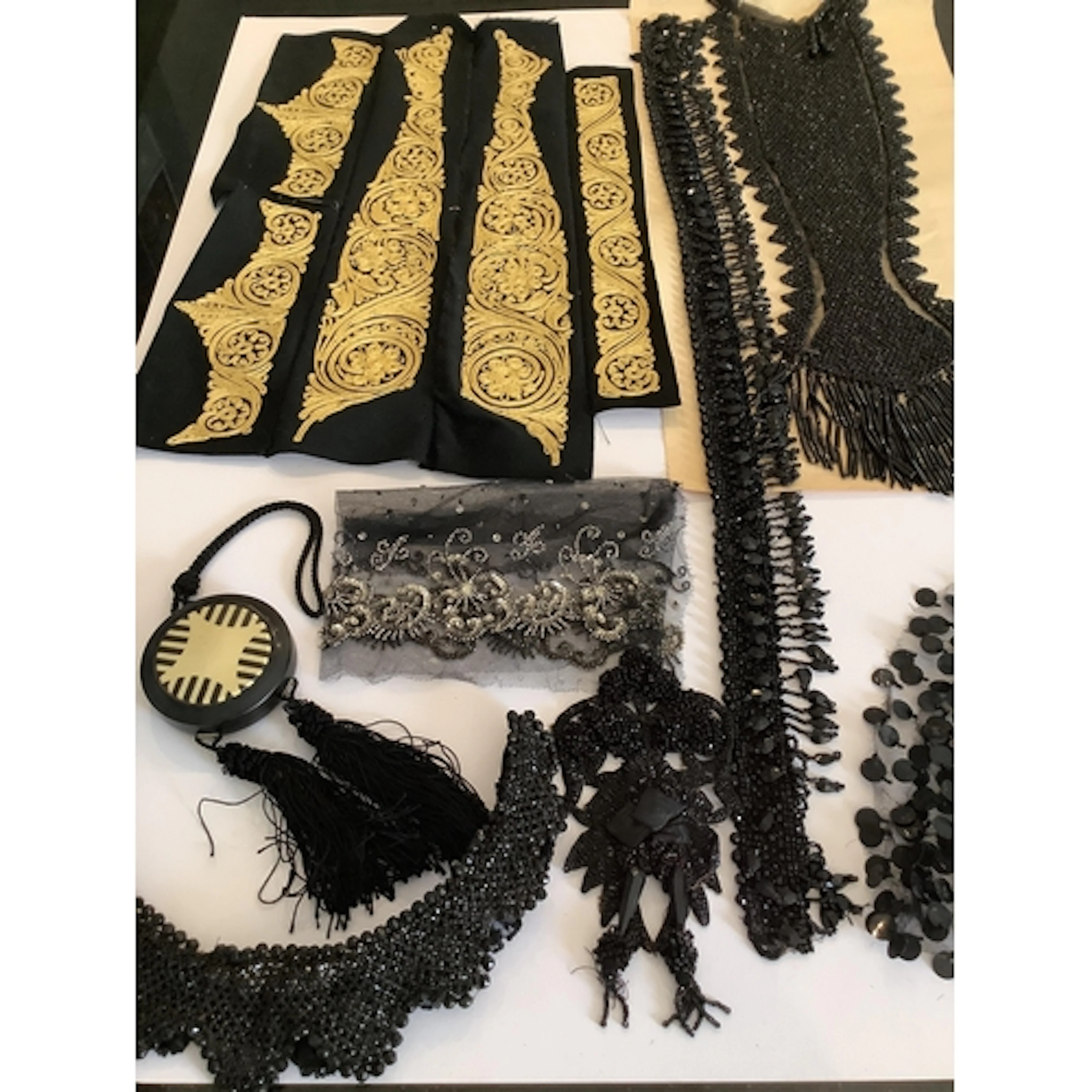
A collection of Victorian and 20th century Jet beading and s...
10/12/2026

€224.87
Stima: €176.42
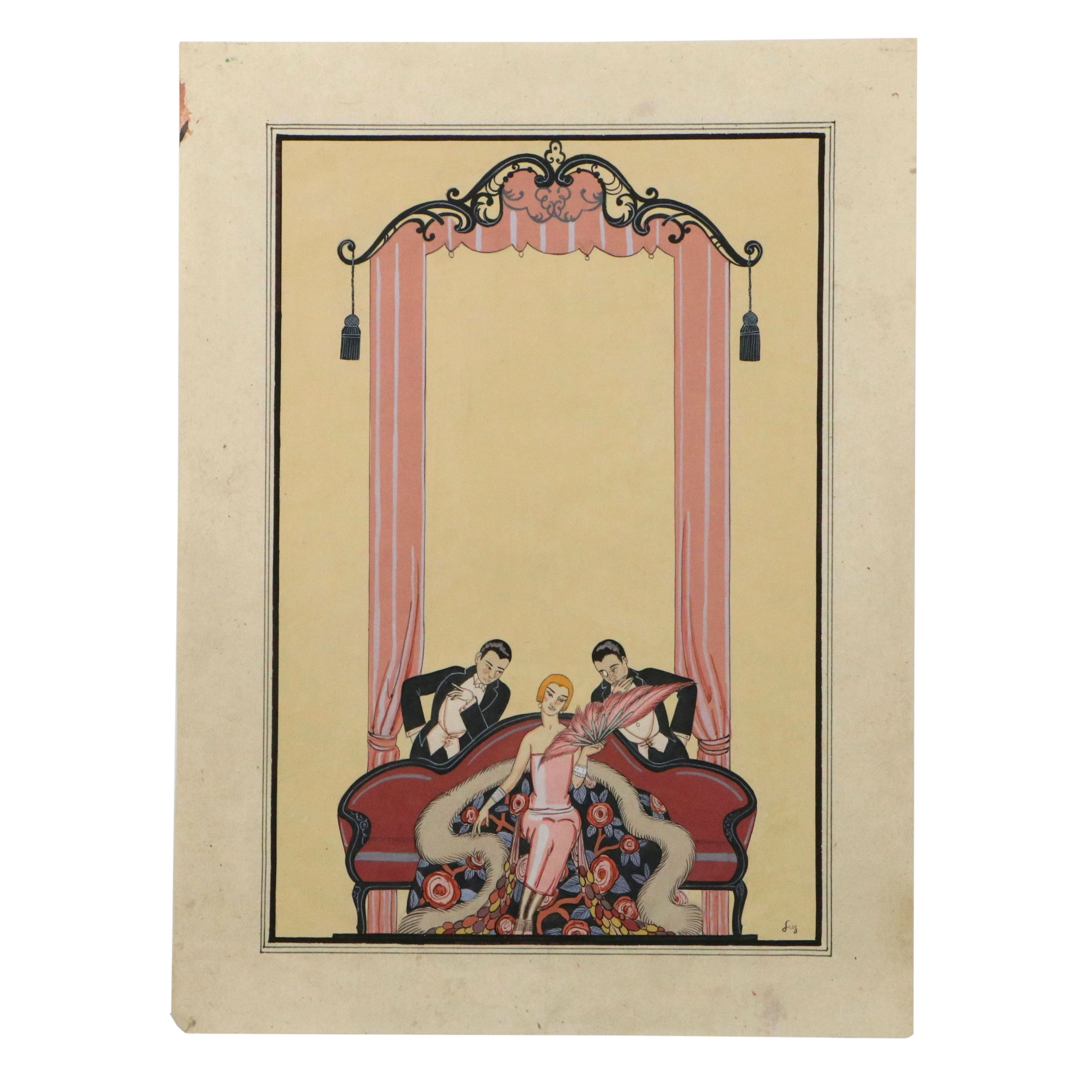
After Georges Barbier Art Deco Gouache Illustration of Lady with Suitors, 1920s
10/12/2026
€98.21
Stima: €27.66

WW1 Imperial Navy war ensign flag approx. 6ftx3 stamped alon...
10/10/2026
€70.89
Stima: €70.59

Porta la tua asta ai collezionisti di tutto il mondo!
Pubblica ora