







NOV 8 | 1:00 PM

Tutte le aste / Etnografia / Mblo entertainment mask - Baule - Côte d'Ivoire


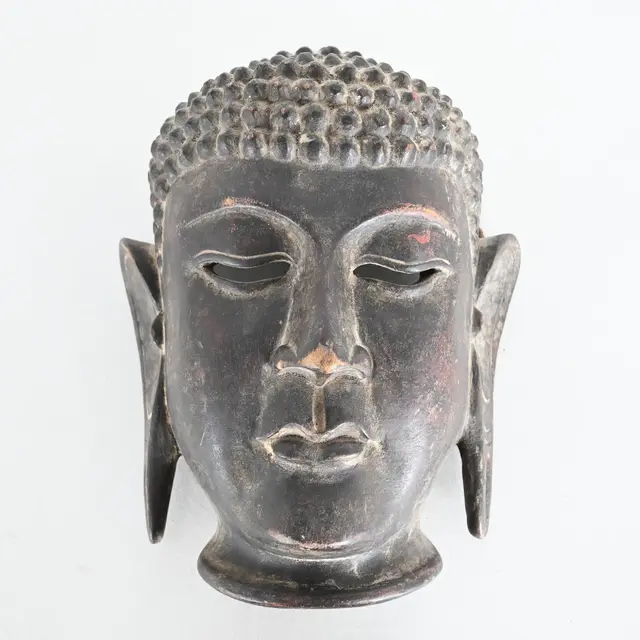
Ivory Coast Baoulé Wood Height: 390 mm Width: 190 mm Depth: 190 mm Small repair at the top middle on the back. Baoulé Portrait Mask (Mblo / Ndoma) Origin and Cultural Context • The Baoulé People: This mask comes from the Baoulé (or Baule) ethnic group, mainly located in the central regions of Ivory Coast. The Baoulé are renowned in African art for their extreme refinement, naturalism, and attention to detail in their wood carvings. • The Mblo / Ndoma Typology: This object is related to the Mblo type of masks (sometimes called Ndoma). These are portrait masks that present a highly idealized representation of a respected community member (most often a woman or a dignitary), created to celebrate their physical beauty, grace, or moral qualities. Physical and Aesthetic Characteristics The analysis of the object reveals stylistic elements typical of this courtly art: • Pigmentation and contrast: The face bears a bright red patina that contrasts strongly with touches of black and white pigments highlighting the gaze and morphological details. • The sophisticated coiffure: The hair, carved in relief with fine regular geometric grooves, is topped with a bun or elaborated crest. Among the Baoulé, a carefully arranged coiffure is a symbol of prestige, social order, and elegance. • Scarifications: Small raised marks (ritual scarifications) are arranged symmetrically on the forehead and at the corners of the eyes, features of traditional aesthetic and identity criteria. • Facial expression: Arched eyebrows and almond-shaped eyes give the mask a serene and inward look. The slightly open mouth, showing carved teeth, adds a touch of naturalism and expressiveness that enlivens the piece. • The crenellated collar: The lower part of the face is encircled by a beard or stylized ornament in the form of a black toothed frieze, completing the overall balance of the mask. Ritual Use and Function Unlike other masks that are purely sacred or secret, the Mblo mask is mainly used in a setting of public entertainment and celebration. • Joyful dances (Gbagba): These masks appear at the end of festive ceremonies or during funerals of important people. The dancer (always a man), fully costumed in fabrics or raffia fibers, mimics scenes of daily life or pays homage to the person whose mask is depicted. Women and children are fully allowed to attend these performances. • Reversing design and ergonomics: The inner side reveals the artisan’s work. The interior is entirely hollowed out with an adze, matching the wearer’s face. The side openings were used to attach cords or fabric to secure the mask. There is also a small transverse opening at the level of the mouth of the sculpture, serving as a peephole or breathing opening for the dancer during the performance. Fast and protected shipping. Parcels are sent with a tracking number. Delivery in 1 to 3 days in France with Chronopost, 2 to 5 days throughout the European Union with Chronopost International. Delivery with Colissimo International to the rest of Europe and worldwide We speak english. Mask african art Afrikanische Maskenkunst arte de máscaras africanas arte delle maschere africane statue african art Arte de estatuas africanas arte delle statue africane Afrikanische Maskenkunst Máscara de estatua de galería de arte africano
Stima:€150
Vai all’astaVedi tutti gli oggetti diCatawikioEtnografia
Stima:
€150


NOV 8 | 1:00 PM


Porta la tua asta ai collezionisti di tutto il mondo!
Pubblica oraIscrivendoti, accetti la politica sulla privacy. Annulla l'iscrizione in qualsiasi momento.
Barnebys HQ
Brahegatan 10
BOX 5038
114 37 Stockholm
