


Tutte le aste / Arte Antica / Levant Bronze Canaanite Bronze Statuette of a Deity with Raised Arms - 5.5 cm

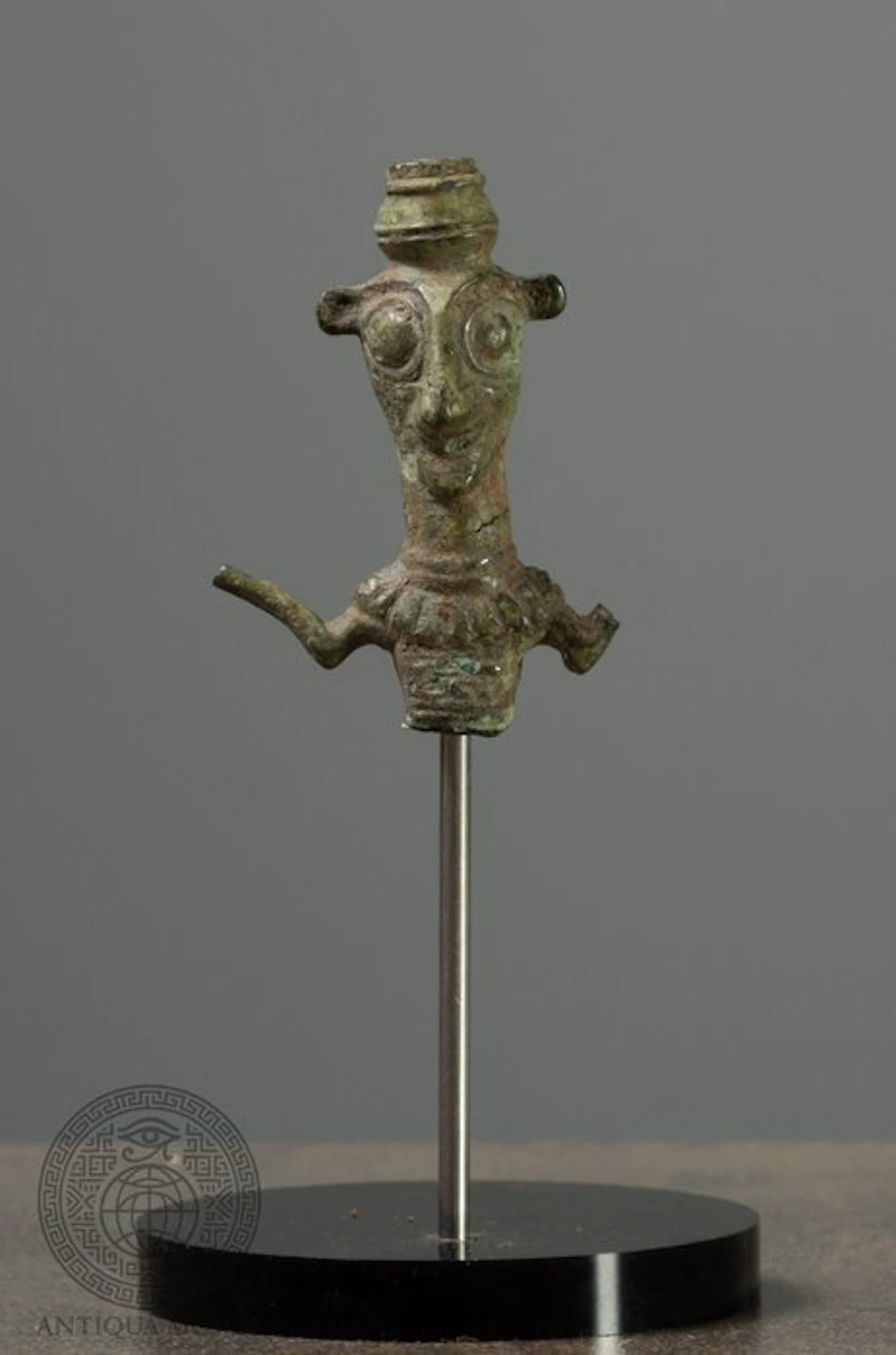
An expressive ancient Canaanite bronze statuette representing an anthropomorphic deity or divine figure, attributed to the Levantine cultural sphere of the 2nd millennium BC. The figure is conceived frontally and displays the strongly stylised features characteristic of ancient Near Eastern small-scale bronze sculpture. The elongated head is dominated by a pair of exceptionally large, prominent circular eyes. A long and narrow nose defines the centre of the face, while the mouth and chin are rendered in a simplified but distinctly sculptural manner. On either side of the head are strongly projecting disc- or coil-shaped ears, adding to the striking and highly individual appearance of the figure. The head is crowned by a tall, carefully modelled headdress, composed of several horizontal or profiled sections. Its uppermost part appears recessed or open. Together with the exaggerated eyes and elongated facial proportions, the elaborate headdress gives the figure a pronounced hieratic and ceremonial character. The long neck terminates in a broad collar or pectoral ornament, articulated by numerous radiating ribs. This strongly modelled element forms a visually prominent transition between the head and upper body. Particularly striking is the position of the arms. They extend outward from the shoulders before bending upwards on either side of the body. The extremities of the arms or hands are only partially preserved. This formalised raised-arm gesture contributes strongly to the ritual or cultic appearance of the figure. The lower part of the body is no longer preserved. The surviving fragment consists of the head and headdress, neck, upper torso and raised arms. Cultural Attribution and Dating The statuette can stylistically be placed within the tradition of Levantine and Canaanite bronze figurines of the 2nd millennium BC. Small cast bronze figures formed part of the religious material culture of the ancient Levant and could represent deities or other figures associated with cult and ritual practice. Characteristic features include highly stylised human proportions, strongly emphasised facial features, elaborate headdresses and formalised gestures. The combination of the prominent eyes, tall headdress, decorated chest area and raised arms supports an attribution to this broader Levantine tradition. On stylistic grounds, a dating to approximately 1600–1300 BC, spanning the later Middle Bronze Age and early Late Bronze Age, appears plausible. In the absence of a documented archaeological find context or an identifying inscription, the precise identity of the represented figure cannot be established with certainty. It is therefore preferable to describe the subject more generally as an anthropomorphic deity or divine figure, rather than assigning it to a specific named god. Condition Fragmentary, as shown. The head with headdress, neck, upper torso and raised arms are preserved. The lower body, including the legs and feet, is missing. The ends of the raised arms or hands are incomplete and show ancient losses. The bronze surface displays age-related corrosion, minor cracks and losses, together with an attractive green, brown and dark brown patina and areas of mineral encrustation. Despite its fragmentary condition, the most characteristic sculptural details remain clearly visible, particularly the large circular eyes, elongated facial features, elaborate headdress and ribbed collar or pectoral. On the reverse are older adhesive residues or accretions, probably associated with a previous mounting. Please examine all photographs carefully, as they form an integral part of the condition description. Display Mounted on a modern presentation stand. The modern display stand is used solely for presentation and is not part of the ancient object. Provenance Formerly in the Madeleine & Erich Dammann Collection, Germany. Acquired during the collectors’ extensive travels between 1950 and 1970. The collection is documented in Germany by 1970 through historical photographs of the family residence and subsequently remained in continuous family ownership. The objects were acquired privately during the collectors’ travels. As was customary for private purchases made at local markets during the 1950s and 1960s, purchase receipts or invoices were generally neither issued nor requested. Historical photographs and biographical documentation relating to the Dammann Collection are available and support the long-standing provenance of the collection.
Stima:€850
Vai all’astaVedi tutti gli oggetti diCatawikioArte Antica
Stima:
€850
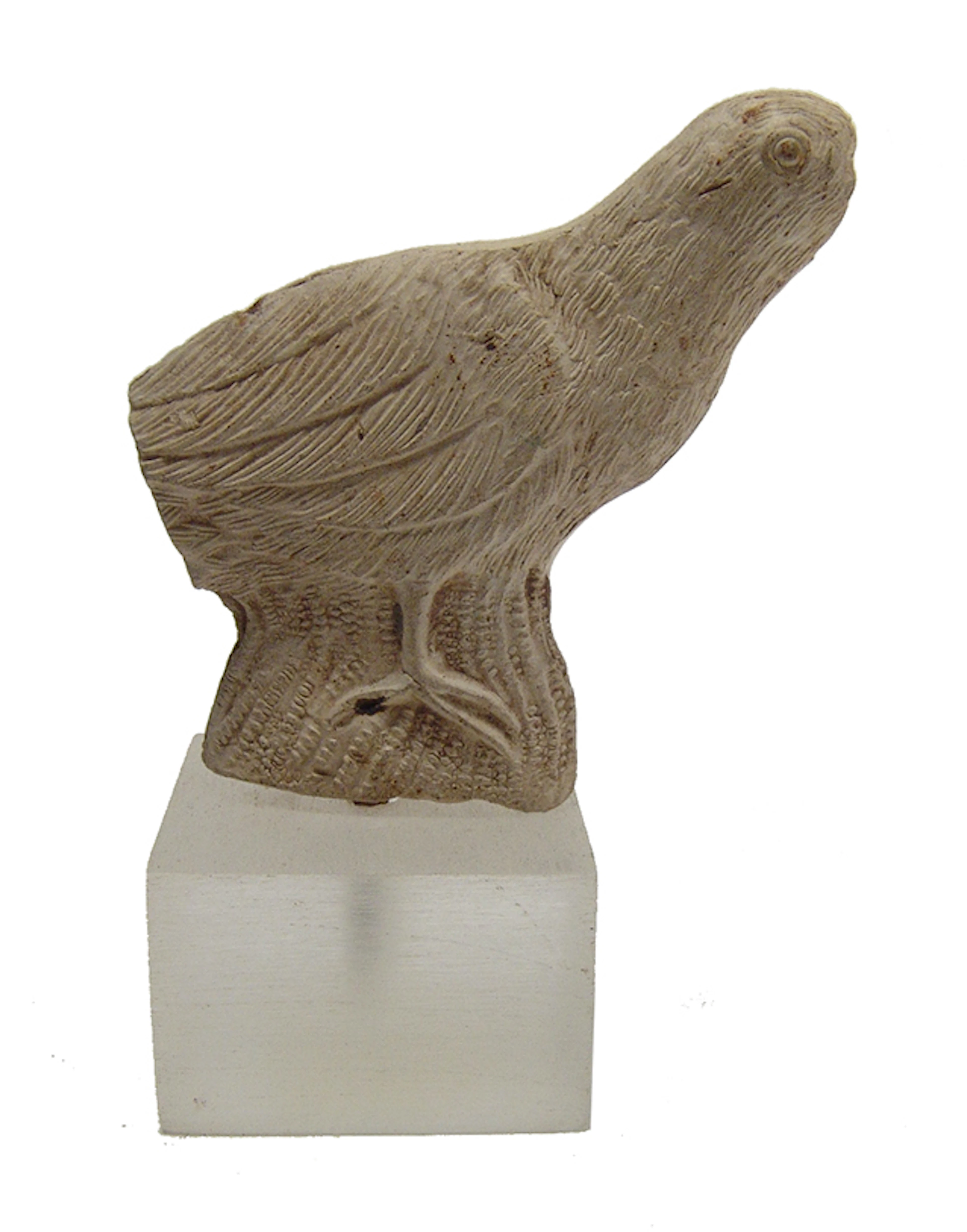
An Egyptian stucco figure of a bird, Late Period
07/02/2017
€218.5
Stima: €218.5
Porta la tua asta ai collezionisti di tutto il mondo!
Pubblica oraIscrivendoti, accetti la politica sulla privacy. Annulla l'iscrizione in qualsiasi momento.
Barnebys HQ
Brahegatan 10
BOX 5038
114 37 Stockholm
