


OCT 8 | 3:00 PM

Porta la tua asta ai collezionisti di tutto il mondo!
Pubblica oraIscrivendoti, accetti la politica sulla privacy. Annulla l'iscrizione in qualsiasi momento.
Barnebys HQ
Brahegatan 10
BOX 5038
114 37 Stockholm
Tutte le aste / Libri, Mappe & Manoscritti / Jacques-Fabien Gautier d’Agoty and Nicolas Jadelot...

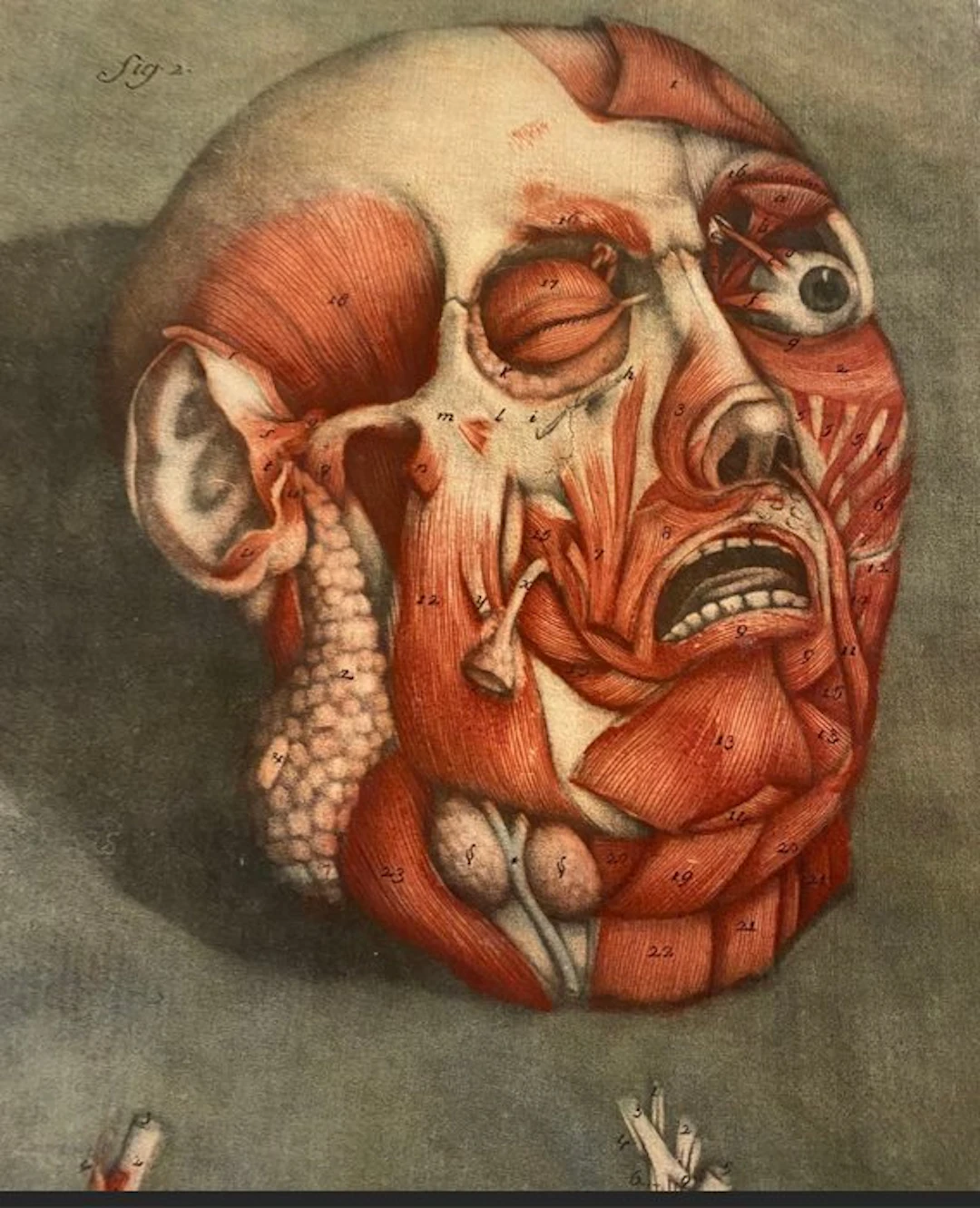
THE HUMAN BODY TRANSFORMED: GAUTIER D’AGOTY’S MASTERPIECE OF COLOUR MEZZOTINT ANATOMY Jacques-Fabien Gautier d’Agoty and Nicolas Jadelot, Cours complet d’anatomie. Nancy: Jean-Baptiste-Hyacinthe Leclerc, 1773. Folio (600 × 480 mm): [4], 25, [1] pages, XV leaves of plates, with title vignette and tail piece. Thus: engraved title page, ‘Plan of the Work’ and ‘Privilege’ (two pages, in double columns), 25 pages of explanation by Nicolas Jadelot in two columns, including details of each plate. This is followed by 15 coloured mezzotint plates. The anatomical plates are preceded by tipped-in stubs bearing contemporary manuscript annotations identifying muscles and other anatomical features on several plates. Beautifully preserved in its original three-quarter calf over mottled boards. First edition. A magnificent copy of one of the most spectacular anatomical atlases of the eighteenth century, complete with the celebrated plates of Apollo and Venus, which are frequently lacking. Anatomy Transformed: Colour, Texture, and the Spectacle of the Human Body D’Agoty’s Cours complet d’anatomie, produced in collaboration with the Nancy physician and professor Nicolas Jadelot, ranks among the most ambitious and visually arresting anatomical publications of the French Enlightenment. Monumental in scale and dazzling in execution, it presents the human body not merely as an object of scientific inquiry, but as a dramatic visual spectacle—classical, theatrical, anatomical, and unsettlingly beautiful. The fifteen plates unfold as a carefully conceived sequence, progressing from idealised classical figures to exposed musculature with “écorchés” (flayed figures showing muscles and bones) skeletonised extremities, and increasingly direct anatomical revelation. The celebrated opening images of Apollo and Venus establish the work's extraordinary premise: the body is first encountered through the language of antique beauty before gradually becoming an object of dissection and scientific study. As Colin Franklin memorably observed, the plates may be read "as a scheme of progress, from the classical figures at the start, to skeletal hands and feet; or we can see it as a strip performance, from fully clad nudes by stages to muscle and bone." The result is unlike almost any other anatomical publication of the period, functioning simultaneously as scientific atlas, artistic performance, and technical tour de force. Gautier d’Agoty's figures occupy a compelling space between life and artifice. Flesh appears luminous and tactile, muscles emerge from velvety shadows, and exposed anatomical structures possess an almost sculptural presence. The images are at once seductive and unsettling, inviting close medical scrutiny while rewarding aesthetic contemplation. It is precisely this tension between clinical observation and theatrical display that gives the Cours complet its enduring fascination. A Revolution in Colour Printing The work occupies a pivotal place in the history of colour printing. Gautier d’Agoty had been associated with Jacques-Christophe Le Blon, the pioneering inventor of colour mezzotint printing, whose process employed separate plates inked in primary colours. Following Le Blon's death, Gautier d’Agoty refined and vigorously promoted his own adaptation of the technique, introducing a fourth plate printed in black to deepen tonal values, strengthen shadows, and heighten the illusion of three-dimensional form. The plates in the Cours complet d’anatomie demanded an exceptional degree of labour, technical skill and precision. For each image, separate copperplates were prepared for the different colours. Rather than being engraved with lines, each plate was first roughened across its entire surface with a finely toothed rocker, creating a burr that would print as a rich, velvety black. The image was then brought into light by painstakingly scraping and burnishing selected areas of the plate, smoothing the burr to produce progressively lighter tones. Each plate was inked separately and printed in exact register with the others; even the slightest misalignment could spoil the illusion of volume and colour. The process was painstaking, expensive, and extraordinarily demanding, requiring a level of craftsmanship achieved by very few eighteenth-century workshops. Some surviving copies of Gautier d’Agoty's anatomical works were later coated with gum arabic or varnish to imitate the surface sheen of paintings. These coatings have often yellowed or oxidised over time, obscuring the brilliance and freshness of the original impressions. The present copy is especially desirable for remaining unvarnished, preserving the clarity, luminosity, and intended surface quality of the original colour printing. Original cost The title page announces the price of the book, unbound, as “90 livres”. The “livre” here is the livre tournois (₶), the French accounting currency of the Ancien Régime, used pricing books, wages, rents, and goods. A skilled craftsman, say a printer or bookbinder, would need to work for 36 days to be able to buy the Cours complet d’anatomie. A provincial physician might earn 1000 livres a year and for a well-established doctor the book would cost about 5% to 6% of annual income. The cost of the Cours complet d’anatomie today would be around a €2,000–5,000. Finally, by comparison, ordinary editions of literary works by Voltaire might cost only a few livres, Montesquieu’s De l’esprit des lois (1748) around 10–20 livres, and Rousseau’s Julie, ou la Nouvelle Héloïse (1761) or Émile, ou de l’éducation (1762) generally around 12–15 livres depending on the edition. The price of Albinus’s Tabulae sceleti et musculorum corporis humani (Leiden, 1747) is more difficult to establish than Gautier d’Agoty’s atlas because the original publisher’s retail price is not as consistently recorded. A reasonable estimate for the first edition is that it sold for approximately 100 livres tournois. A Sumptuous Enlightenment Atlas Although conceived under the title Cours complet d’anatomie, the projected series was never carried beyond this volume, making the 1773 edition the complete published form of the work. It belongs to Gautier d’Agoty's celebrated sequence of anatomical publications, encompassing his investigations of musculature, the viscera, the sensory organs, and the structure of the human body. Collectively these works established him as one of the most original anatomical illustrators of the eighteenth century and among the boldest innovators in colour printing before the modern era. The present copy is especially appealing not only for its imposing format and original binding, but also for the contemporary manuscript anatomical annotations on the tipped-in stubs preceding the plates. These additions suggest active use by an early physician, student, or teacher, transforming the atlas from a luxurious printed object into a practical instrument of anatomical instruction. An enormous, sumptuous, and highly theatrical Enlightenment atlas: a landmark of colour mezzotint printing and one of the most visually memorable anatomical books of the eighteenth century. SOME REFERENCES Choulant, Ludwig. History and Bibliography of Anatomic Illustration, translated and annotated by Mortimer Frank: 265–274. Franklin, Colin and Charlotte Franklin. A Catalogue of Early Colour Printing: From Chiaroscuro to Aquatint: 43–44, 49-50. Rodari, Florian (ed.). Anatomie de la couleur: L’invention de l’estampe en couleurs. Paris, 1996. The standard modern study of Gautier d’Agoty and eighteenth-century colour printing. Mauriès, Patrick, Corinne Le Bitouzé, and Anne-Marie Garcia. Essais et traités anatomiques. Paris, 2016. A modern facsimile edition and critical study of Gautier d’Agoty’s principal anatomical publications. Singer, Hans W. Arnauld-Eloi Gautier d’Agoty: Beschreibung der von ihm ausgeführten fünfzehn anatomischen Tafeln. Leipzig, 1928. D. R. R., and Dale R. Roylance, “The Eighteenth Century: Search for Tone,” Yale Art Gallery Bulletin 27/28 (1962) : 24–34. Issued during a special display of the Cours d’anatomie: Peter Mitchell and Martin Crampin, “The Tradition of ‘Living’ Anatomy: Jean-Nicolas Jadelot, Cours Complet d’anatomie 1773,” in Treasures: The Special Collections of the University of Wales Trinity Saint David, edited by John Morgan-Guy (2022): 136–41. SOME AUCTION AND RETAIL PRICES The work is encountered more frequently in a fragmentary state, with the plates dispersed and offered individually. At the time of writing, Gaëlle Cambon (Paris) offers a single plate from the Cours complet for €1,200; Erik Zink lists two plates at €8,000; and Alain Brieux offers individual plates priced between €3,000 and €3,500 each. The strength of the market for Gautier d’Agoty's colour mezzotints is further demonstrated by the pricing of his earlier Anatomie de la tête (1748), comprising just eight mezzotint plates, which was sold at Forum Auctions on 16 July 2028 for £23, 400 (= €25, 500). This copy was described as ‘bound without privilege and advertisement, faint scattered spotting to mounts, not affecting text or plates, modern calf-backed boards, light rubbing’.
Stima:€19,000
Vai all’astaVedi tutti gli oggetti diCatawikioLibri, Mappe & Manoscritti
Stima:
€19,000
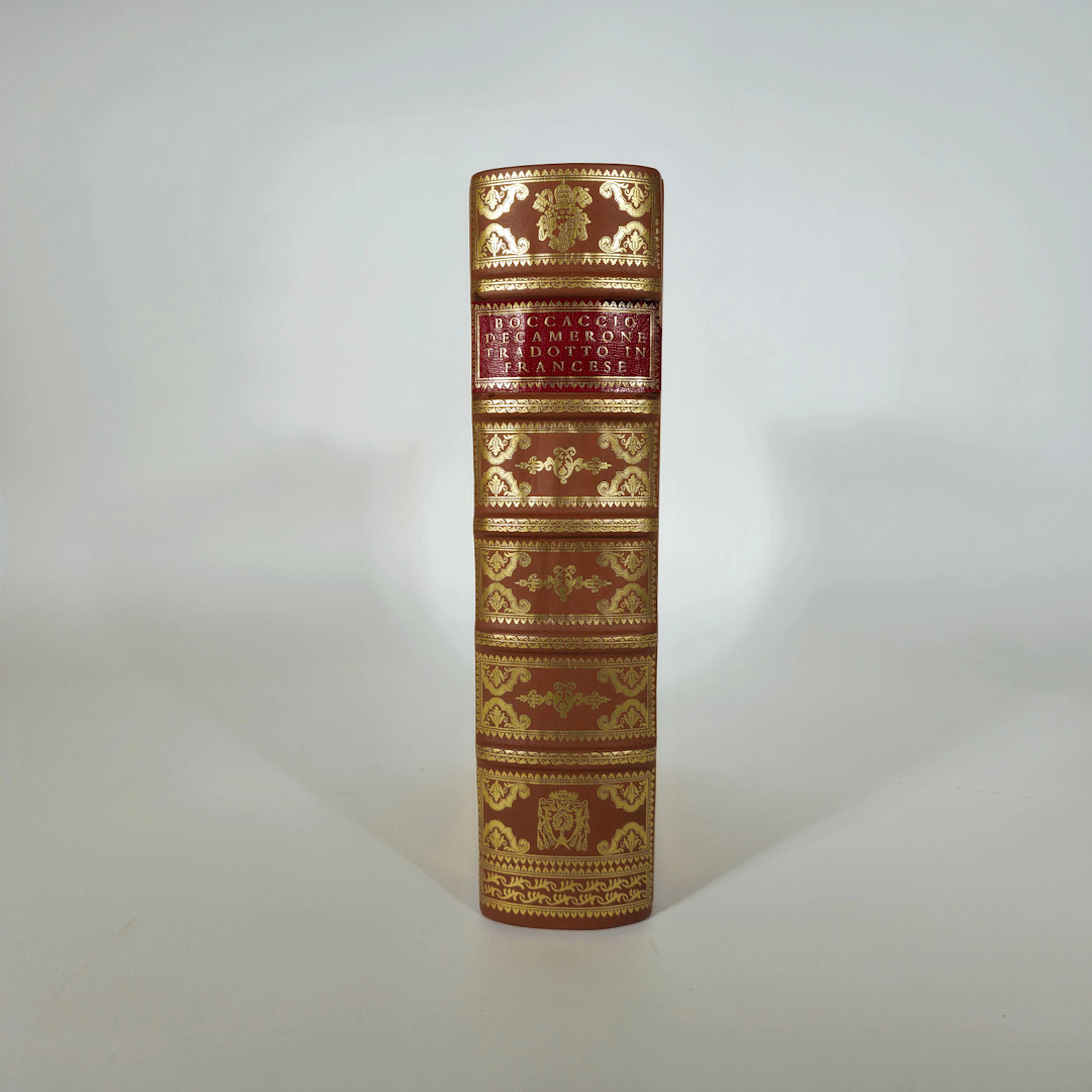
LIBRO FACSÍMIL BOCCACCIO DECAMERONE, TRADOTTO IN FRANCESE (COD. PAL.
10/05/2026
€110
Stima: €250
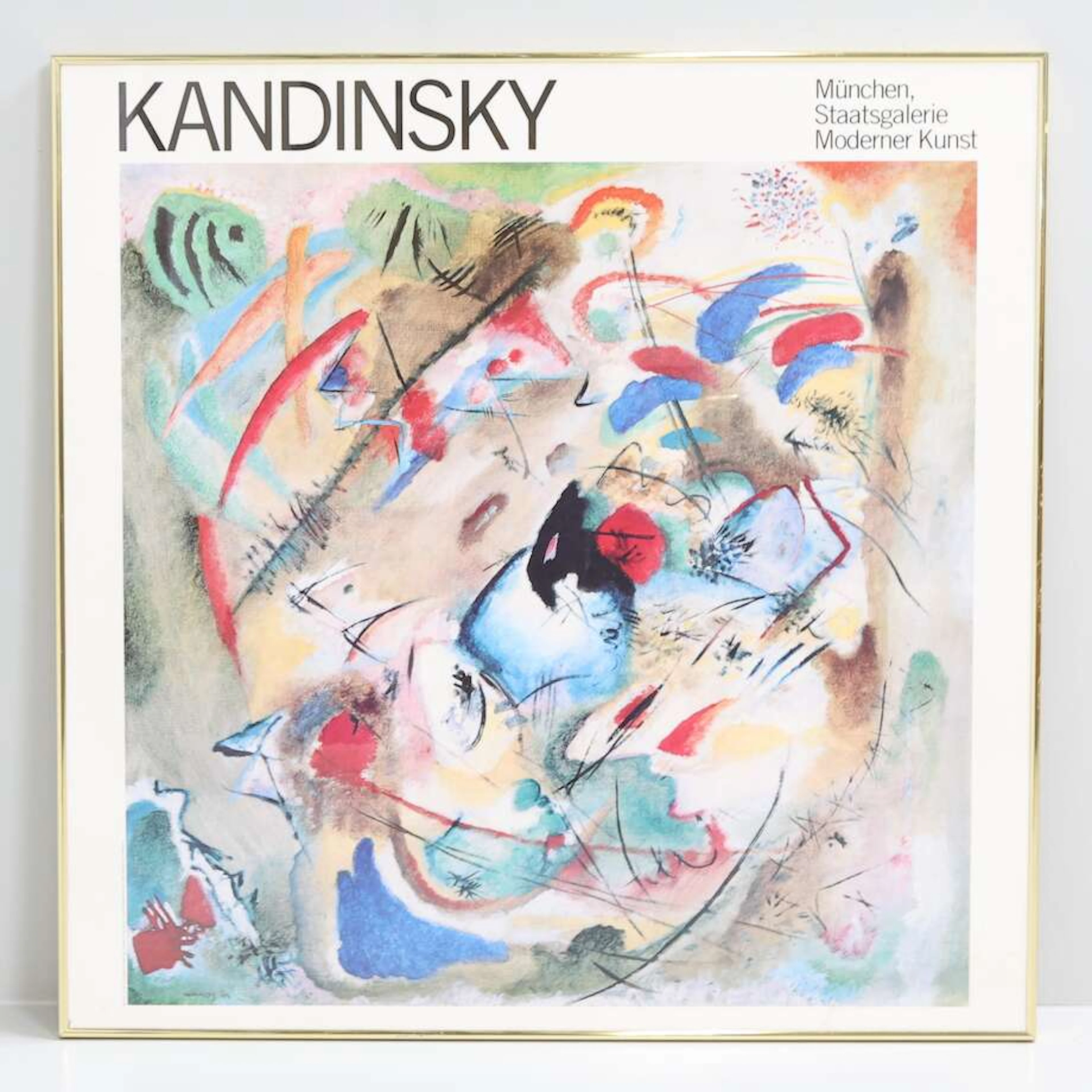
OCT 8 | 3:00 PM
Porta la tua asta ai collezionisti di tutto il mondo!
Pubblica ora

TINTINS ÄVENTYR / ENHÖRNINGENS HEMLIGHET, första svenska upplagan 1961.
10/05/2026
€44.43
Stima: €88.46
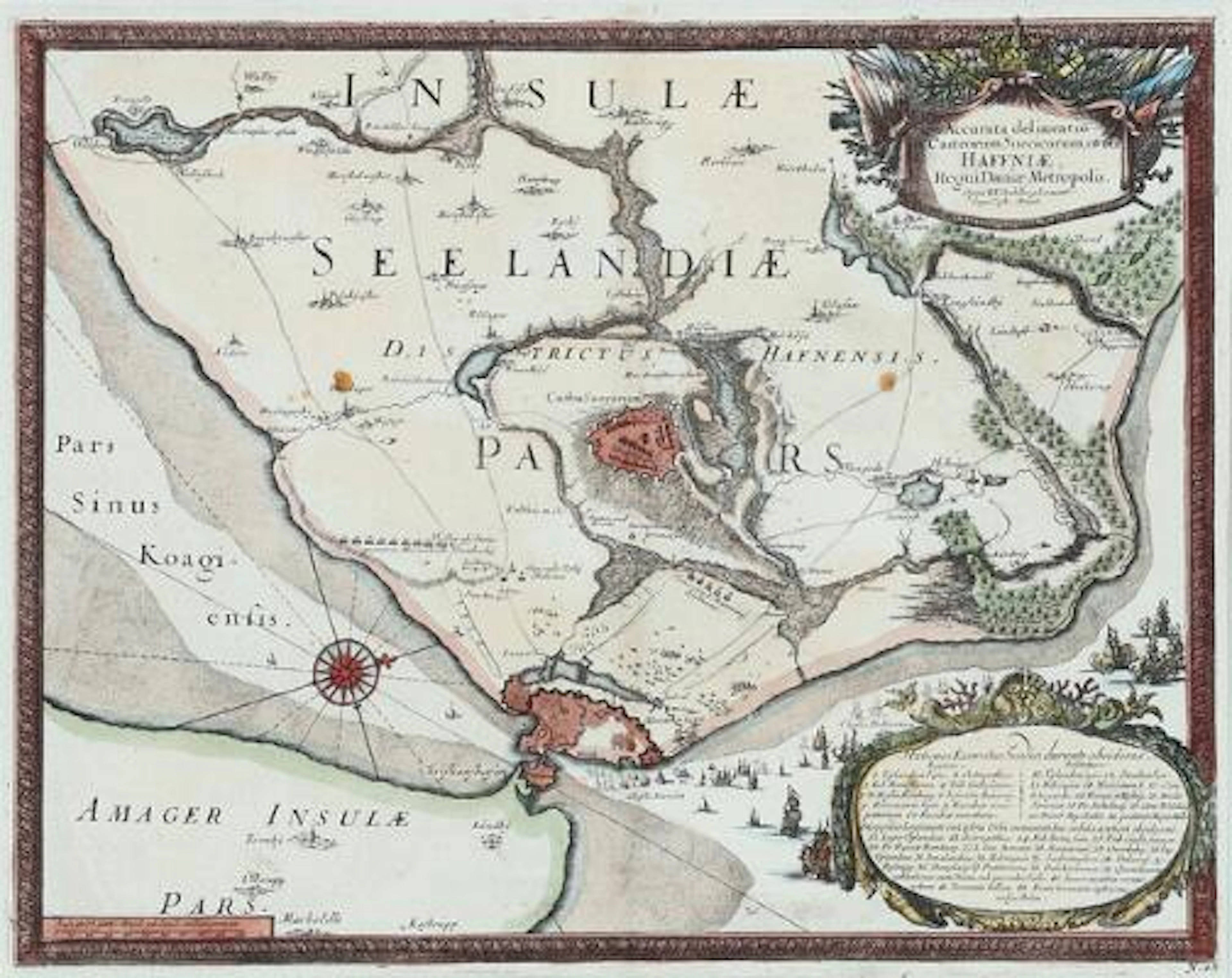
Erik Dahlbergh: "Haffniæ, Regni Daniæ Metropolis". C. 1660. Hand coloured
10/05/2026

€428.08
Stima: €294.36