
Tutte le aste / Arte, Pittura e Arti Grafiche / Henri Matisse (1869-1954), after - Nu Bleu II - SIAE licensed print - 1999

Henri Matisse (1869-1954), after - Nu Bleu II - SIAE licensed print - 1999
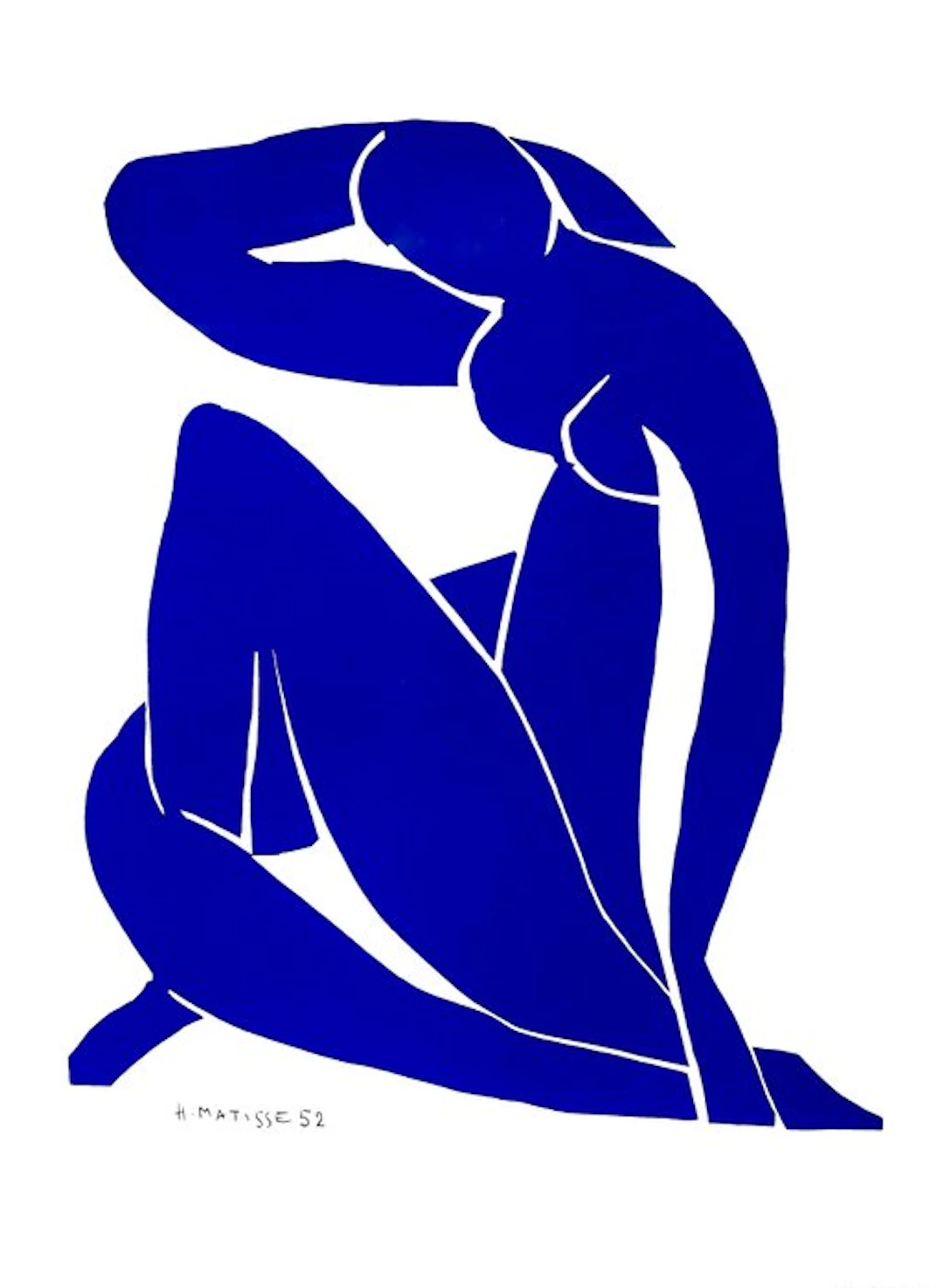
Offset lithograph after Henri Matisse (*) Reproduction of the work “Nu Bleu II,” created by Matisse in 1952 and part of the collection of the Centre National d’Art Georges Pompidou. Print authorized by the Matisse Estate. Published by SIAE Signed on the plate. Specifications: - Support dimensions: 60 x 45 cm - Year: 1999 - Condition: Excellent (this work has never been framed or exhibited, and has always been kept in a professional art folder, thus in perfect condition). The work will be carefully handled and packed in a reinforced flat cardboard package. The shipment will be tracked with a tracking number. The shipment will also include full insurance for the final value of the work with full reimbursement in case of loss or damage, at no cost to the buyer. (*) Henri Matisse was born in 1869 in Cateau-Combsais (France). Like Pierre Bonnard, Matisse studied Law. He began painting in 1890 and attended classes at the Académie Julian (1891-1892). He enrolled in the École des Beaux-Arts in Paris in 1892 and joined Gustave Moreau’s studio. The landscapes and still lifes he painted in that period are of a classical style, while giving color a preeminent importance. His first solo exhibition took place in 1904. The year before, Matisse had co-founded the Salon d’Automne and was an integral part of the group “La cage aux fauves” in 1905. Matisse is the one who truly led the Fauvism movement that provoked so much controversy; the artist applies vibrant, flat colors on the canvas that convey the intensity of his emotions, simplifies forms and outlines them with a black contour. Travel to sunny countries (Corsica, the south of France, Algeria, Spain, Tahiti…) confirms his inclination to privilege color. Matisse painted landscapes, portraits, and still lifes with figures. In 1907, the artist opened a painting school, the Matisse Academy, in his Paris studio. In 1910 he published “Notes of a Painter,” in which he stated: “what I seek above all is expression.” The arabesque is among the motifs of this expression around 1910. He painted interiors, studios, nudes. His free treatment of color and form provoked scandal at the Armory Show, in which he participated in 1913. After World War I, Matisse devoted himself to portraying female figures, odalisques posing for him in garish, iridescent settings with arabesque and floral motifs. Matisse settled in Nice in 1921, where he would remain for the rest of his life. He drew series, etched, illustrated, created frescoes, staged theater decor and costumes, modeled busts and female nudes, painted, and entered a new phase of experimentation starting in 1947: he cut and pasted papers enhanced with added gouache; his work became more abstract. Matisse created the album “Jazz” in 1947 and another series of “Interiors” according to the same scheme. Matisse died in Nice in 1954.
Stima:€150
Vai all’astaVedi tutti gli oggetti diCatawikioArte, Pittura e Arti Grafiche
Stima:
€150
Oggetti simili

Risultati d’asta per oggetti simili
Aldo van den Nieuwelaar Wand- / Tischleuchte 'Ming', 1968 (Entwurf)
10/13/2026

€1,100
Stima: €1,200
Porta la tua asta ai collezionisti di tutto il mondo!
Pubblica ora