
Tutte le aste / Libri, Mappe & Manoscritti / Hartmann Schedel / Wohlgemut / Pleydenwurff / Durer - The...

Hartmann Schedel / Wohlgemut / Pleydenwurff / Durer - The...
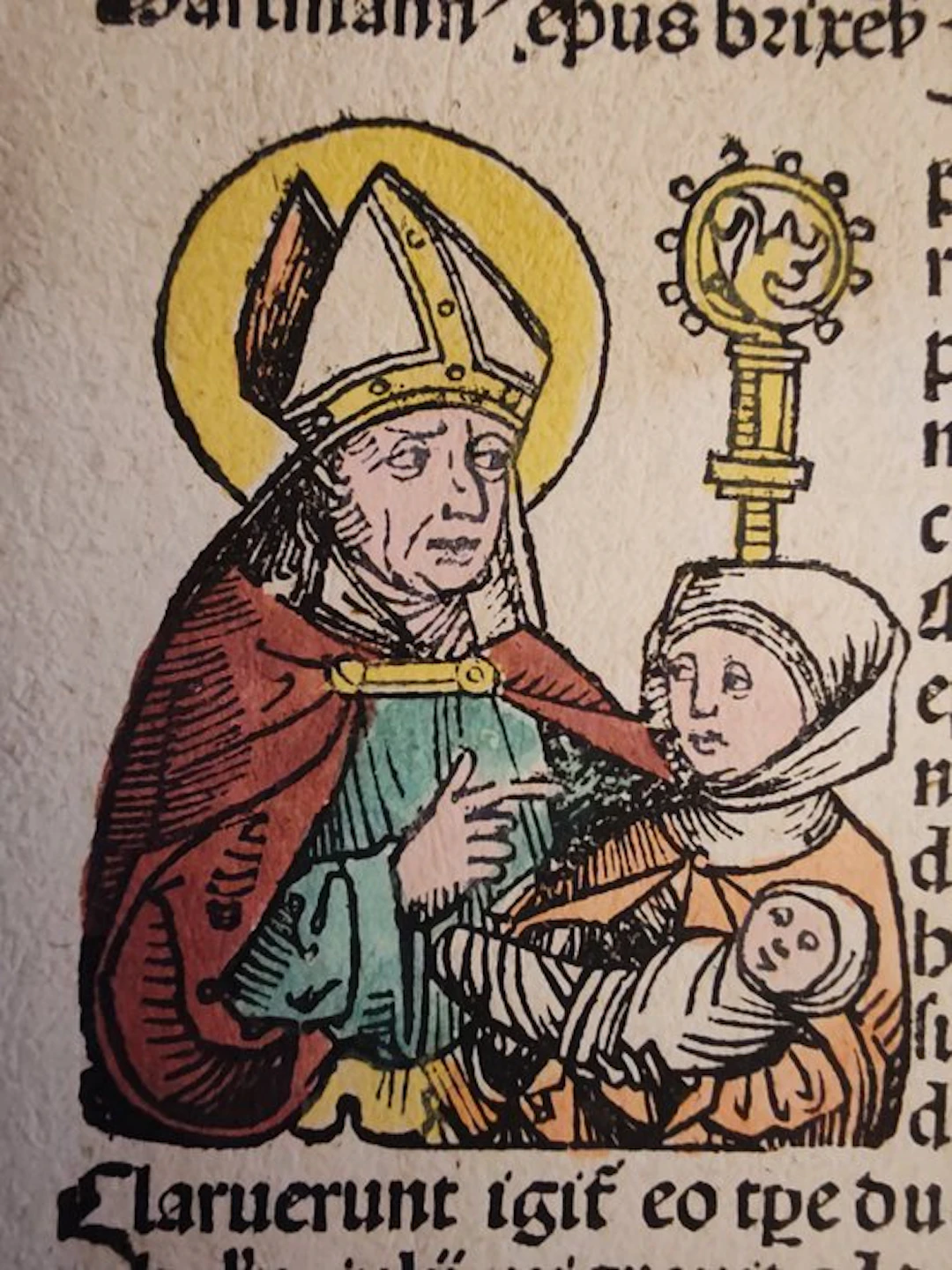
This original sheet is an incunabulum from 1493, coming from the Liber Chronicarum, also known as the Nuremberg Chronicle, one of the most celebrated and monumental works in the early history of printing. The text was drafted by the German humanist Hartmann Schedel, printed by the famous publisher Anton Koberger in Nuremberg, and illustrated with woodcuts from the workshop of Michael Wolgemut and Wilhelm Pleydenwurff. The page is part of the section titled “Sexta etas mundi,” dedicated to the Christian era. Through an intense and dramatic narration, the sheet juxtaposes the convulsive military events of the Crusader kingdoms in the Holy Land with the rapid and unstable succession of Roman popes at the end of the 12th century, shaken by the advance of Saladin. On the front of the sheet (noted at the top right by the woodcut numbering Fo CCIIII) the focus is on the history of the Kingdom of Jerusalem and European nobility. The left column is embellished with four woodcut portraits. At the top stands out the bishop Hartmann of Bressanone (Hartmann[us] ep[u]s brixne[n]s), followed by the regal portrait of the Crusader king Amalric I of Jerusalem (Almericus de. jherosolimo[rum] rex), described in his military campaigns in Egypt and at Ascalon. Further down appears the portrait of King Philip II of France (Philippus rex francor[um]), celebrated for his deeds and his departure for the Third Crusade together with Richard the Lionheart, and finally the pious figure of Saint Elizabeth of Thuringia, here indicated as Elisabeth mo[n]talis saxonie. The text describes in detail the alternating fortunes of the Christian armies in the East, the complex dynastic relationships, and the threats posed by the Saracen rulers. The back of the sheet shifts the focus to the history of the medieval papacy in a moment of deep crisis, under the woodcut heading “Linea summorum pontificum.” The left column hosts three solemn portraits arranged vertically: Pope Lucius III (Lucius tercius), Pope Urban III (Urbanus tercius), and Pope Gregory VIII (Gregorius octavus). The text describes their brief pontificates, marked by harsh clashes with Emperor Frederick Barbarossa and by the trauma of the loss of Jerusalem in 1187, an event that led Gregory VIII to immediately summon the Third Crusade before dying in Pisa. The lower part of the page hosts the portrait of the Calabrian abbot and theologian Joachim of Fiore (Joachim abbas), renowned for his prophetic visions of the Apocalypse, biblical exegesis, and his complex theology of history divided into the three ages of the Father, the Son, and the Holy Spirit, widely discussed and commented upon by the theologians of the time. Dimensions 45 x 31 cm It will be shipped by courier.
Stima:€250
Vai all’astaVedi tutti gli oggetti diCatawikioLibri, Mappe & Manoscritti
Stima:
€250
Oggetti simili

Risultati d’asta per oggetti simili
HOMANNS ARVINGAR, KARTA ÖVER SKANDINAVIEN, ca 1770.
10/09/2026
€98.27
Stima: €107.33

SERIETIDNINGAR, 57 st Fantomen, år 1950-56.
10/09/2026
€124.96
Stima: €71.55
KARL XII:S BIBEL. 1703, samtida band.
10/09/2026
€580.17
Stima: €536.69
Porta la tua asta ai collezionisti di tutto il mondo!
Pubblica ora