






Tutte le aste / Libri, Mappe & Manoscritti / Euclide & Tartaglia - Scientie Mathematice - 1585

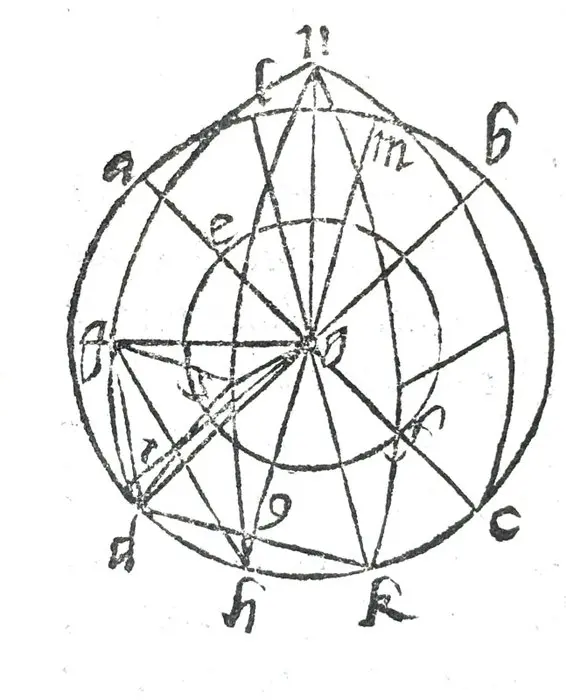
Euclid of Megara, 1585 Geometry as the foundation of reason, knowledge, and civilization Historical-scientific presentation of a Venetian edition of Euclid’s Elements, curated by Niccolò Tartaglia and printed by the heirs of Troiano Navò. 1. Introduction: a book that crosses the centuries The work we have the privilege to admire today is not merely an ancient printed volume. It is a tangible testament to one of the most extraordinary journeys in European intellectual history: the transmission of mathematical knowledge from classical antiquity to the Renaissance, through the labors of scholars, humanist culture, and the printing revolution. The title page bears an eloquent title: Euclid of Megara, most acute philosopher, sole introducer of mathematical sciences. The following indicate the work of Niccolò Tartaglia, the revision of the text, and the exposition intended to facilitate its understanding. The copy presented here belongs to the Venetian edition of 1585, printed by the heirs of Troiano Navò, at the bookstore known as “dal Leone.” Its importance lies as much in its content as in the material history it preserves: the paper, the type, the geometric engravings, and the signs of time restore to us the world of a culture that regarded knowledge as a conquest to be preserved and transmitted. Each page thus represents a meeting point between Greek antiquity, Renaissance ingenuity, and the emerging scientific modernity. 2. Euclid: the master of rational geometry To understand the value of this work, we must go back to Euclid of Alexandria, a mathematician active around 300 BCE, during the Hellenistic era. It should be noted that the edition’s title uses the designation “Euclid of Megara,” a historical attribution now recognized as erroneous: the mathematician of the Elements is distinct from the philosopher Euclid of Megara. Tradition attributes to Euclid the arrangement of the Elements, one of the most influential mathematical treatises ever composed. His fundamental merit lies in organizing a vast inheritance of knowledge into an ordered system, in which definitions, postulates, propositions, and proofs contribute to the construction of rigorous understanding. Euclidean geometry is not limited to describing shapes and measures. It teaches how to proceed from the known to the unknown, to distinguish what can be demonstrated from what is merely asserted, and to base conclusions on logically verifiable steps. This is his deepest legacy: the idea that human reason can reach solid results through a disciplined, universal, and shareable method. From triangle properties to the theory of proportions, from plane figures to solid geometry, the Elements provided for centuries a backbone for mathematical teaching. 3. Niccolò Tartaglia: the mathematician who made knowledge accessible Alongside Euclid arises the figure of Niccolò Tartaglia, born in Brescia around 1499 and died in Venice in 1557. An extraordinarily enterprising mathematician, Tartaglia lived in a period when the revival of ancient knowledge went hand in hand with the need to make it useful to contemporary society. His work on the Elements was not a mere transcription. In 1543 he published the first modern Italian edition of the Euclidean work, accompanied by a substantial commentary. To achieve this, he confronted earlier Latin textual traditions, helping to render the text more accessible to readers who did not possess specialized training in Latin or Greek. The 1585 edition belongs to the editorial history of this endeavor: its own title again signals the revision, restoration of the text’s integrity, and the addition of explanations designed to facilitate learning. Tartaglia understood that the diffusion of science required not only minds capable of discovering, but also scholars willing to translate, order, explain, and teach. Thus his work sits at a decisive moment in European culture: a moment when mathematical knowledge began to circulate more widely beyond the walls of universities and scholarly circles. 4. The printer and 16th-century Venice The title page points to Venice and the heirs of Troiano Navò as the editorial references of the copy. In the sixteenth century Venice was one of Europe’s major centers of printing and book trade. Its geographical position, economic vitality, and the presence of printers, booksellers, and scholars fostered the circulation of works from different cultural traditions. Printing represented a fundamental transformation: it allowed reproducing a text in numerous copies, disseminating it to distant places, and promoting greater stability in the transmission of knowledge. For a mathematical treatise, the challenge was particularly demanding. It was not enough to set the words correctly: one had to preserve the correspondence between explanations, reference letters, geometric figures, and demonstrations. The engravings in the volume are therefore not decorative; they are an integral part of the mathematical argument. A figure enables the reader to visualize relationships that the text describes verbally, while letters associated with points and lines allow following the steps of the proof. The printer’s and the publisher’s work thus becomes part of the history of science. Thanks to collaboration among author, commentator, printer, and bookseller, knowledge born in antiquity could continue to live in the hands of new generations. 5. The meaning and content of the work The heart of the Elements is a method: start from explicitly stated principles and, through demonstrations, construct a coherent network of results. The books that make up the Euclidean tradition address topics such as plane geometry, triangles, polygons, proportions, incommensurable magnitudes, number theory, and solid geometry. Tartaglia’s edition transmits this structure through a historical Italian language, an explanatory apparatus, and numerous figures. Thus the value of the work does not consist only in preserving formulas or geometric properties. It testifies to a way of thinking. Before a geometric proposition, the reader is invited not to rely on immediate intuition, but to follow a path: identify hypotheses, observe relationships, apply general principles, and verify the conclusion. In this sense, geometry becomes a discipline of the mind. It teaches precision, coherence, patience, and the ability to recognize errors. It is remarkable that such an approach has maintained its influence for more than two thousand years. The history of the sciences is rich in outdated theories and replaced models; the Elements, instead, have preserved a fundamental role in the history of mathematical demonstration and scientific education. 6. Renaissance, art, and architecture: measuring the world The historical significance of the work becomes especially clear when we place it in the context of the Italian Renaissance. Between the fourteenth and sixteenth centuries, artists, architects, and scholars sought rational tools to understand space, represent reality, and design harmonious constructions. Linear perspective, developed in Italian artistic culture and eminently associated with Filippo Brunelleschi and Leon Battista Alberti, deeply transformed the way space is represented. Geometric principles contributed to understanding proportions, converging lines, and the relationships among objects. Alberti, in his treatise De pictura, written in the fifteenth century, tackled fundamental questions for constructing perspective. His reflection shows how closely artistic culture and mathematics were connected. It would not be accurate to attribute every development of perspective directly to Euclid or Tartaglia. Yet it is legitimate to recognize in the geometric tradition one of the theoretical foundations that made possible a more rigorous understanding of space. The same principle applies to architecture. Measuring, plotting, calculating ratios, and checking proportions means turning a conceptual idea into a controllable structure. In this meeting of reason and beauty lies one of the Renaissance’s highest ideals: the belief that understanding the laws of nature can contribute to knowledge as well as to artistic creation. 7. From Euclid’s geometry to the scientific revolution The thread that links Euclid to modernity also leads to Galileo Galilei, born in 1564, about twenty years after Tartaglia’s first Italian edition of the Elements. Galileo was not merely a successor of Euclid: he introduced a new way of studying nature, in which observation, experiment, and mathematical formulation played a decisive role. Yet his research shares with the Euclidean tradition an essential principle: scientific statements must be subjected to rational scrutiny, and phenomena can be investigated through quantitative relations. In Galilean mechanics, mathematics is not merely an auxiliary language, but a tool for formulating laws and describing motion. The comparison with Euclid thus illuminates a historical transformation: geometry, born as a deductive discipline, becomes one of the fundamental tools through which modern science studies the physical world. Another significant connection concerns Leonardo da Vinci, who lived between the fifteenth and sixteenth centuries. His studies of anatomy, proportion, mechanics, and space representation show how fruitful the meeting between empirical observation and geometric reasoning could be. It is not necessary to claim that Leonardo or Galileo depended on this specific 1585 edition. The historical point is broader: Euclid’s work belongs to the mathematical tradition that helped shape the intellectual language of the Renaissance and the scientific revolution. 8. The historical impact: knowledge as a shared heritage The Elements’ fortune is measured not only by the number of editions but by the duration and breadth of their influence. For centuries, the work was used in teaching, in the study of proportions, in constructing demonstrations, and in training generations of mathematicians. The Italian edition by Tartaglia had particular significance because it contributed to circulating geometric knowledge in a language accessible to a broader audience than that of Latin readers alone. Subsequent reprintings testify to the persistence of interest in the text and in Tartaglia’s divulgative project. The 1585 volume thus belongs to a period when printing made possible a dialogue between distant eras. A classical author could be studied by a Renaissance reader through the work of an Italian mathematician, thanks to a Venetian printing house. It is a chain of cultural transmission of great significance: no generation restarts entirely from zero; each receives, interprets, and transmits what it has inherited. 9. The value of the historical copy To observe this volume today is to encounter two forms of testimony. The first is intellectual: the mathematical content, the demonstrations, and the figures preserve the memory of a discipline that contributed to the formation of European science. The second is material: the old paper, the typography, the traces of time, and the copy’s characteristics document the concrete history of book production and preservation. An ancient work is not merely a container of a text. It is also a historical object, passed through hands, libraries, and cultural contexts that may have altered its path. For this reason, its evaluation requires attention to provenance, completeness, state of preservation, binding, and precise identification of the edition. In this case, the title page allows us to recognize the Venetian edition of 1585. Further statements about the provenance of the copy, its rarity, or its monetary value would require dedicated bibliographic and antiquarian verification. prudence, far from diminishing the value of a document, is part of the respect we owe it. 10. Conclusion: the permanence of reason Ladies and Gentlemen, this volume invites us to reflect on the extraordinary continuity of human knowledge. Euclid represents the search for rational order; Tartaglia embodies the commitment to transmitting that knowledge to new readers; Venetian printing testifies to the strength of a technology capable of broadening the circulation of ideas. In the transition from antiquity to the Renaissance, from classical geometry to modern science, the Elements have endured through centuries of political, cultural, and scientific transformations without losing their historical importance. The pages before us are not merely a fragment of the past. They are the material proof that ideas can survive their authors, cross languages and borders, inspire new questions, and continue to speak to those willing to listen. In an era dominated by speed and the ongoing production of information, this ancient book reminds us of the value of precision, demonstration, and patient study. Its highest lesson is perhaps this: progress is not born solely from discovering the new, but also from the ability to safeguard, understand, and renew the heritage received. To preserve a work such as this means guarding not only a book but a part of the history of human reason. And it is in this union of knowledge, memory, and beauty that its true meaning resides. Collation and state of preservation: 3pp; (315pp) excellent state of preservation with notes on wear and foxing but overall a rare and magnificent work Shipping: express in only 24 working hours within Europe; for non-EU countries, 48 working hours will be necessary
Stima:€750
Vai all’astaVedi tutti gli oggetti diCatawikioLibri, Mappe & Manoscritti
Stima:
€750
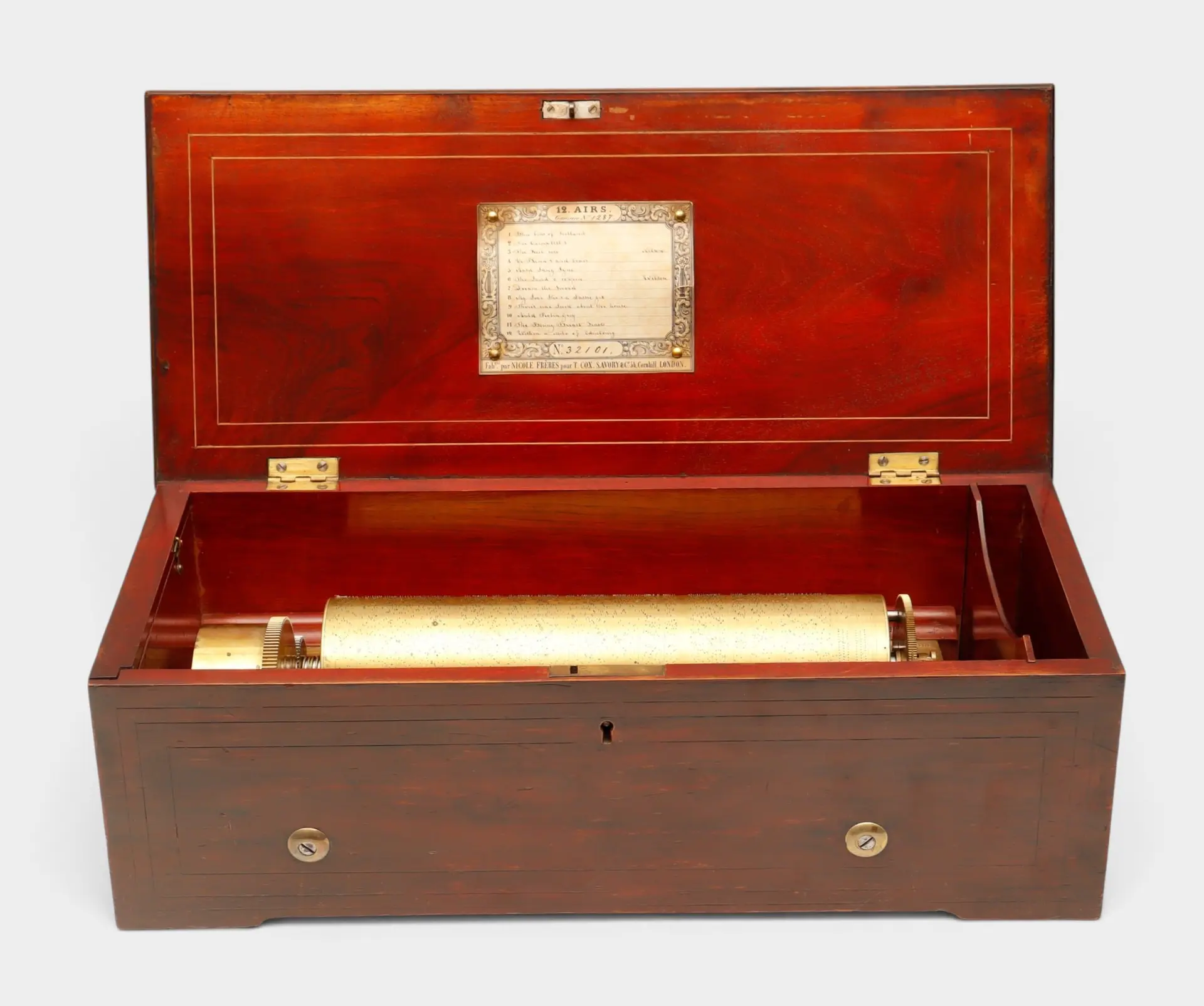
Caja de música suiza de doce canciones de Nicole Frères, hacia 1848-1852.
10/22/2026
€1,350
Stima: €1,300
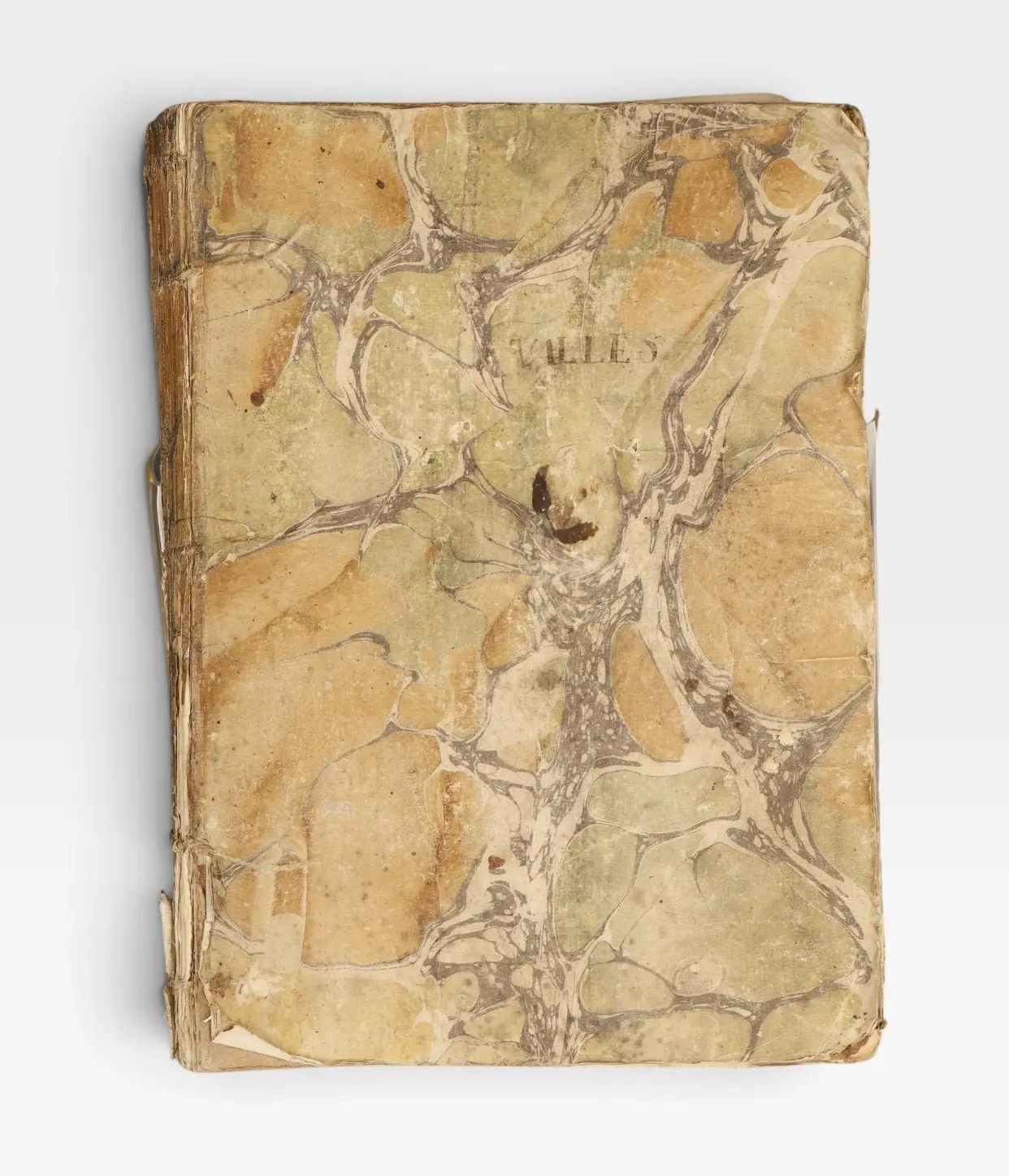
Guerra de la Independencia, Cataluña, 1808-1809.
10/22/2026
€130
Stima: €140
Porta la tua asta ai collezionisti di tutto il mondo!
Pubblica oraIscrivendoti, accetti la politica sulla privacy. Annulla l'iscrizione in qualsiasi momento.
Barnebys HQ
Brahegatan 10
BOX 5038
114 37 Stockholm
