


Tutte le aste / Arte Antica / Etruscan Cauldron handles in the shape of hands

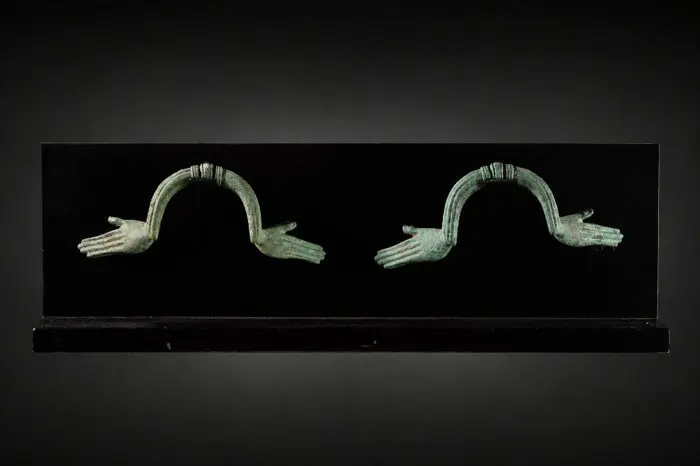
These two handles are the only surviving elements of a bronze vessel that must have been quite substantial. Each piece forms a robust arch whose ends transform into open human hands, with outstretched fingers differentiated by longitudinal lines. Several transverse mouldings decorate the central area of the arch. Although they are now presented as separate objects, they originally formed part of a larger piece and contributed to both its function and its appearance. The exact shape of the vessel cannot be determined solely from the handles. They have traditionally been associated with a cauldron, although similar solutions are known for hydriae and situlae. This uncertainty allows us to appreciate how a seemingly secondary element could acquire a marked sculptural dimension. The handles were not simply mechanisms for lifting or carrying the vessel: their shape, size, and decoration contributed to expressing the value and prestige of the entire object. The motif of the hands creates a particularly evocative relationship between the vessel and the human body. As the arch extended into two open palms, the vessel appeared to be held or offered by hands that were part of it. When someone lifted the vessel, their own hands came into contact with those modelled in bronze, establishing a visual dialogue between the human action and the represented image. While a definitive symbolic interpretation cannot be proposed, the hand could evoke ideas of giving, receiving, protection, or offering, particularly appropriate for an object related to the serving of food or liquids. The piece is situated within the dynamic context of 6th-century BC Etruria, a period of urban prosperity, intense artisanal activity, and extensive trade. Etruscan cities maintained continuous relations with the Greek communities of the Mediterranean, as well as with the Phoenicians and other peoples of the Italian peninsula. Raw materials, luxury goods, techniques, and artistic models circulated through these networks. Etruscan artisans assimilated many of these influences, but adapted them to their own traditions and developed a highly distinctive bronze production. Metal vessels played a prominent role in aristocratic banquets. These gatherings combined the ritualized consumption of wine and food with music, conversation, and various forms of entertainment, becoming occasions to display hospitality, wealth, and social standing. Large vessels for holding or mixing liquids, jugs, strainers, cups, ladles, and cauldrons were needed for these celebrations. The presence of elaborate bronze tableware transformed the actions of serving, mixing, or sharing into ceremonial gestures. Many of these objects were later placed in tombs. In Etruscan culture, the funerary space could symbolically represent the home and extend the social identity of the deceased into the afterlife. Banquet utensils placed beside the deceased served as reminders of their way of life and ensured the ideal continuity of their celebrations. Although the archaeological context of these handles is unknown, their quality and ornamental character allow us to connect them to this world of aristocratic practices, cultural exchanges, and funerary ceremonies. Bronze gave the vessel considerable value. Their production required raw materials, specialized technical knowledge, and extensive finishing work. The green patina that currently covers the surfaces is a result of the metal's transformation over time. Beneath it, the finger incisions, the moldings of the arch, and the irregularities characteristic of an individually crafted piece are still visible. Separated from the vessel to which they belonged, the handles have lost some of their functional context, but they retain a powerful sculptural presence: in their open hands remains the gesture for which they were created—to hold and offer. Parallels: - Handle of a hydria or possibly a situla, ending in open hands, 540–520 BC — Acropolis Museum, Athens. - Etruscan bronze cauldron with a movable arched handle, circa 550 BC — Metropolitan Museum of Art, New York. - Metal vessels from the banquet service of Laris Harenie, from an Etruscan tomb in Bolsena — Gregorian Etruscan Museum, Vatican Museums. Acquired from a French private collection, M.C in the 80's. -The piece includes an authenticity certificate as well as Spanish license export document ( Passport for European Union ). IMPORTANT: Due to the new laws on the export of archaeological pieces, we have decided to NO LONGER sell outside the European territory for the following countries: SWITZERLAND & UNITED STATES of AMERICA. For other destinations out of European territory: all our items will be shipped after obtaining a definitive LICENSE EXPORTATION by the Ministry of Culture of Spain. We inform our clients that it may take between 4-8 weeks. According to Spanish legislation, items sent outside the European Union are subjected to export taxes. The taxes will be added to the invoice, at the buyer's expense. These export fees are fixed on the final auction price, and the tax rate is not applied directly to the total value of the item to be exported, but rather the different percentages by sections are applied to it: Up to 6,000 euros: 5%. / From 6.001 to 60.000 euros: 10 %. Please note that for far destination (Asia, middle east etc.. ), there will be an additional cost for the shipping.
Stima:€5,500
Vai all’astaVedi tutti gli oggetti diCatawikioArte Antica
Stima:
€5,500
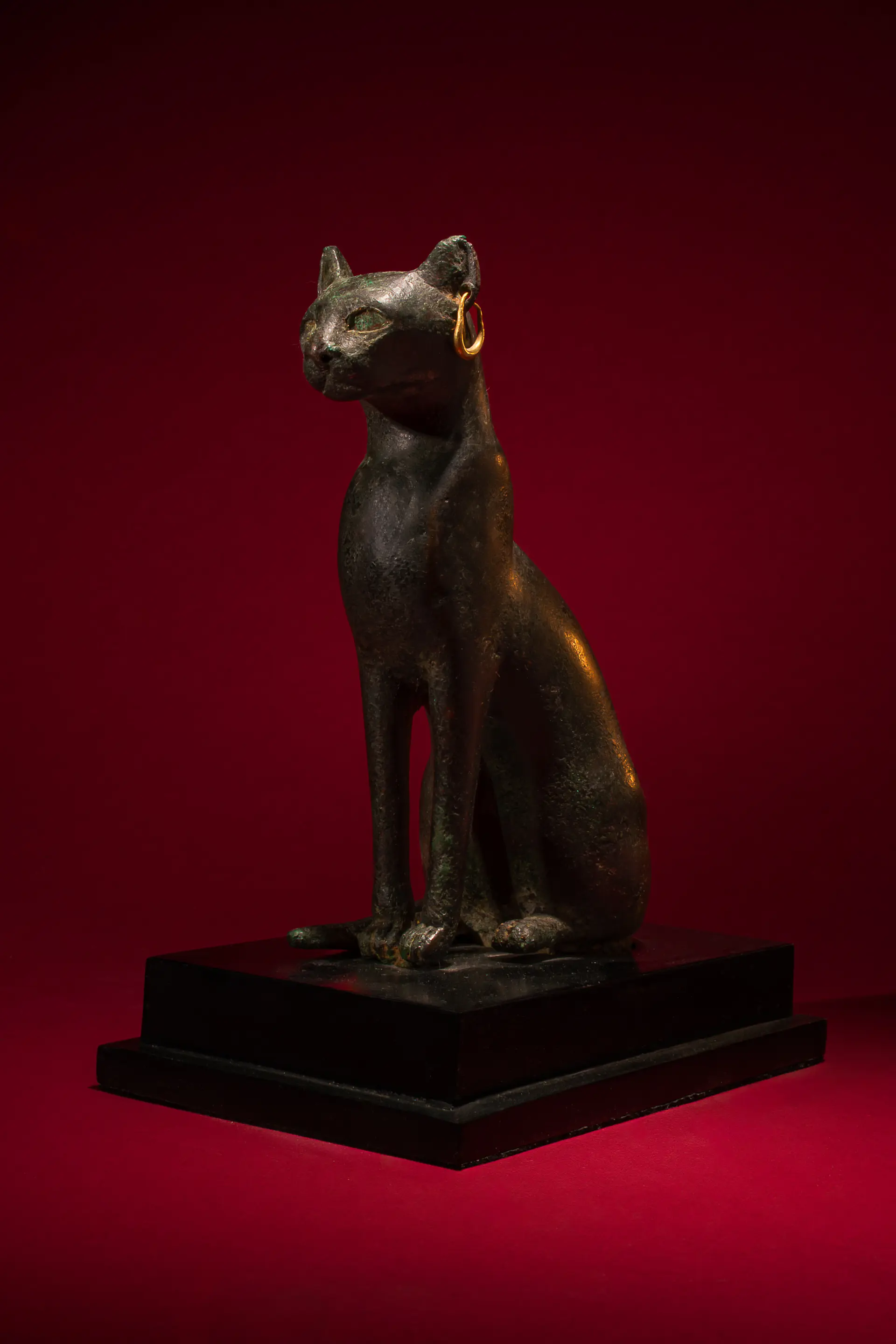
RARE EGYPTIAN BRONZE CAT STATUETTE WITH GOLD EARRINGS - LARGE SIZE
06/21/2026

€25,506.4
Stima: €23,095.64
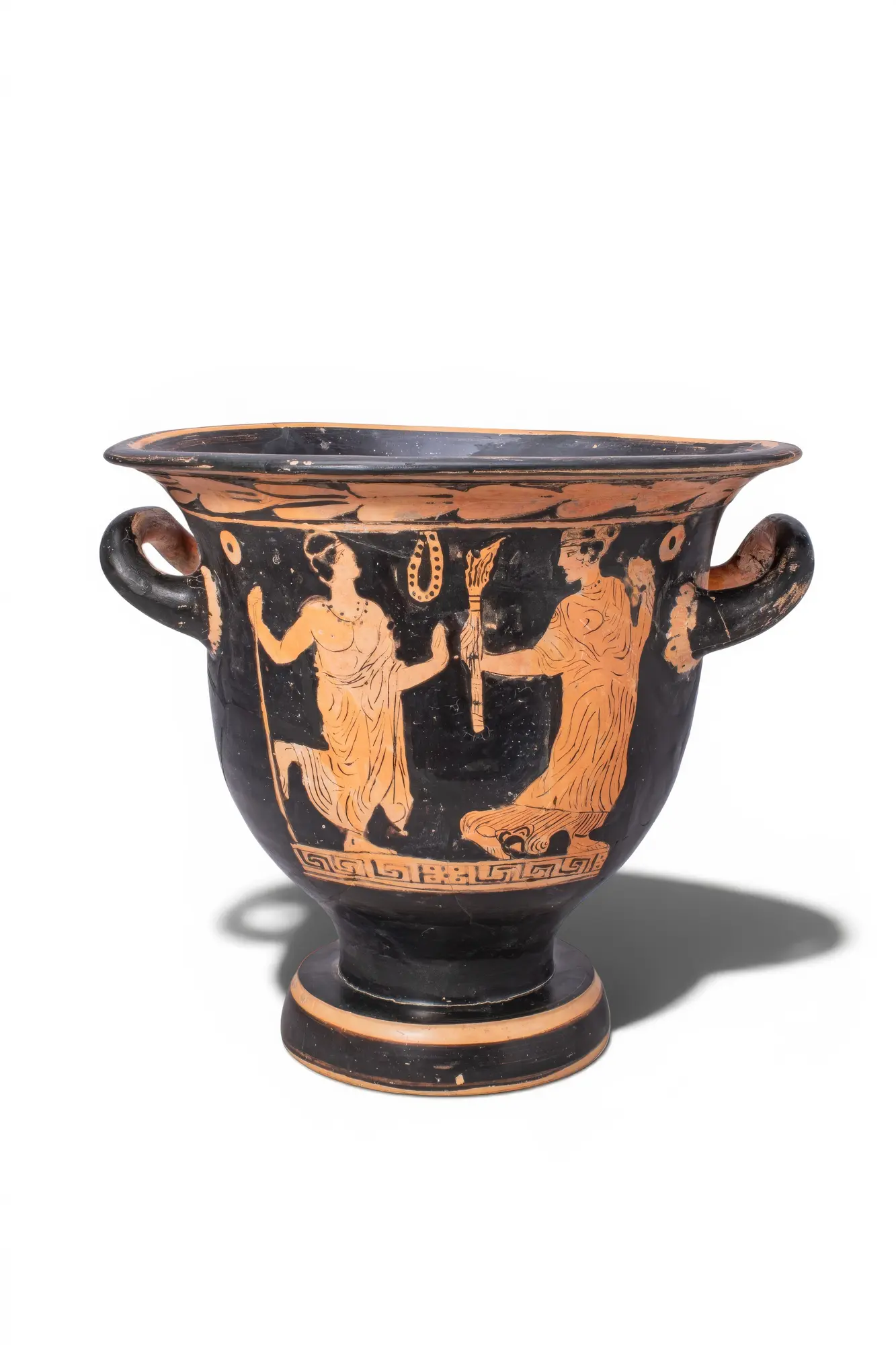
APULIAN RED-FIGURE BELL KRATER WITH KOMASTOS AND MAENAD - TL TESTED
06/21/2026
€3,014.39
Stima: €2,304.2
Porta la tua asta ai collezionisti di tutto il mondo!
Pubblica oraIscrivendoti, accetti la politica sulla privacy. Annulla l'iscrizione in qualsiasi momento.
Barnebys HQ
Brahegatan 10
BOX 5038
114 37 Stockholm
