



Tutte le aste / Altro / École postcubiste (XX) - Nature morte aux bouteilles et citrons - NO RESERVE


Twentieth-Century Cubist School Still Life with Lemons, Bottles and Everyday Objects Oil on Canvas – Figurative Cubism and Post-Cubism Interesting oil painting on canvas from the twentieth-century cubist school, depicting a vibrant still life composition formed by bottles, containers, lemons and various everyday objects, interpreted through a plastic language with a marked cubist and post-Cubist influence. The work stands out for its intense chromatic richness, the geometric fragmentation of volumes and its expressive spatial organization, features that connect it with artistic currents stemming from the investigations of Pablo Picasso and Georges Braque. The artist transforms a traditional still life composition into a construction of shapes, planes and colors, in which objects partially lose their naturalistic appearance to integrate into a pictorial structure of great dynamism. The use of emerald greens, intense yellows, deep blues, reds, pinks and whites creates a set of notable visual force, in which dark lines delineate the different surfaces and reinforce the geometric character of the composition. The painting combines recognizable elements of reality with a free, expressive interpretation, a characteristic of certain tendencies of figurative cubism and post-Cubism developed during the twentieth century. Description of the work The painting represents a still life composition organized on a supporting surface, in an interior space built through overlapped geometric planes. In the upper half appear several long-necked bottles, represented by stylized forms and an intense color range. Two of them display yellow bodies with dark vertical strokes, while others show blueish, greenish and orange tones. The arrangement of these containers introduces a vertical rhythm that contrasts with the more fragmented structure of the objects in the foreground. In the central area appear different jugs, vessels and containers of white, gray and blueish tones, whose outlines intertwine and overlap. Some of these objects feature curved handles and angular profiles that contribute to reinforcing the dynamic of the composition. The representation does not conform to a single conventional perspective, but combines different viewpoints, allowing the simultaneous observation of different parts of the objects. In the lower left sector stand out two lemons of intense yellow, placed on a light surface delimited by dark lines. These fruits constitute one of the main chromatic points of attention of the painting and create an attractive contrast with the surrounding greens and blues. In the lower right area appears another set of curved and angular shapes, among which plant elements and partially overlapped containers can be distinguished. The background is built with broad geometric surfaces of greens, turquoises, whites and grays, delimited by black lines. At the bottom a sequence of planes in reds, pinks, blues and greens is introduced, bringing chromatic intensity and helping to visually close the composition. The scene presents a deliberately complex spatial organization, in which the objects seem to intertwine inside a unified pictorial structure. Style and artistic influences From a stylistic point of view, the work relates to figurative cubism and post-Cubist tendencies developed during the twentieth century. Cubism was one of the fundamental movements of European artistic vanguards, profoundly transforming the way space, objects and visible reality are represented. Developed mainly by Pablo Picasso and Georges Braque at the beginning of the twentieth century, the movement proposed a new conception of painting based on the decomposition of volumes and the simultaneous representation of different viewpoints. In contrast to traditional perspective, cubism proposed an organization of space through geometric planes, structural lines and chromatic relationships. This work participates in that tradition by simplifying objects, superimposing forms and employing a deliberately free perspective. The bottles, jugs and fruits retain a recognizable identity, though their volumes appear transformed through angular contours and fragmented surfaces. The composition also shows affinities with certain tendencies of synthetic cubism, especially due to the use of large color planes and the construction of objects through relatively simplified forms. However, the intensity of the colors and the expressive treatment of surfaces also allow it to be related to post-Cubist reinterpretations developed in the following decades. In this sense, the painting approaches the language of those artists who adopted the structural resources of cubism, incorporating greater chromatic freedom and a more spontaneous interpretation of form. Influences of Pablo Picasso and Georges Braque The work shows evident stylistic relationships with the pictorial tradition inaugurated by Pablo Picasso (1881–1973) and Georges Braque (1882–1963). Both artists played a fundamental role in the development of cubism and gave special importance to the still life genre. Bottles, glasses, jugs, fruits and everyday objects became recurring motifs in their pictorial investigations. These elements allowed exploring new relationships between volume, space and representation, transforming seemingly simple compositions into complex geometric structures. In this painting, the use of black outlines, the fragmentation of the containers and the superposition of planes recall certain procedures associated with cubism. The intensity of the colors and the simplification of forms also align with some of Picasso’s still lifes, particularly those in which objects are represented by large color fields. On the other hand, the arrangement of bottles and containers on a table recalls one of Braque’s fundamental themes throughout his career. These relations should be understood as stylistic influences, without implying a direct attribution to any of the artists mentioned. The painting constitutes a personal interpretation of cubist principles, combining a geometric structure with a highly expressive color palette. Color and its expressive function One of the most notable aspects of the work is its vibrant treatment of color, which plays a fundamental role in organizing the composition. The artist uses an intense palette, dominated by emerald greens, bright yellows, deep blues, turquoises, reds and pinks. The yellows of the bottles and lemons constitute some of the main visual attractors. These warm tones contrast with the greens and blues of the background, generating a chromatic tension of notable intensity. The white and grayish containers introduce zones of visual rest that balance the richness of the surrounding colors. Dark lines delineate the different surfaces, reinforcing the separation between planes and contributing clarity to a composition of complex structure. Color is not used solely to reproduce the natural appearance of objects, but as an autonomous resource intended to build space and convey expressiveness. The presence of reds and pinks in the lower area contributes to intensifying the whole and creates a contrast with the greens predominant in the upper part. The alternation between warm and cool colors generates a dynamic visual rhythm, characteristic of certain manifestations of post-Cubism. Technique and painting execution The work is oil on canvas, using a technique that combines broad color fields with dark outlines and expressive brushstrokes. The objects appear built with relatively defined color planes, though the pictorial matter shows variation in texture and direction. The bottles display a marked vertical structure, with brushstrokes that reinforce the sense of volume. The central containers are bounded by curved and angular black lines, which allow distinguishing their different parts within the overall overlay. The lemons are executed in a more compact manner, based on intense yellows and small green and white nuances. The background is treated with broad color masses, some of them overlapped, contributing to create a fragmented spatial structure. The brushwork remains visible in different zones, imparting spontaneity and vitality to the surface. The result is a painting of marked plastic expressivity, in which drawing, color and pictorial matter jointly participate in constructing the image. Composition and geometry The composition presents a predominantly vertical organization, articulated through a succession of geometric planes. The bottles in the upper area introduce vertical lines that structure the space. The central containers provide curved and angular forms, generating a complex network of visual relationships. The lemons in the foreground offer a counterpoint of rounded shapes that contrast with the geometry of the surrounding objects. The arrangement of the different elements avoids traditional perspective and proposes an organization based on superposition and simultaneity of viewpoints. The dark lines play a structural role, delimiting the planes and guiding the eye through the composition. The background does not act as a neutral space, but actively participates in the geometric construction of the whole. The green, blue and white surfaces integrate with the objects, making it difficult in certain points to separate figure from background. This interaction constitutes one of the fundamental resources of the cubist language. The painting thus offers a composition of great dynamism, in which the different elements are united by a coherent visual structure. The still life in Cubism Still life occupied a fundamental place in the development of Cubism and the European vanguards of the twentieth century. Artists found in everyday objects a field particularly suitable for experimenting with new forms of representation. Bottles, glasses, fruits, musical instruments, jugs and domestic utensils became protagonists of numerous compositions. The relative simplicity of these motifs allowed focusing attention on the truly pictorial problems: constructing space, the relationship between planes, fragmentation of volumes and the autonomy of color. Through Cubism, the still life ceased to be merely a representation of objects and became a space for formal inquiry. This transformation deeply influenced European painting and gave rise to numerous reinterpretations during the twentieth century. This work participates in that tradition through a composition that preserves the recognizable identity of the objects, but transforms their representation through a geometric and expressive language. The use of an especially intense palette adds a chromatic dimension that connects the work with post-Cubist tendencies and with certain currents of modern figuration. Artistic and decorative value The painting constitutes an attractive example of the influence of Cubism on European figuration in the twentieth century. Its interest lies in the combination of a geometric composition, a highly intense palette and a free interpretation of everyday objects. The presence of bottles, containers and fruits allows immediate recognition of the genre of the still life, while the fragmentation of forms introduces a modern and expressive reading. The use of greens, yellows, blues and reds provides notable visual strength, especially suitable for collections of modern and avant-garde painting. The work is especially interesting for collectors of Cubism, Post-Cubism, modern still life and twentieth-century figurative painting. Frame and presentation The painting is framed with a wide classical-inspired frame, finished in gold, ochre and brown tones. The frame has a slightly aged surface, with different ornamental profiles that add depth to the overall composition. An inner ivory-toned molding visually separates the painting from the outer frame, while a fine gold profile delimits the pictorial surface. This combination of warm and neutral tones establishes an attractive contrast with the painting’s chromatic intensity. The frame is offered as a gift to the buyer, with no commercial value, and is not an integral part of the work, so any possible damage to it will not be a ground for complaint. It is recommended to carefully examine all photographs, which are an integral part of the description, to properly assess the condition of the painting and its framing. Features Author: twentieth-century cubist school. Chronology: twentieth century. Technique: oil on canvas. Genre: still life / bodegón. Theme: composition with bottles, jugs, containers and lemons. Style: figurative cubism and post-Cubism. Artistic influences: Pablo Picasso, Georges Braque and European cubist currents. Presentation: framed. Shipping The work will be carefully and professionally packaged, using protective materials appropriate to ensure its safety during transport. Shipments outside the European Union may be subject to taxes, customs duties, import duties, handling charges and/or customs procedures. These possible costs will be the sole responsibility of the buyer and are not included in the hammer price nor in the shipping costs. Additionally, shipments to islands, insular territories or remote or hard-to-access areas as considered by the transport companies may incur additional charges. Any surcharge applied by the transport company for this reason must be borne by the buyer.
Stima:€1
Vai all’astaStima:
€1

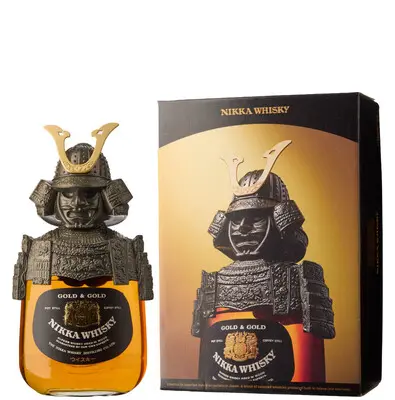
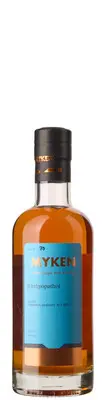
1 x 0,5 l Myken Arctic Single Malt Whisky Ichthyopathol 4 Years
10/22/2026

€125.92
Stima: €76.41
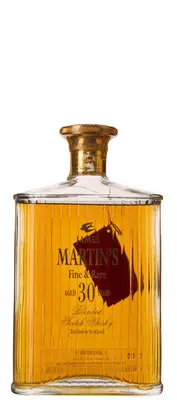
1 x James Martin's Blended Scotch Whisky Fine & Rare Aged 30 Years
10/22/2026
€305.27
Stima: €382.06
Porta la tua asta ai collezionisti di tutto il mondo!
Pubblica oraIscrivendoti, accetti la politica sulla privacy. Annulla l'iscrizione in qualsiasi momento.
Barnebys HQ
Brahegatan 10
BOX 5038
114 37 Stockholm
