
Tutte le aste / Mobili, Design & Specchi / Crucifix - Pear - 1900-1910 - Crucifix Pear wood - XL - 106 cm

Crucifix - Pear - 1900-1910 - Crucifix Pear wood - XL - 106 cm
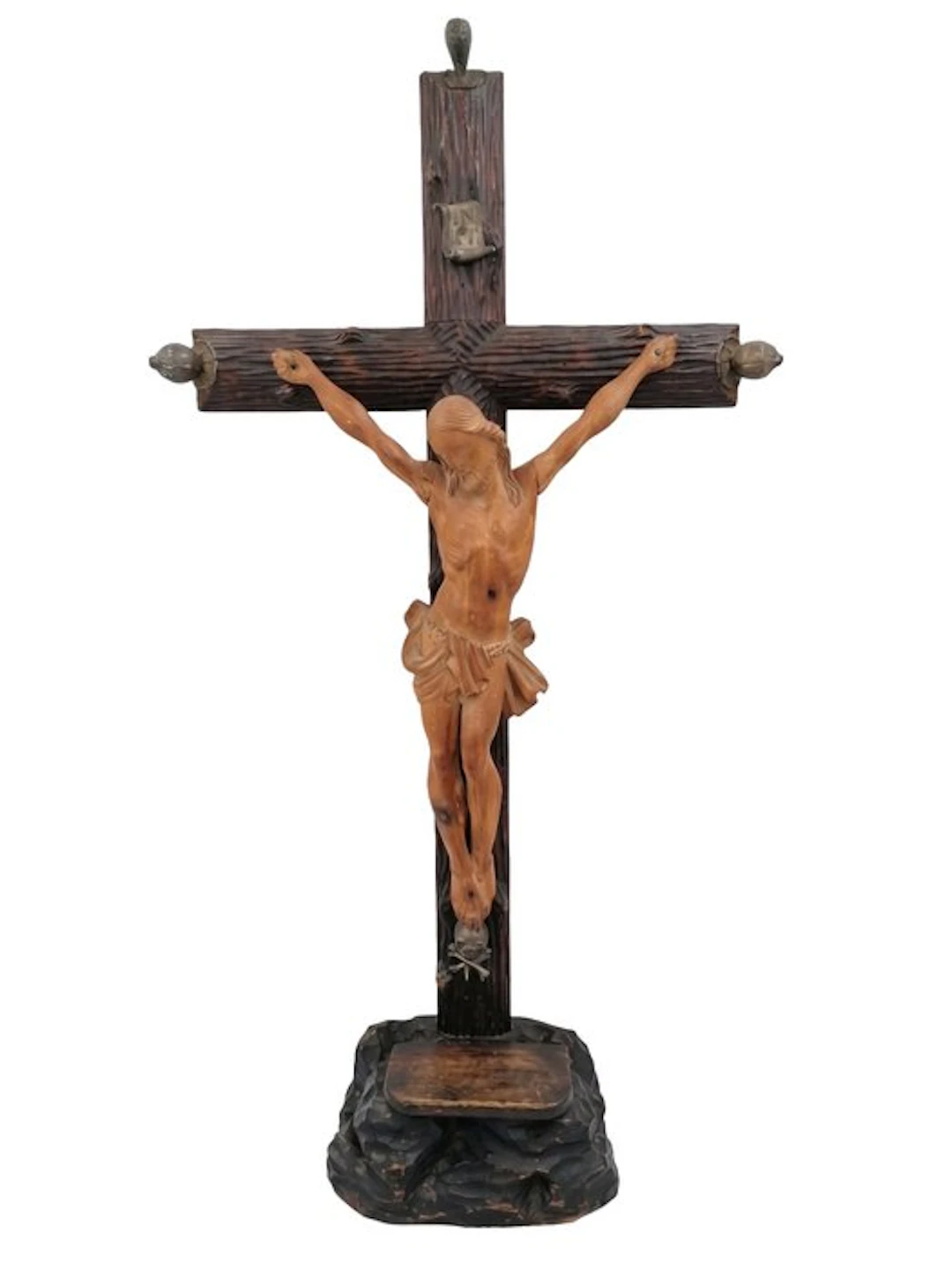
Specifications and characteristics of the object: Type: Monumental altar- or chapel-cross on a rocky base (Golgotha). Dimensions: Height 1.07 meters, width 56 centimeters. Weight: Under 10 kilograms (fully dried wood). Construction of the corpus: The hand-carved wooden figure of Jesus (the corpus) is built in three parts; the torso is vertically cut and both arms are inserted as separate pieces with a dowel joint. Cross and base: The cross is rustic, shaped like tree trunks. The base represents the rock of Golgotha and is manually planed and hollowed on the underside. Metal fittings: The cross is fitted with cast metal elements (tin or patinated bronze), including decorative end caps on the crossbars, an INRI plaque at the top, and a Memento Mori skull with crossed ribs beneath the feet of the corpus. This crucifix was made between 1880 and 1920 (late 19th or early 20th century). There are three clear reasons pointing to this specific period: the Neo-styles: around 1900 there was a tremendous revival of interest in older art forms in Europe (such as Neo-Gothic and Neo-Baroque). This very rustic cross, deliberately rough as a natural log, was very popular for churches and home altars in that period. the metal fittings: the combination of a hand-carved wooden Jesus figure with industrially cast metal elements (such as the INRI scroll, the skull and the decorative end caps) is typical of the late 19th century. In this period craftsmen often combined their wood-carving with finer metal castings that became more widely available. the origin: this type of folk art and church inventory was produced in large numbers in specialized regions in Southern Germany (such as Oberammergau), Austria (Tyrol), and Northeast France. The object is thus about 100 to 140 years old and a beautiful and legitimate piece of antiquity. This type of crucifix hails from Southern Germany (the Bavaria region), Austria (Tyrol), or the eastern part of France. There are a few specific features that strongly indicate these regions: the tradition of woodcarving: the Alpine regions (notably places like Oberammergau in Bavaria and the Valtellina/Grödnertal in Tyrol) were worldwide known around 1900 for their high-quality, hand-carved religious art. Whole villages depended on producing these kinds of church and chapel crosses. the 'log' cross (Astkreuz): the particularly rough and natural shaping of the cross as a tree trunk with knots is a typical Germanic and Central European tradition. In German-speaking countries this is called an Astkreuz. It symbolizes the 'Tree of Life'. the tin/metal fittings: the combination of woodcarving with cast tin or bronze components (the skull, caps, and INRI plate) was widely used in both German and French religious ateliers of that period to give the crosses a richer appearance.
Stima:€300
Vai all’astaVedi tutti gli oggetti diCatawikioMobili, Design & Specchi
Stima:
€300
Oggetti simili

Risultati d’asta per oggetti simili
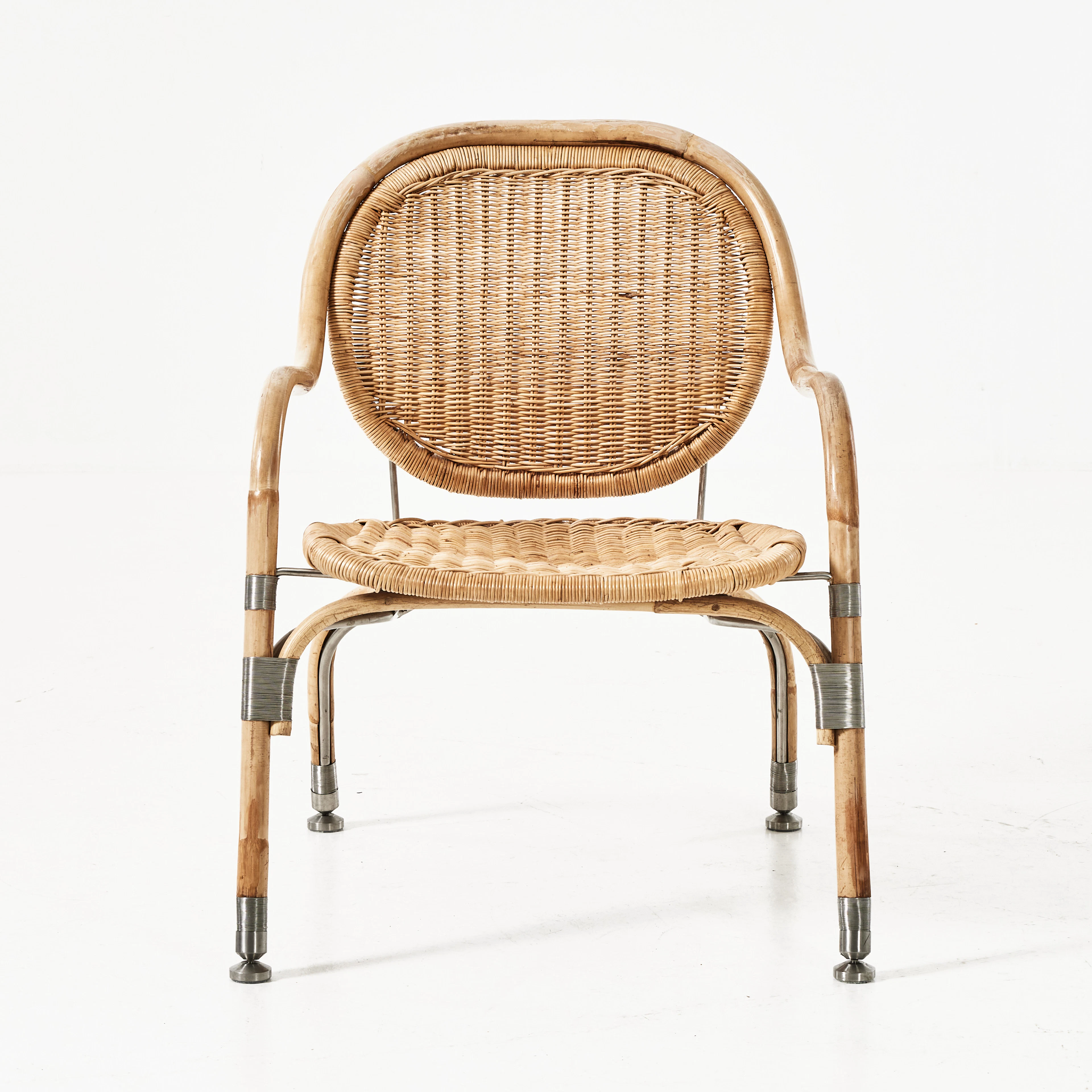
MATS THESELIUS. Fåtölj, "Nätön", IKEA, formgivningsår 2001, skyltmärkt.
10/09/2026
€285.62
Stima: €357.79

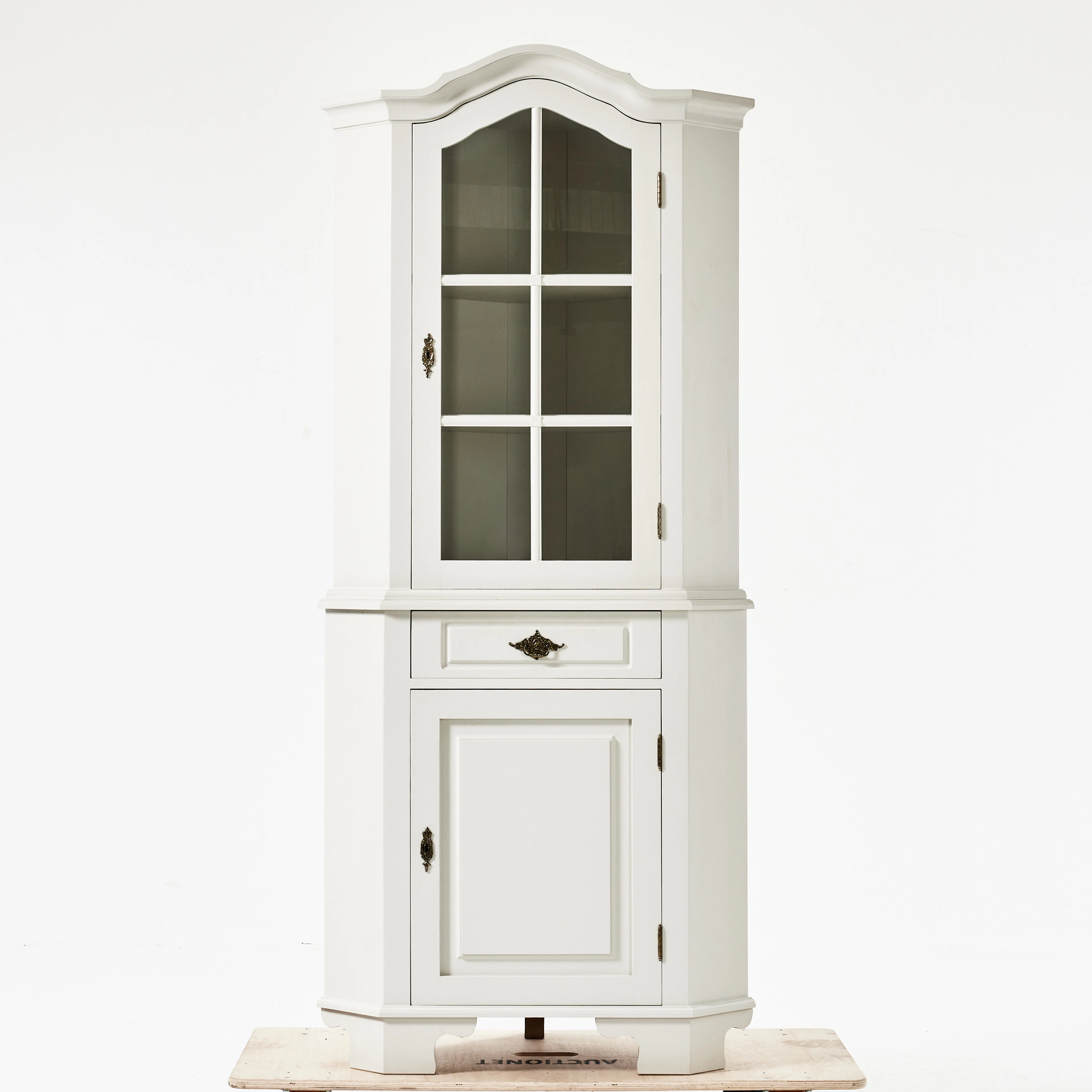
VITRINSKÅP, för hörn, Åmells Möbler, 1900-talets andra hälft, rokokostil
10/09/2026
€285.62
Stima: €268.34
Porta la tua asta ai collezionisti di tutto il mondo!
Pubblica ora