





Tutte le aste / Libri, Mappe & Manoscritti / Camillo Camilli; Girolamo Porro - Imprese illvstri - 1586


# Camillo Camilli - Girolamo Porro ## Notable creeds of different men, with Camillo Camilli’s discourses and the copper engravings by Girolamo Porro Padovano Venice, Francesco Ziletti, 1586 · First, second and third parts · Emblematic literature, art history and courtly culture of the Renaissance The work presented here constitutes a testimony of particular interest to the pictorial and literary culture of late sixteenth-century Italy. Published in Venice in 1586, it brings together Camillo Camilli’s reflections on the deeds of illustrious figures of his time, accompanied by copper engravings made by Girolamo Porro, a Padovan engraver. The title page also states the printing being “In Venetia, appresso Francesco Ziletti,” indicating the Venetian printing workshop responsible for the publication. This is not a mere repertory of ornamental figures or noble emblems. The volume belongs to that refined Renaissance tradition in which the image becomes a vehicle for thought, a manifestation of identity and a tool for communicating moral virtues, personal aspirations, and dynastic memory. The images are accompanied by interpretive discourses that clarify their meanings and allow the reader to grasp the relationships among symbol, motto, and the character of the depicted person. The power of the work lies precisely in the meeting of word and image: the engraving offers a visual composition to observe and decipher, while the text reconstructs its intellectual and moral meaning. In this way, the collection fits into a period in which humanist culture, court life, and the collecting of illustrated books contributed to making the symbol one of the privileged languages of the educated European society. ## 1. The author: Camillo Camilli and the culture of Italian courts Camillo Camilli, an Italian literatus who lived in the 16th century and died in 1615, operated in an environment where literary production was closely linked to political life, diplomatic relations, and the court system. His formation and activity lie in the transition between the high Renaissance and the more complex cultural forms of the late Cinquecento, when the search for formal elegance accompanied a growing interest in the moral interpretation of images and in the symbolic representation of the individual. The entry on Camilli in the Dizionario Biografico degli Italiani of Treccani identifies precisely in Imprese illustri di diversi one of his most significant original works, published in 1586 and dedicated to Cardinal Ferdinando de’ Medici. The same source emphasizes the author’s attention to the relationships between the virtues attributed to noble houses and the figurative content of their respective emprises. Camilli’s task, therefore, was not to passively describe a series of figures. He aimed to interpret them, grounding the figurative elements in a broader reflection on human behavior, honor, and virtue. The emblem, in his reading, becomes a condensed form of self-representation: through a few carefully chosen elements, an individual can communicate a moral principle, a purpose, or an ideal to which they wish their person to be associated. In this sense, Camilli presents himself as an interpreter of the aristocratic culture of his time. His work required familiarity with classical literature, with allegorical tradition, and with the symbolic conventions shared in intellectual circles. The reader is invited to participate actively in the interpretation, relating the image, the words, and the information concerning the figure. His production is not limited to the field of emblems. Camilli is also attributed the religious poem Le lagrime di santa Maria Maddalena, a testimony of literary interest that encompassed both moral and religious representation and the symbolic elaboration characteristic of courtly culture. The 1586 collection thus represents a meeting point between erudition, literature, and figurative culture: a work intended for an audience capable of recognizing in symbols not merely an aesthetic element but a complex system of cultural references. ## 2. Francesco Ziletti: the printer and Venetian publishing in the Cinquecento The publication bears the designation “In Venetia, appresso Francesco Ziletti,” a bibliographic formula that identifies the place of printing and the publisher responsible for the edition. Venice is not a secondary choice: in the second half of the sixteenth century the city represented one of Europe’s major centers of book production, thanks to the presence of printers, booksellers, engravers, cartographers, and specialists in image production for print. Venetian publishing had inherited the grand season inaugurated by Aldus Manutius, but throughout the Cinquecento it had progressively developed into a highly diversified market. Alongside humanistic editions, religious texts, and scientific works, illustrated publications were produced for readers interested in heraldry, architecture, antiquities, history, and the symbolic forms of aristocratic culture. In this context, the illustrated book was a product in which the intellectual value of the text had to be matched by the quality of its physical realization. The typographic composition, the choice of typefaces, the arrangement of the images, and the sharpness of the engravings contributed to the edition’s recognizability and its ability to reach a cultivated audience. The collaboration among Camilli, Porro, and Ziletti responds precisely to this need. The writer supplied the interpretive apparatus, the engraver translated the symbolic repertoire into images, and the printer organized the editorial production. The work thus resulted from the meeting of different competencies, united by a common cultural project. Bibliographic records of the 1586 edition document a three-part structure, with frontispieces specific to each part and an illustrated apparatus. The exemplar depicted here shows at least the frontispiece of the first part and that of the second, both dated 1586. The presence of distinct frontispieces is also significant commercially: each section had its own editorial identity, even though it belonged to a unified overall project. ## 3. Girolamo Porro: engraving as intellectual language One of the most relevant features of the work is the presence of copper engravings by Girolamo Porro, indicated on the title page as “Padovano.” His involvement is not incidental: the pictorial apparatus constitutes an essential component of the book’s structure. Porro belongs to the tradition of Italian printmakers of the late Renaissance, in which the production of images for printing assumed increasing importance. Engraving allowed the reproduction of fine lines, architectural details, allegorical figures, and intricate compositions with a precision particularly suited to representing emblems. In Imprese illustri, the drawing does not merely decorate the text. The figure must render a conceptual relationship legible: an object, an animal, a plant, a natural phenomenon, or an allegorical composition can symbolize a moral principle or evoke the events and ambitions of a particular figure. Thus, the engraver’s task is to translate a concept into a concise visual form, recognizable and sufficiently rich to support the interpretation proposed by the author. Porro’s interest also fits a season in which printed images facilitated the circulation of symbolic models beyond the borders of individual cities. An image printed on paper could be studied by readers far from where it was conceived. Printing thus made broader diffusion of iconographic repertoires possible, while not eliminating differences among local artistic traditions. The work is therefore a testimony to the close relationship between the visual arts and books in sixteenth-century Venice. ## 4. The meaning of the work: what are the “imprese illustri” To fully understand the volume’s content one must pause on the historical meaning of the word impresa. In Renaissance language, an impresa was a symbolic composition conceived to express a thought, a moral disposition, a purpose, or a personal ideal. It could include a figure and a motto, elements that gained meaning especially through their reciprocal relationship. It did not simply correspond to a heraldic shield. The shield primarily identified a family or lineage according to established conventions; the impresa, instead, could express an individual intention, an ethical program, or an ideal chosen by its designer. The two forms could nonetheless coexist, especially in aristocratic circles, where dynastic identity and personal self-representation were deeply interwoven. The title Imprese illustri di diversi announces therefore a collection of symbolic compositions associated with different personalities. The phrase “coi discorsi di Camillo Camilli” specifies that the reader does not receive only the images, but also the arguments through which the author interprets their meaning. The mention of the engravings by Porro completes the description of the project: text and image are presented as complementary parts of the same system. The impresa could be read as a kind of intellectual portrait. Whereas a painted portrait represented the subject’s physical traits, the symbolic composition attempted to represent, in condensed form, their moral qualities, ambitions, or conception of existence. This mode of self-representation responded to a fundamental need of court society: to make one’s value recognizable through signs that were both personal and culturally shared. The symbol had to be immediate enough to attract attention, yet complex enough to reward the educated observer. Camilli’s collection turns this practice into a matter of literary reflection. The impresa is not only a sign to be recognized, but a visual text to be interpreted. The reader is invited to question the relationship between image and character, between the depicted object and the virtue ascribed to it, between outward representation and moral content. From this perspective, the book also assumes an educational function. It offers models for reading images and shows how a figurative composition can become a vehicle for a discourse on human action, honor, and reputation. ## 5. The historical context: late Renaissance Italy The 1586 edition sits in a particularly complex phase of Italian and European history. The peninsula was politically fragmented into states, republics, duchies, and principalities, each seeking to consolidate its position through alliances, diplomacy, dynastic strategies, and manifestations of cultural prestige. The Italian courts were places of symbolic competition as well as political struggle. Architecture, painting, literature, music, collecting, and ceremonial contributed to the representation of rulers’ greatness. Culture was not separate from politics: it was one of the tools by which a dynasty could affirm its continuity, legitimize its role, and build a durable public image. Camilli’s book belongs to this universe. The impreses allowed for expressing, in a condensed form, concepts of value, virtue, prudence, fidelity, and steadfastness—central elements in the ideal representation of prince and gentleman. The year 1586 is also significant for the Medici dynasty. At that moment Ferdinand de’ Medici was still a cardinal and embedded in Rome’s complex system of political and diplomatic relations. He would become Grand Duke of Tuscany in 1587, after the death of his brother Francesco I. His subsequent governance would help redefine Tuscany’s diplomatic balances, maintaining relations with Spain and developing closer ties with France. The reference to Ferdinando, present on the frontispiece of the second part, thus places the publication within the prestige networks and patronage linking literary circles to major Italian families. It is important, however, to distinguish between the documented historical context and the work’s interpretation: it cannot be claimed, on the basis of the frontispiece alone, that Camilli intended to formulate a specific political program for Ferdinando. It is instead demonstrable that the dedication to the cardinal is coherent with the customs of the time, reading this choice within the framework of relations among scholars, publishers, and high-ranking figures. ### Ferdinando de’ Medici’s patronage The dedication to Cardinal Ferdinando de’ Medici deserves special attention. Son of Cosimo I and Eleonora di Toledo, Ferdinando had been steered toward an ecclesiastical career and had developed in Rome a network of political and cultural relationships of considerable importance. His figure belonged to a dynasty that had made artistic patronage, the gathering of works, and the celebration of its memory among the fundamental tools of family prestige. In the frontispiece of the second part, the cardinal’s name appears in a laudatory formula emphasizing his rank and Medici affiliation. The dedication is not a marginal element: it makes visible the link between book production and court society. In Renaissance culture, dedicating a work to a prominent figure could be an act of homage, a form of recognition of his prestige, and a means to place the book within a network of relations. The dedication also gave the work a precise social position, idealizing it within the dedicatee’s milieu. In the Imprese illustri, the relationship is particularly relevant: a book devoted to symbolically representing virtues and personal identity speaks to an exponent of one of Italy’s most influential families. Thus the association with the Medici strengthens the historical interest of the volume, without requiring the book to have a direct political role or to circulate exclusively among the aristocracy. ## 6. The iconographic apparatus: architecture, allegory, and visual hierarchy The frontispieces reproduced in the photographs offer a particularly eloquent example of the volume’s figurative language. The page is conceived as an architectural composition, where inscription, figures, and ornaments contribute to the construction of a unitary image. The page layout is not random. The text sits at the center of the composition and is enclosed by a structure that recalls a monumental portal. The side figures, architectural elements, and the upper and lower decorations guide the eye toward the title, giving the page a precise visual hierarchy. This solution turns the frontispiece into a kind of symbolic threshold: even before entering the book’s content, the reader encounters a representation of the work’s dignity and authority. ### The frontispiece of the first part In the image for the first part, the composition is distinguished by a large central arch, topped by a triangular structure reminiscent of a classical frieze. The side columns are replaced or integrated by sculpted female figures, represented as architectural supports. Their role is both structural and decorative: they frame the title and establish a relationship between human figure and architecture. The presence of such figures evokes the classical and Renaissance ornamental repertoire, in which anthropomorphic elements could be integrated into architectural structures with a load-bearing or purely decorative function. Above the arch, the triangular architectural motif is enriched by vegetal motifs and a central medallion. At the sides appear symmetrical ornamental elements, while the lower part presents an elaborate cartouche containing the printer’s name. The frontispiece thus organizes a sequence of information: the architectural image draws the eye, the title identifies the work, the author’s name specifies intellectual responsibility, and the typographic indication makes the place of production recognizable. The date 1586, expressed in Roman numerals, completes the chronological identification of the edition. ### The frontispiece of the second part The second frontispiece presents a different interpretation of the same compositional principle. In this case, the architectural structure takes a more elaborate form, with a central arch, festoon decorations, and figures placed within side niches. The page maintains a balance between monumental grandeur and ornamental density. The central inscription constitutes the focal point of the composition, while the side figures perform an accompanying and framing function. In the upper part, the triangular architectural motif recalls classical building language. In the lower area, the cartouche and decorative elements introduce the printer’s name and the date. The frontispiece of the second part also bears the dedication to Ferdinando de’ Medici, cardinal, explicitly linking the volume to the world of aristocratic patronage. The two pages thus show how a single work could adopt different figurative solutions to distinguish its parts while preserving overall linguistic coherence. ### The architectural component The depicted architecture should not be read as the documentary plan of a real building. It is rather a figurative architecture, built through classical and Renaissance elements combined to produce an impression of order, solidity, and authority. Arches, columns, pediments, and niches belong to a repertoire widely shared by sixteenth-century artists and engravers. Their function is also rhetorical: they give the text a monumental frame, as if the literary work were safeguarded inside a symbolic building. The printed page thus becomes a miniature monument. The book, a tangible object intended for reading, presents itself simultaneously as an artistic artifact and as evidence of a cultured visual culture. ### The female figures and the classical repertoire The side figures on the frontispiece of the first part deserve particular attention. Their placement recalls the type of Caryatid figures, i.e., human figures used as substitutes for architectural supporting elements. In Renaissance language, such figures could evoke the ancient tradition and contribute to the composition’s monumental quality. It is not possible, however, to assign them a specific allegorical meaning without more precise textual or iconographic corroboration. It is therefore appropriate to distinguish between observable data and interpretation: their compositional function is evident, while any identification with personifications of virtues, deities, or specific characters would require further evidence. ### The printer’s cartouche Particularly significant is the cartouche placed at the bottom of the frontispiece, containing the inscription “Appresso Francesco Ziletti.” The placement is not accidental: the printer’s name is inserted within an ornamental structure that integrates it into the artistic composition. The editorial identity thus becomes part of the overall image. The page performs simultaneously an informative and celebratory function. It informs the reader about the book’s production and, at the same time, presents the volume as a carefully crafted object, built according to a coherent visual project. ## 7. The relationship between text and image The peculiarity of Imprese illustri emerges especially when considering the relationship between the engravings and the accompanying discourses. The Renaissance impresa rests on the possibility of expressing a concept through a limited set of visual elements. An object, an animal, a natural phenomenon, or an allegorical figure can become the starting point for reflection on human conduct. However, the image does not always have a unique meaning. The same element can acquire different values depending on the context, the accompanying motto, and the intent attributed to the person. This is precisely where Camilli intervenes: the literary discourse guides the reading, reconstructs the cultural associations, and offers an interpretation of the figure. This mechanism makes the work interesting for the history of image reception as well. The printed figure is not considered autonomous but inserted into an interpretive system that requires historical, literary, and moral knowledge. The reader must be able to recognize references, compare the composition’s elements, and understand how they contribute to expressing a principle. Reading thus becomes an exercise in observation and reasoning. From this perspective, the volume testifies to a conception of culture in which knowledge does not consist only in accumulating information but also in properly interpreting signs and symbols. ## 8. Cultural impact and the fortune of the emblematic genre Assessing the historical impact of a sixteenth-century book requires caution. It would not be correct to attribute to Imprese illustri a broad diffusion or influence without specific data on print runs, circulation of copies, and contemporary readers’ reception. Yet it is possible to place the work within a well-documented cultural phenomenon: the fortune of books devoted to emblems, devices, and symbol repertoires in Renaissance Europe. These volumes served different needs. They could provide models for composing new impresa, offer material for artists and writers, document the identities of noble houses, and transmit a shared language within court circles. Printing played a fundamental role in disseminating this language. A symbolic composition could be reproduced on paper and consulted far from where it was conceived. The availability of illustrated collections encouraged comparison among models, reinterpretation, and adoption in new contexts. In this sense, Imprese illustri participates in the construction of a visual memory of Renaissance society. The images do not merely document objects or figures: they preserve a way of thinking about the relationship between the individual, virtue, reputation, and social belonging. Their historical value also lies in the possibility of studying how Italian elites wished to represent themselves, which qualities they deemed worthy of memory, and which tools they used to communicate their identity. The work also belongs to a period in which antiquarian erudition, the recovery of classical culture, and moral reflection coexisted with new courtly society’s demands. The symbol allowed linking tradition and individuality, authority of the past and contemporary aspirations. Its importance should not be sought in a single political event or in an immediate influence on a particular artist, but in the testimony it offers of a cultural system in which words and images were complementary instruments of knowledge and self-representation. ## 9. The historical and bibliographic value of the exemplar From a bibliographic point of view, the depicted exemplar documents a Venetian edition of 1586, with distinct frontispieces for at least two parts of the work. The collection is registered in digital bibliographic repertoires as a publication structured in three parts, with autonomous pagination and an engraved illustrative apparatus. The bibliographic records also indicate the presence of ornamental elements, initials, and final figures, confirming the illustrated and articulated nature of the editorial project. Dating, authorship, printer’s name, and the engraver’s mention allow placing the volume within precise historical coordinates. The book also testifies to the collaboration between literature and graphic arts in late sixteenth-century Venice. ## 10. Conclusion Impresse illustri di diversi by Camillo Camilli represents a significant testimony of the intellectual and figurative culture of late Renaissance Italy. Published in Venice in 1586 by Francesco Ziletti and enriched by Girolamo Porro’s engravings, the work gathers literature, symbolism, and printing art in a project in which the image serves to express and transmit moral meanings. The book renders the world of a society in which individual and dynastic identity was constructed also through signs, mottos, and allegorical compositions. The impreses allowed communicating ideals of virtue and reputation, transforming symbolic representation into a instrument of self-recognition and memory. The dedication to Ferdinando de’ Medici places the work within the system of cultural relations and patronage of the great Italian families, while the quality of the engraved apparatus testifies to the essential role of graphic arts in disseminating figurative repertoires. The frontispieces, with their classically inspired architectures, side figures, and elaborate cartouches, express a conception of the book in which even the initial page is conceived as an autonomous artistic composition, capable of anticipating the cultural prestige of the content. Ultimately, this work is not merely a collection of Renaissance symbols. It is also a document of the history of visual communication, courtly culture, and Venetian publishing: a product in which literary thought translates into image and the image, in turn, becomes a tool of historical knowledge. Its importance lies in its ability to preserve a language intrinsic to the sixteenth century, restoring to contemporary readers the complexity of a civilization that entrusted signs with the task of rendering visible virtues, aspirations, and memories destined to outlive the lives of individuals. Collation and condition: - first part 7 pp, (182 pp) - second part 2 pp, (95 pp) - third part 1 pp, (56 pp) Splendid state of preservation, margins fresh and pristine, book practically intact, maximum preservation and completeness. Shipping: express delivery in only 24 working hours for all of Europe; for non-EU countries, delivery within 48 working hours."
Stima:€1,100
Vai all’astaVedi tutti gli oggetti diCatawikioLibri, Mappe & Manoscritti
Stima:
€1,100

DAVID LODGE - Out of the Shelter, first edition, with dust-j...
10/22/2026

€656.64
Stima: €235.96

ANISH KAPOOR, a 2009 Royal Academy hard-back book, First edi...
10/22/2026
€274.59
Stima: €355.1
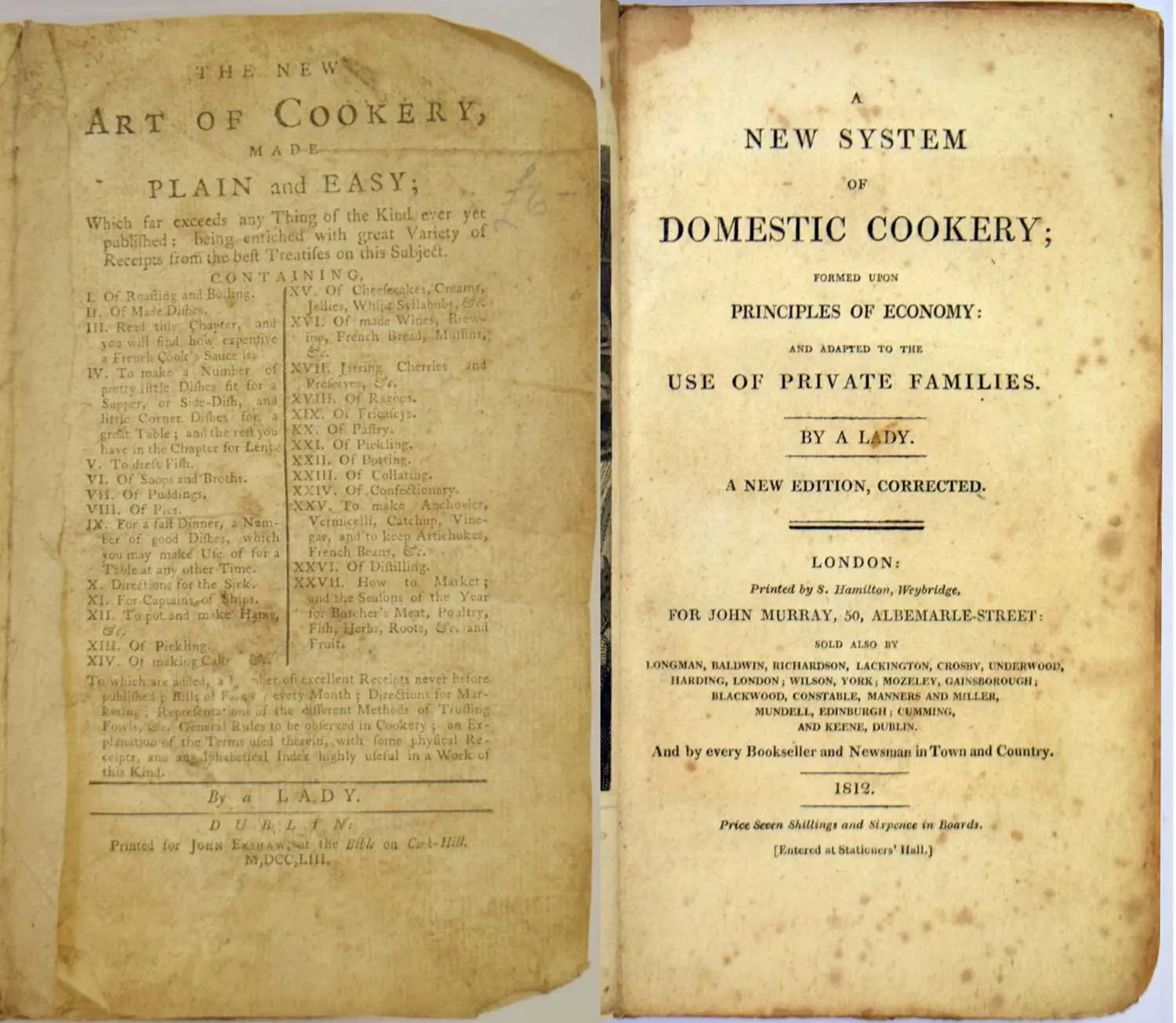
[Hannah Glasse], ‘The New Art of Cookery made Plain and Easy’, early
10/22/2026
€101.48
Stima: €59.18

J.M. Barrie, 'Peter Pan and Wendy', first edition thus, 1921
10/22/2026
€131.32
Stima: €70.78
Porta la tua asta ai collezionisti di tutto il mondo!
Pubblica oraIscrivendoti, accetti la politica sulla privacy. Annulla l'iscrizione in qualsiasi momento.
Barnebys HQ
Brahegatan 10
BOX 5038
114 37 Stockholm
