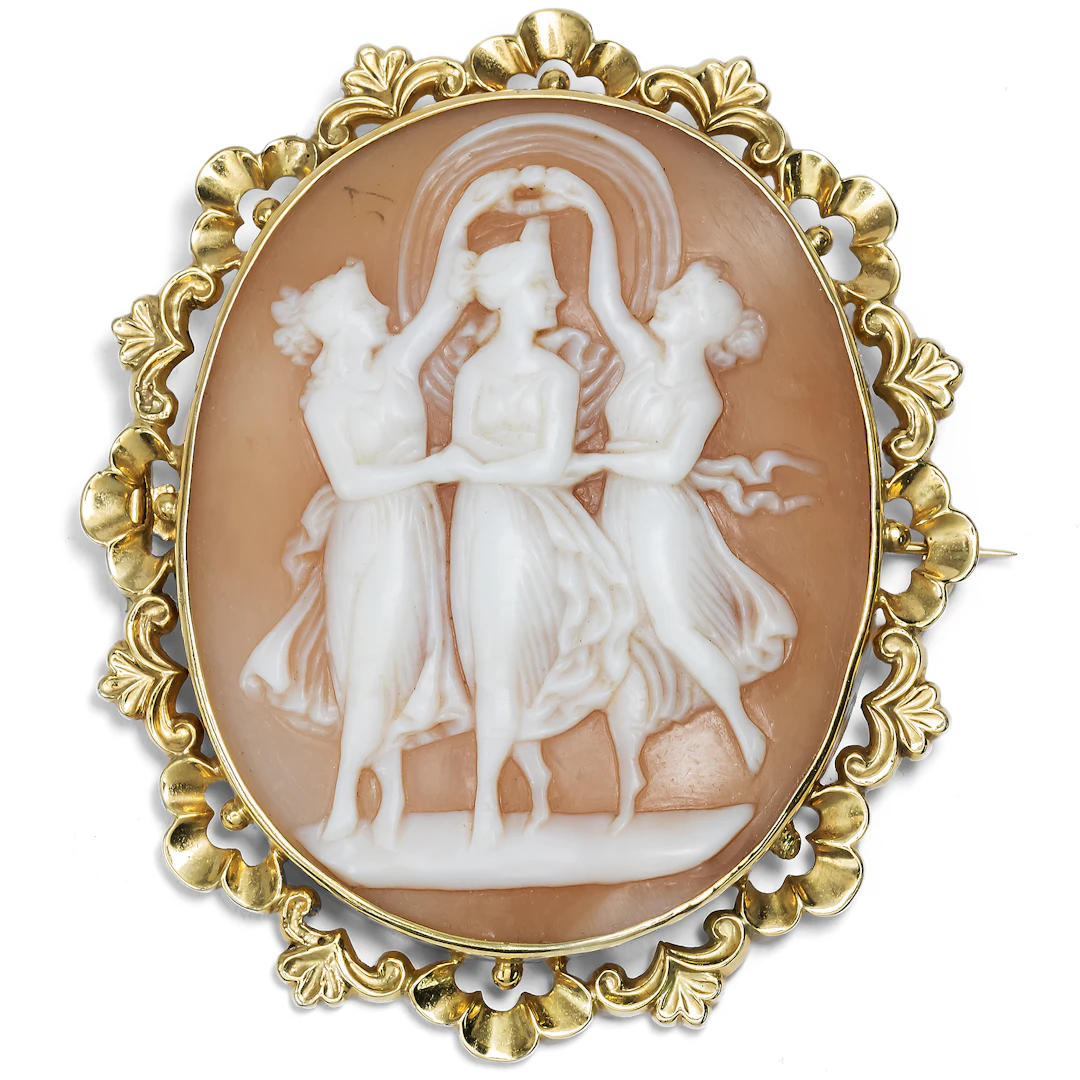
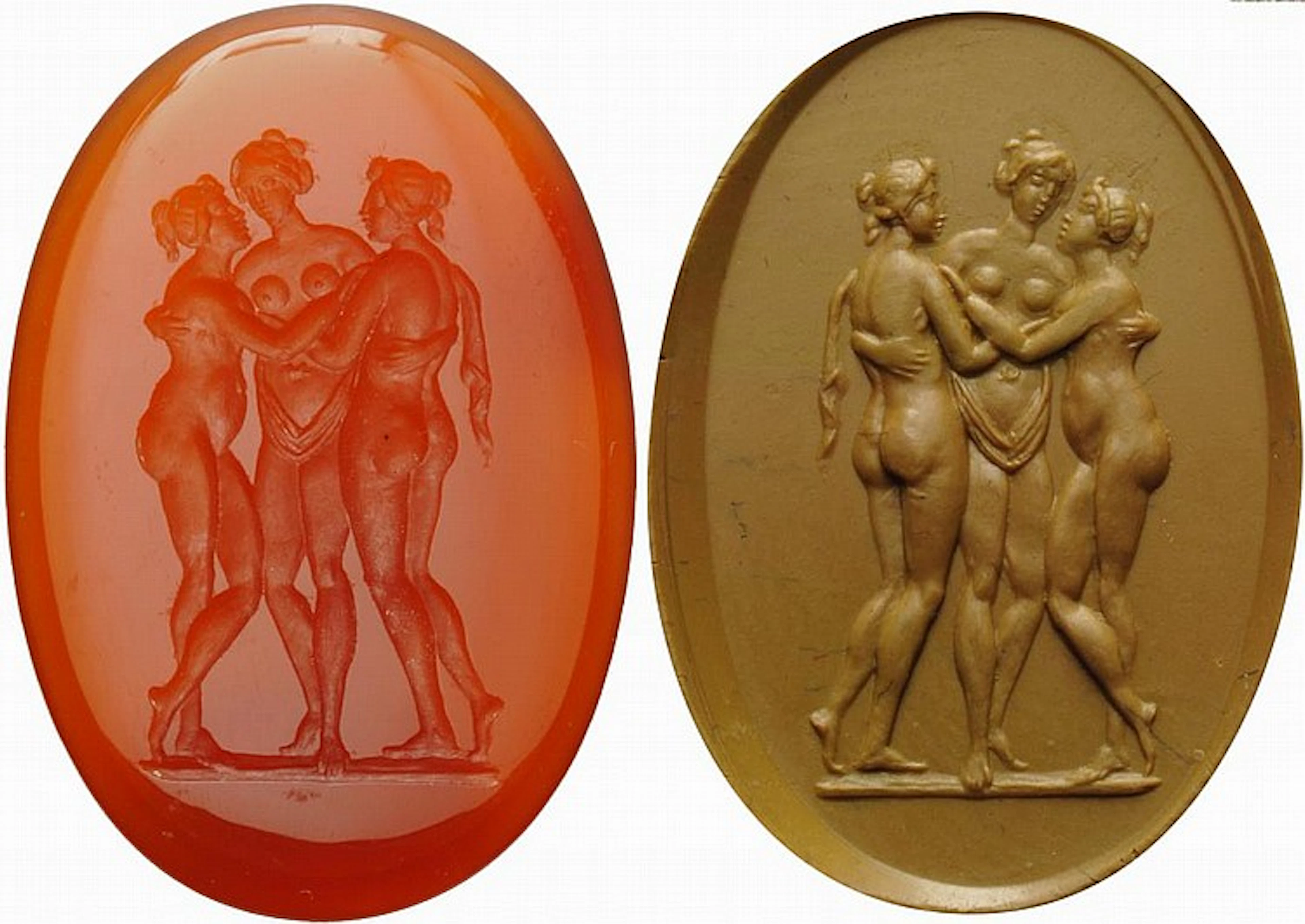
Antique Shell Cameo Gold Brooch after Antonio Canova, c. 1850
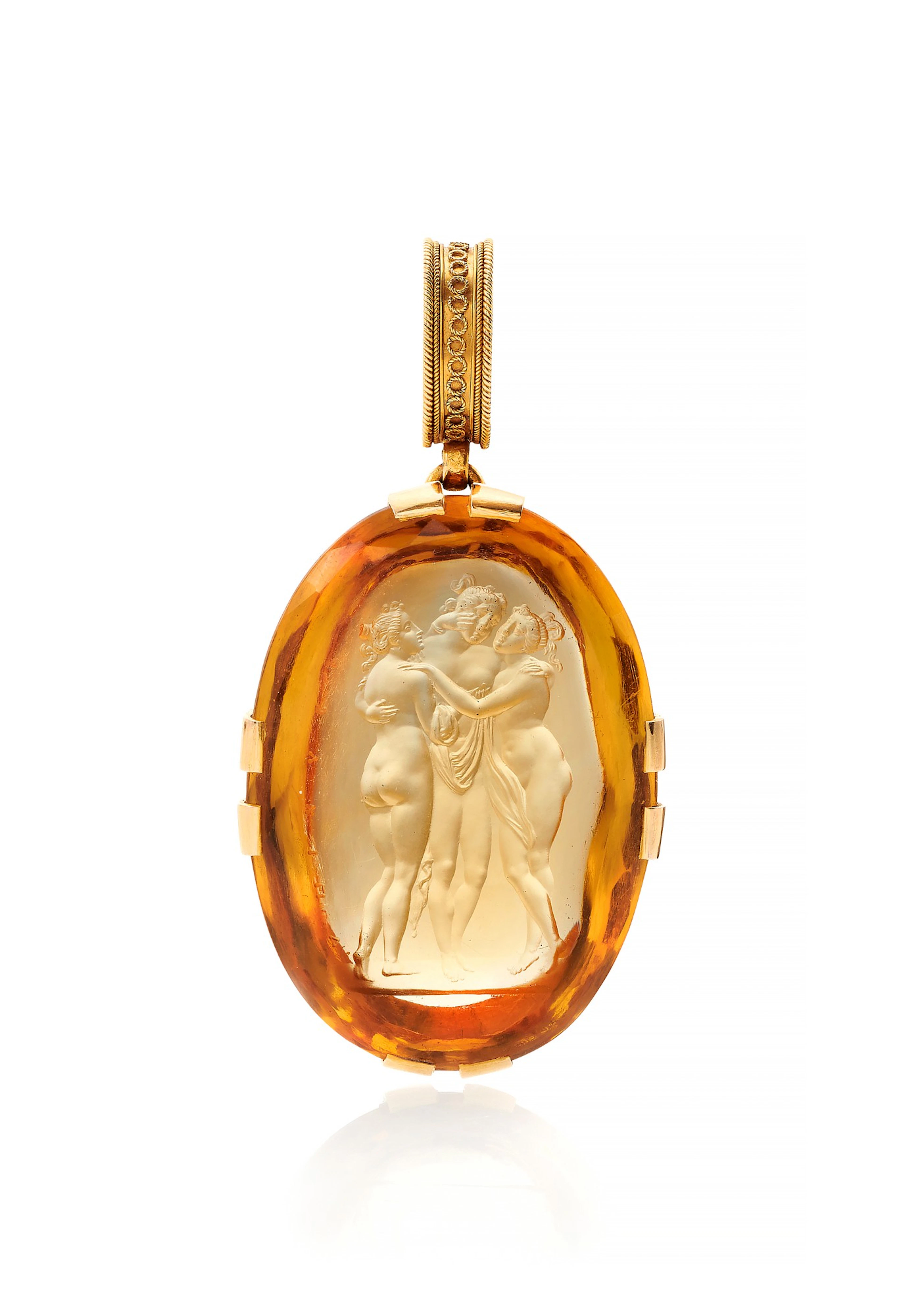
In ancient mythology, the three Graces were three daughters of Zeus. Their names are Euphrosyne (cheerfulness), Thalia (festive joy) and Aglaia (the shining one). In European art, they almost always appear in threes, and usually in dance. Peter Paul Rubens painted them (today in the Prado in Madrid) and no less famous is a relief by Antonio Canova from 1797. Canova, one of the most respected sculptors of his time and probably the most important representative of classicism in Italy, shows in his relief the three Graces dancing in front of Mars, the god of war, and Venus playing the lute. Canova presents all three Graces frontally to the viewer and gives the scene both verve and grace with flowing robes and a wreath of roses twisted over the head of the central figure. In this cameo from the mid-19th century, we find the three Graces in exactly this way. The artist was probably familiar with Canova's relief from a copperplate engraving; Canova's pictorial ideas were already being disseminated throughout Europe during his lifetime. A gold setting in the typical bold forms of the time turns the carving into a brooch In this piece of jewelry, the enthusiasm for Roman antiquity and the admiration for the art of classicism come together to form an indissoluble whole. The cameo was probably acquired as a souvenir on a trip to Italy. The elegant piece of jewelry found its way to us from southern Germany.
Stima:€980
Vai all’astaVedi tutti gli oggetti diHofer AntikschmuckoGioielli & Gemme