


Tutte le aste / Arte Antica / Ancient Chinese

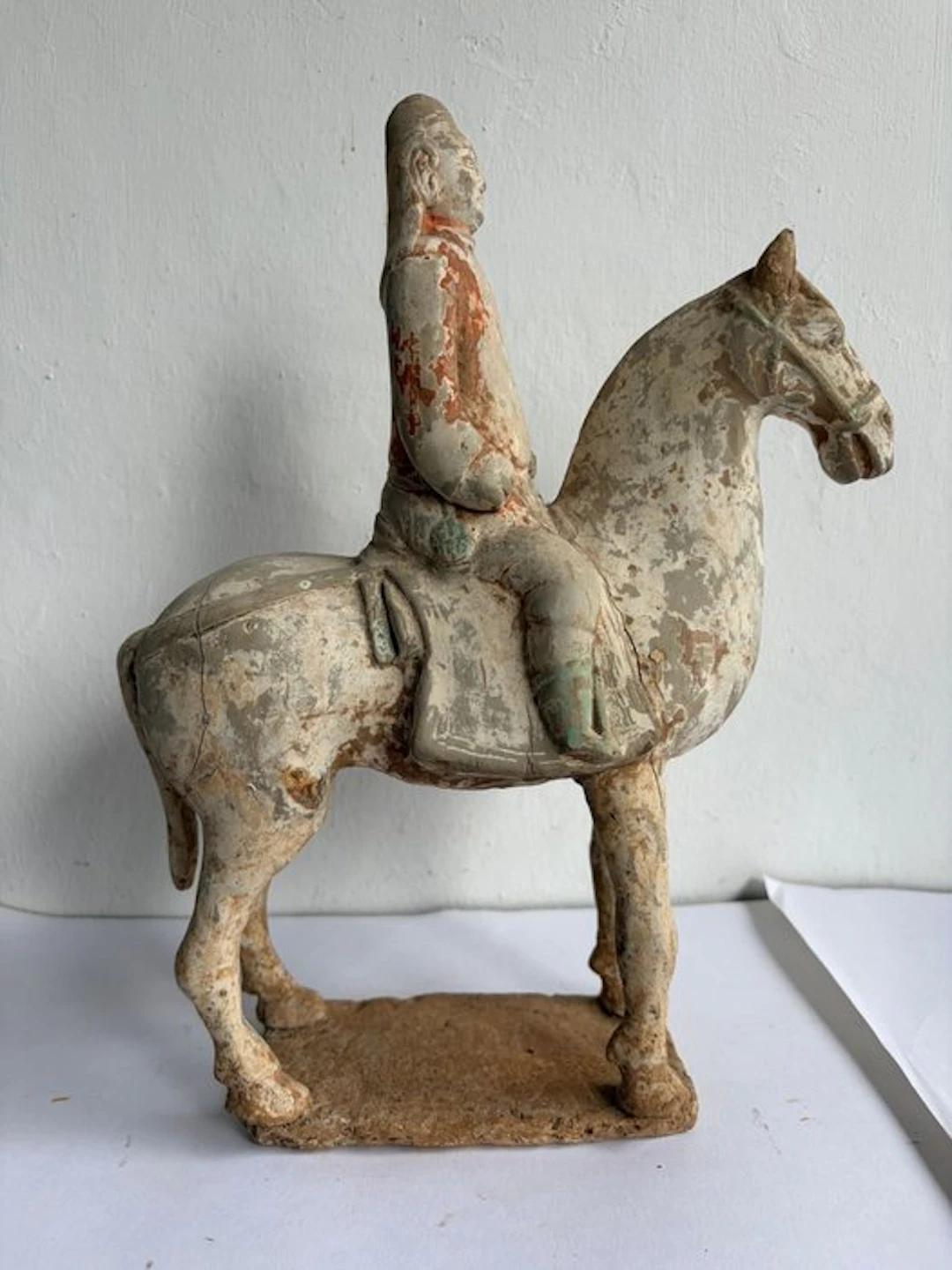
China – Tang Dynasty (618–907), probably 7th–8th centuries. An important funerary figure of a horse and rider in polychrome terracotta – Mingqi. A striking Chinese funerary sculpture group crafted in molded terracotta and originally polychrome, depicting a rider mounted on a horse, belonging to the important Mingqi tradition produced during the Tang dynasty to accompany members of the wealthy classes in their burials. The horse is shown standing, with a powerful rounded hindquarters, a prominent chest and an elevated neck that supports an elongated, expressive head, with pricked ears, modeled snout and small traces of red pigment in the mouth and nostrils. The rider stands erect on the saddle, wearing a long robe with wide sleeves. The arms appear extended in the characteristic position originally intended to hold the reins, today absent as these elements were probably made of organic material. The surface preserves numerous traces of its ancient pictorial decoration, with red, black/gray and white pigments visible on both the clothing and the horse. Notably the broad dark areas of the neck and chest, the light remnants of the body, and the reddish tones preserved on the rider and around the saddle are striking. The deliberately stylized modeling combines the monumentality of the horse with the rigid verticality of the rider, creating a composition characteristic of Tang Chinese equestrian funerary sculpture. Horses held an exceptional place in Tang culture, associated with social status, military power, the Silk Road trade, and the prestige of the aristocracy. Figures like this were deposited in tombs to symbolically guarantee the deceased the continuity of their entourage and social standing in the afterlife. Material: terracotta with traces of pigment applied in a cold technique. Origin: China. Proposed period: Tang Dynasty, 618–907, probably 7th–8th centuries. Type: funerary equestrian figure, mingqi. Dimensions: 33 × 25 × 12 cm. Condition: archaeological state, with wear and extensive losses of pigment, surface deposits, abrasions and small losses. Cracks and old joints/restorations are visible, particularly on some limbs. The surface retains abundant pigment traces and an attractive patina of antiquity. See all detailed photographs.
Stima:€2,300
Vai all’astaVedi tutti gli oggetti diCatawikioArte Antica
Stima:
€2,300
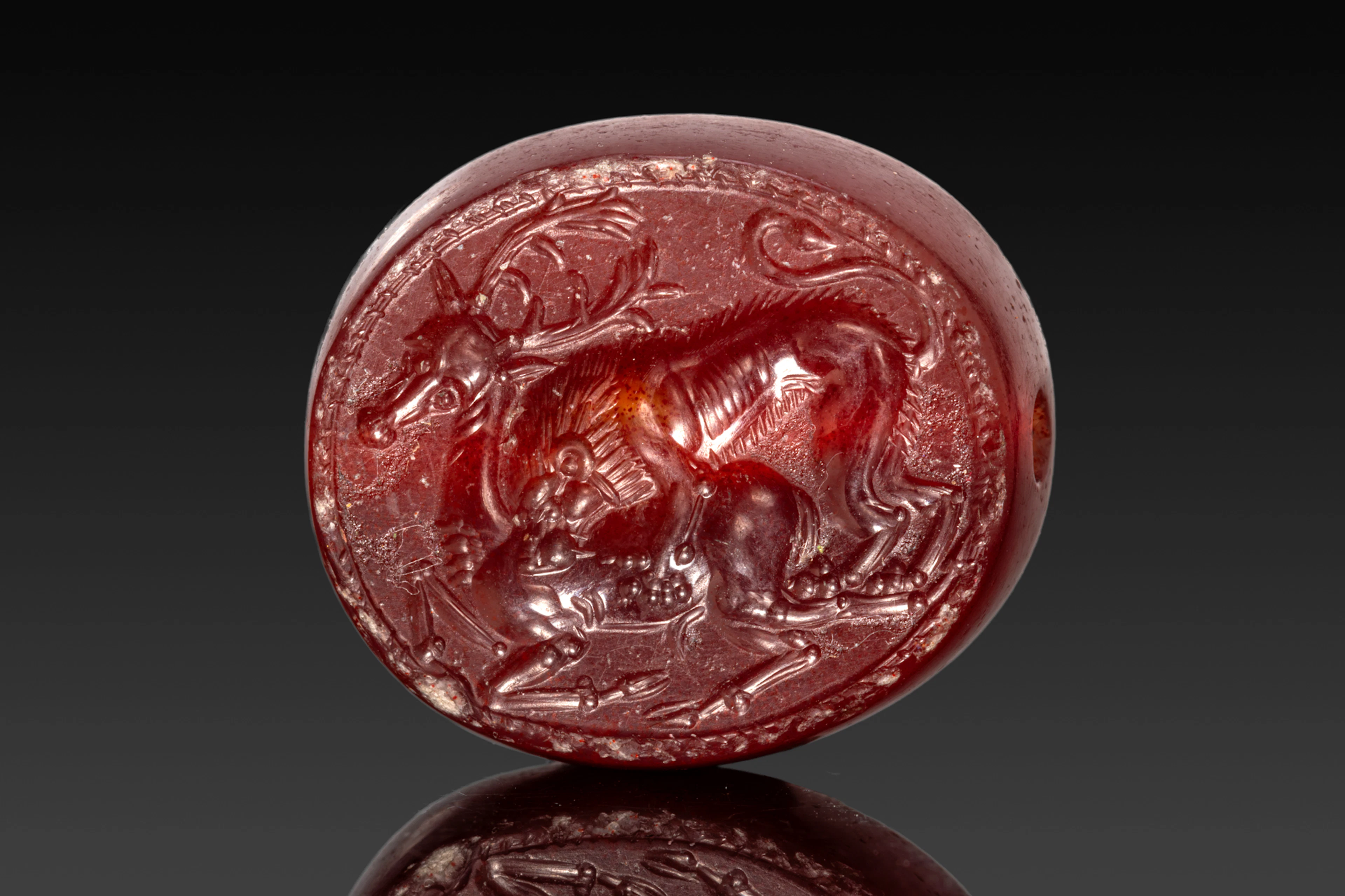
ETRUSCAN CARNELIAN STAMP SEAL WITH A LION ATTACKING A STAG
06/21/2026

€5,796.91
Stima: €5,773.91
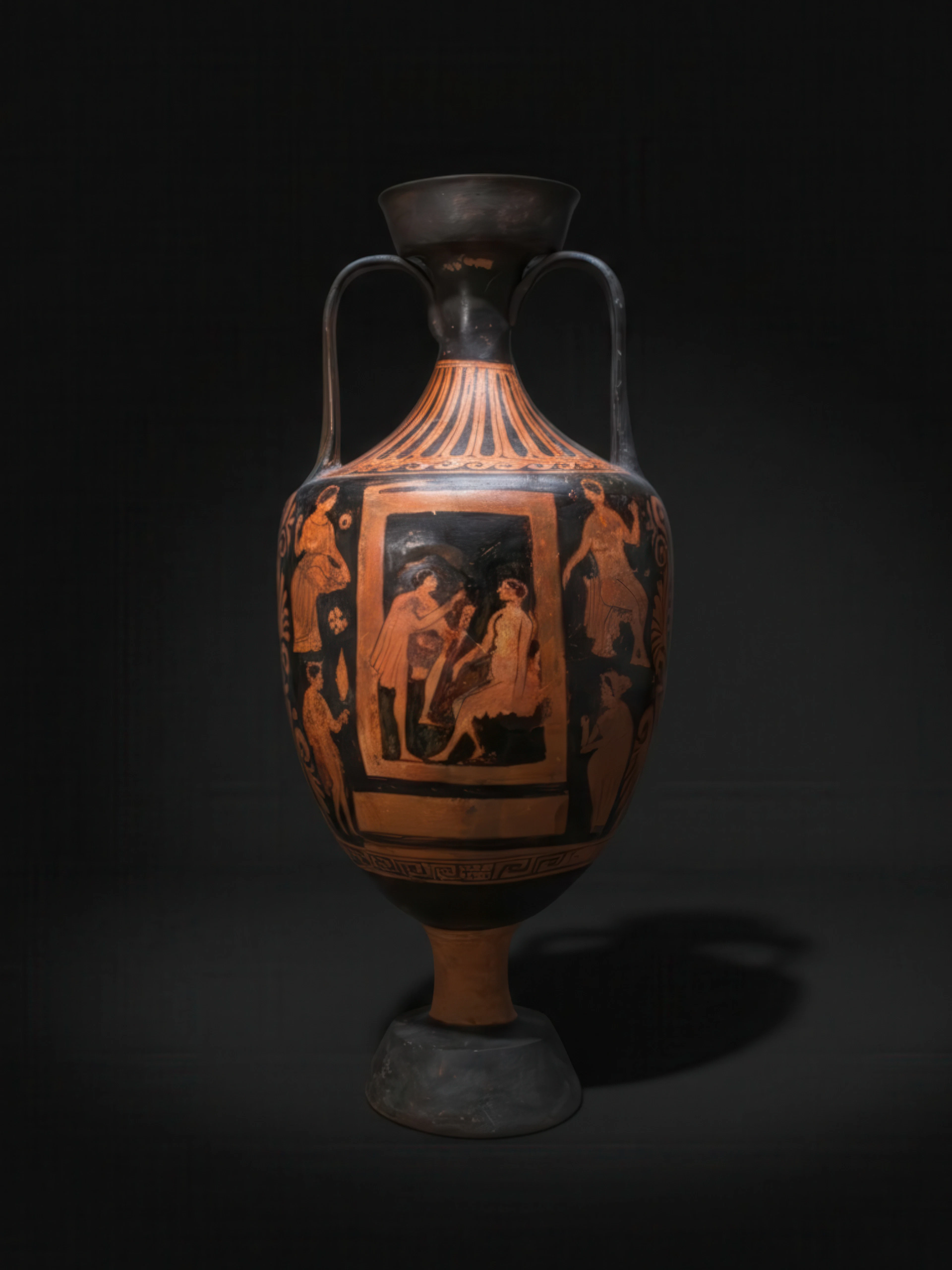
LARGE APULIAN RED-FIGURE AMPHORA WITH NAISKOS SCENE AND ALTAR
06/21/2026
€6,376.6
Stima: €5,773.91

Porta la tua asta ai collezionisti di tutto il mondo!
Pubblica oraIscrivendoti, accetti la politica sulla privacy. Annulla l'iscrizione in qualsiasi momento.
Barnebys HQ
Brahegatan 10
BOX 5038
114 37 Stockholm
