
Tutte le aste / Etnografia / A wooden sculpture - Yoruba - Nigeria (No reserve price)

A wooden sculpture - Yoruba - Nigeria (No reserve price)
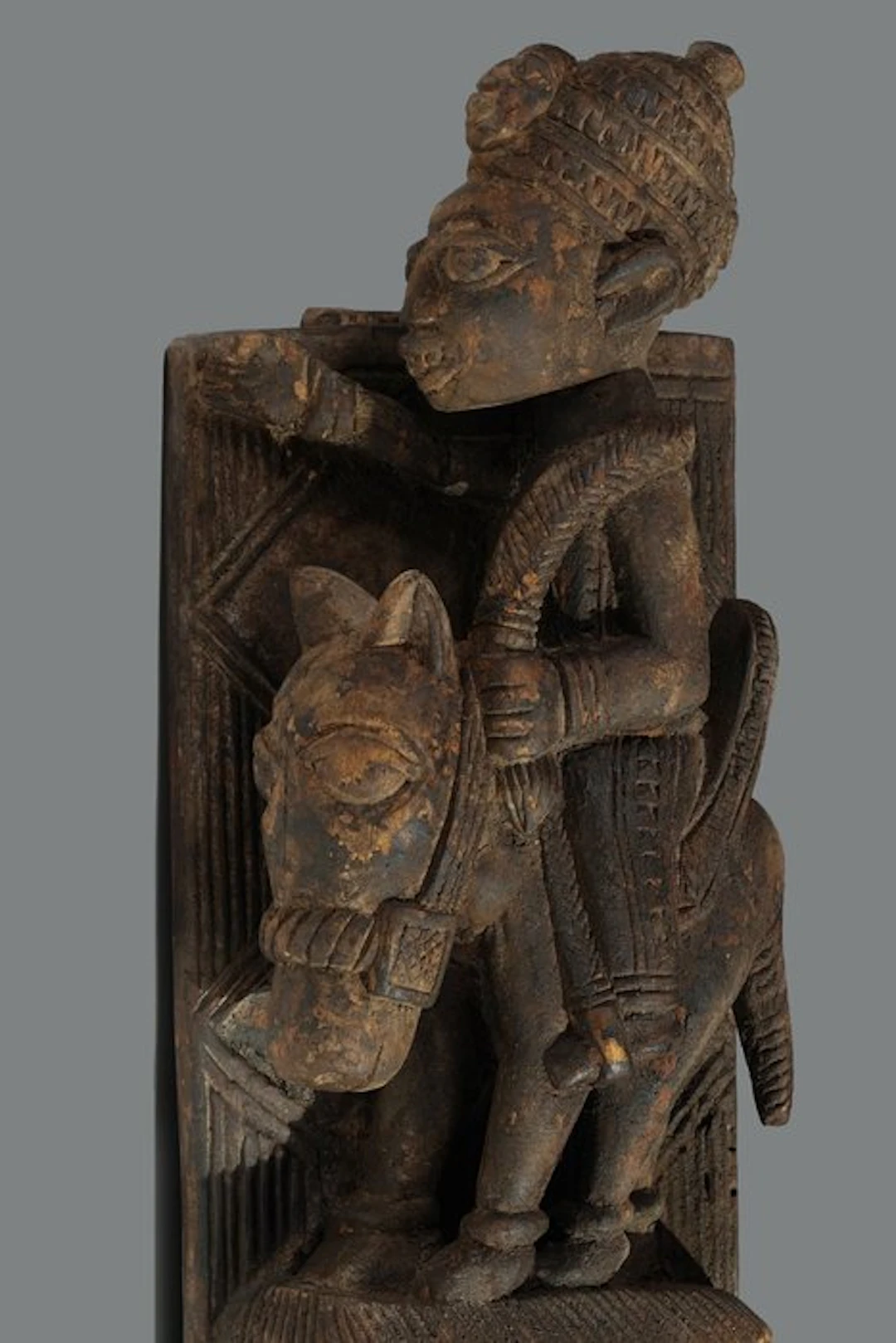
Yoruba Carved Figural Chest, Ekiti Region, Nigeria Yoruba, Ekiti region, Nigeria Wood with dark patina This exceptional carved chest combines the practical form of a rectangular container with an extraordinarily elaborate sculptural program. The entire object has been transformed into a field of figuration: repeated human faces decorate the walls of the box, while the lid supports a dense ensemble of fully modeled human and animal figures. The distinction between container and sculpture is consequently almost dissolved. The long side of the chest is organized as a rhythmic sequence of rectangular panels. Within each appears a frontal human face with prominent eyes, a long nose and projecting mouth. Narrow bands of finely incised geometric ornament separate the faces, while additional triangular and linear patterns frame the composition. Repetition creates a powerful visual rhythm and suggests that the faces form a collective rather than representing a single individual. The lid is considerably more complex. Several human figures are arranged horizontally and in close physical interaction with one another and with animal forms. Bodies overlap, limbs cross neighboring figures, and curved sculptural elements rise above the surface. At either end, large human heads project beyond the rectangular outline of the chest, dramatically extending the composition into the surrounding space. One of the most striking aspects of the work is this deliberate contrast between order and movement. The sides of the container are governed by strict repetition and geometric organization, whereas the sculptural group above is crowded, animated and irregular. The chest therefore establishes two distinct visual registers: an architectural lower section and an almost narrative upper world populated by human and animal beings. The figures are carved with considerable attention to bodily and decorative detail. Hairstyles are rendered through repeated grooves and patterned passages; limbs are articulated by incised bands; and individual faces possess strongly projecting features. The sculptor repeatedly uses parallel hatching, cross-hatching and triangular ornament to enliven otherwise broad wooden surfaces. The dark brown surface shows lighter areas along projecting edges and heavily exposed sections. The recesses preserve deeper coloration, increasing the legibility of the carving. The irregular wear along the edges of the lid and box suggests a history of handling and opening, although the original contents and exact circumstances of use cannot be established from the photograph alone. Regional characteristics The attribution to Ekiti places the chest within one of the most important sculptural regions of northeastern Yorubaland. Ekiti communities developed particularly rich traditions of architectural and figurative woodcarving, including palace posts, doors, veranda posts, bowls, containers and objects associated with shrines and chiefly institutions. Ekiti carving is notable for the prominence of complex multi-figure compositions. Sculptors frequently organized figures hierarchically or combined human beings with animals, attendants and symbolic motifs. Architectural carving offered especially extensive surfaces on which such compositions could develop, and the densely populated lid of the present chest reflects a comparable approach on a smaller scale. The repeated frontal heads along the walls are particularly interesting in a Yoruba context. The head, ori, occupies a central position in Yoruba conceptions of personhood. It is not merely an anatomical component but is closely associated with individual identity, destiny and spiritual potential. Nevertheless, the presence of numerous heads on this particular chest should not automatically be assigned a specific religious meaning without information concerning its original context. Likewise, the complex figural scene on the lid may once have communicated a recognizable narrative, proverb, historical episode or social relationship. Yoruba sculpture frequently employs gesture, hierarchy, costume and relationships between figures to convey meaning. When such objects have become separated from their original oral documentation, however, precise readings can easily become speculative. The chest form itself deserves attention. Containers could acquire considerable significance through what they held and through the social position of their owners. In Yoruba artistic traditions, elaborately carved receptacles might be associated with prestige, ritual materials or valued personal possessions. The complexity of the present carving strongly suggests that the container was intended to possess a significance beyond ordinary storage, although its specific contents cannot be reconstructed from appearance alone. The Ekiti attribution is particularly valuable because the region produced a number of historically documented carving centers and individual master sculptors. Among the best known are artists associated with Areogun of Osi-Ilorin and other northeastern Yoruba workshops, whose works demonstrate the extraordinary narrative possibilities of carved wood. It would, however, be inappropriate to attribute the present chest to a particular named workshop solely on stylistic resemblance. Perhaps the most distinctive feature of this work is the way sculpture completely envelops an otherwise simple architectural volume. The repeated faces transform the walls into a continuous human presence, while the figures above turn the lid into a sculptural stage. The chest can consequently be appreciated simultaneously as a functional container, an exercise in complex relief carving and an unusually ambitious example of Yoruba narrative sculpture. Selected Literature Drewal, Henry John, John Pemberton III and Rowland Abiodun. Yoruba: Nine Centuries of African Art and Thought. New York: Center for African Art, 1989. Fagg, William, and John Pemberton III. Yoruba: Sculpture of West Africa. New York: Alfred A. Knopf, 1982. Carroll, Kevin. Yoruba Religious Carving: Pagan and Christian Sculpture in Nigeria and Dahomey. London: Geoffrey Chapman, 1967. Abiodun, Rowland. Yoruba Art and Language: Seeking the African in African Art. Cambridge: Cambridge University Press, 2014. Thompson, Robert Farris. Black Gods and Kings: Yoruba Art at UCLA. Bloomington: Indiana University Press, 1971. Some of the information and photos are generated by artificial intelligence and is based on published sources from the fields of ethnography, archaeology, and art history documents. All information and photos are protected by copyright. Inv. No. MAZ30832 Informant: Doku
Stima:€275
Vai all’astaVedi tutti gli oggetti diCatawikioEtnografia
Stima:
€275
Oggetti simili

Risultati d’asta per oggetti simili

Porta la tua asta ai collezionisti di tutto il mondo!
Pubblica ora