
Tutte le aste / Etnografia / A wooden mask - Prampram - Ghana (No reserve price)

A wooden mask - Prampram - Ghana (No reserve price)
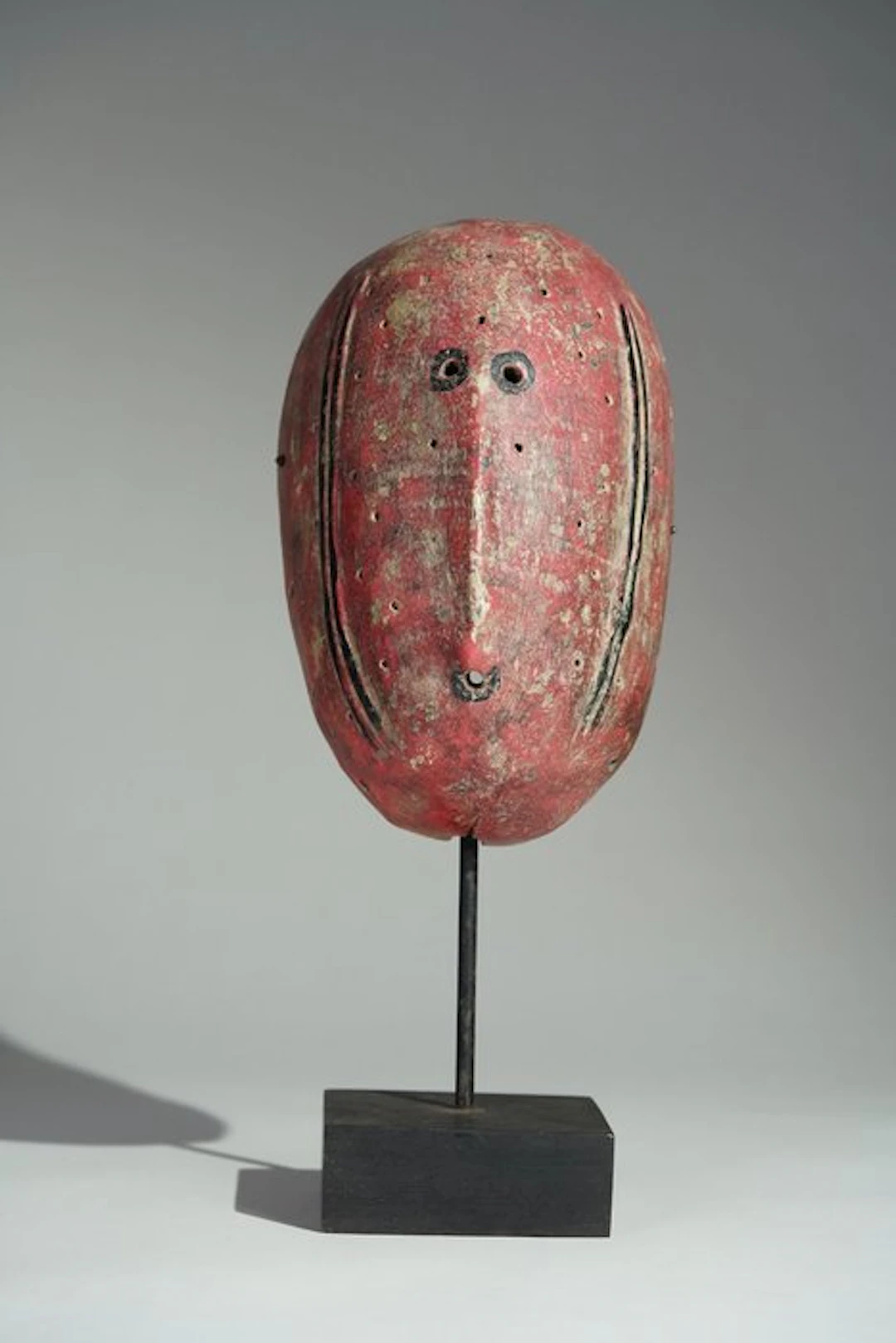
A Prampram mask, Southern Region, Ghana Dark brown hair color, incl stand. This wooden mask, known as a Prampram, has an elongated oval shape, a convex face, and a red coloration that is heavily worn, revealing lighter patches. The face, highly stylized, is organized around a long central ridge representing the nose, two small circular eyes with pierced pupils and black outlines, and a mouth reduced to an opening highlighted by a dark crescent. Two pairs of slightly curved black lines, carved into longitudinal grooves, frame the cheeks and accentuate the symmetry of the composition. Numerous small perforations dot the surface and the rim, though their function cannot be determined from the photographs alone. The reverse side, deeply hollowed out, retains traces of carving and a dark brown coloration; a crack also marks the lower edge. The reduction of the features to a few geometric elements emphasizes an evocation of the human face rather than an individualized portrait. From an ethnological and historical perspective, Prampram refers to a Dangme settlement on the Ghanaian coast, whose history is notably linked to pre-colonial Atlantic trade. "A great discovery were the so called "Prampram" sculptures, which are stylistically related to the Northern part of the small tribes in Northern Ghana and Togo, in particular the Moba. In my interview Baba Sylla, Accra, Ghana, isn't speaking about a "tribe“, he named it "a great family", which seems to be incorrect under anthropological aspects, but it is a link to the fact, how small this "tribe" is or was in reality. May be this is the reason that these sculptures are unknown in literature. Only Karl-Heinz Krieg (short before his death) conducted unpublished researches with voice protocols close to the hut, where these sculptures were once part of a shrine. But a friend of him told me that Mr. Krieg had no possibility to access the hut." Lit.: Dogbe, B.K. (1977). “The human form as a central theme in art” in Image (Journal of the College of Art), Interview with Baba Sylla, the well known Antique dealer in Accra, Ghana, who collected these sculptures the first time. The Prampram people, located primarily in the Greater Accra Region of Ghana, are a subgroup of the larger Ga-Dangme ethnic cluster. Their cultural heritage is deeply rooted in the coastal environment, which has influenced their social structure, livelihoods, and artistic expressions. Among their most significant cultural artifacts are the masks used in traditional ceremonies, which play a central role in ritual and social life. These masks, typically carved from wood and sometimes adorned with paint, fabric, or beads, serve multiple functions including embodying ancestral spirits, facilitating communication with the spiritual realm, and reinforcing communal values. Endigmatic the different patterns of these Pramoram masks (last photo sequence). The relatively rare Prampram masks are worn during important festivals such as the Homowo, a harvest festival celebrated by Ga-Dangme peoples, and during funerary rites. The designs often incorporate stylized human or animal features, with exaggerated forms that hold symbolic meanings within the community. Unlike some other Ga-Dangme groups, the Prampram masks exhibit distinctive coastal influences, reflecting the tribe’s unique historical and geographical context. These masks are integral to masquerade performances, which combine dance, music, and costume to convey stories, social norms, and spiritual beliefs.Most of these sculptures and masks were collected by Wolfgang Jaenicke with more than 100 objects. The artistic tradition of Prampram mask-making is passed down through generations, emphasizing both technical skill and cultural knowledge. The masks are not merely aesthetic objects but function as active participants in social and religious life. This intersection of art, spirituality, and community underscores the importance of mask culture among the Prampram as a medium for connecting the living with ancestors and reinforcing social cohesion. For further academic study on the Prampram and their masks, see: Arhin, Kwame, Traditional Rule in Ghana: Past and Present (Sedco Publishing, 1985); Picton, John, and John Mack, African Art and Leadership (University of California Press, 1989); and Vogel, Susan Mullin, Masks and Masking in West Africa (University of California Press, 1994). Online resources include the Smithsonian National Museum of African Art’s collections (https://africa.si.edu) and the British Museum’s African art database (https://britishmuseum.org/collection/africa). These sources provide valuable context for understanding the symbolic, cultural, and artistic significance of Prampram masks within the broader framework of West African mask traditions. Some of the information and photos are generated by artificial intelligence and is based on published sources from the fields of ethnography, archaeology, and art history documents. All information and photos are protected by copyright. Inv. No. MAZ29697a
Stima:€425
Vai all’astaVedi tutti gli oggetti diCatawikioEtnografia
Stima:
€425
Oggetti simili

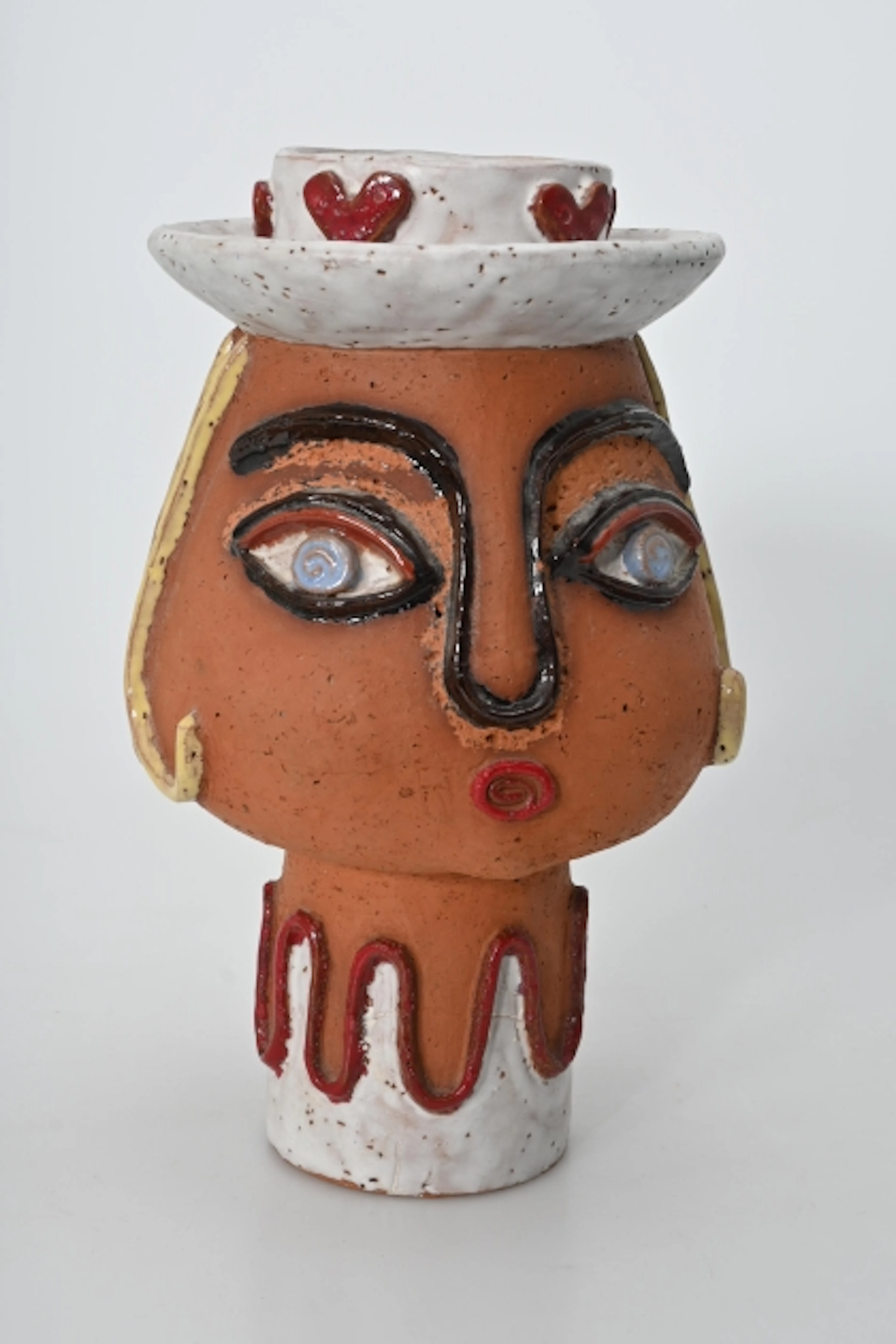
Risultati d’asta per oggetti simili
FLINTYXA samt FLINTDOLK, sannolikt yngre stenåldern, neolitikum.
10/08/2026
€326.32
Stima: €178.57
FLINTYXA samt FLINTDOLK, sannolikt yngre stenåldern, neolitikum.
10/08/2026
€129.51
Stima: €142.86

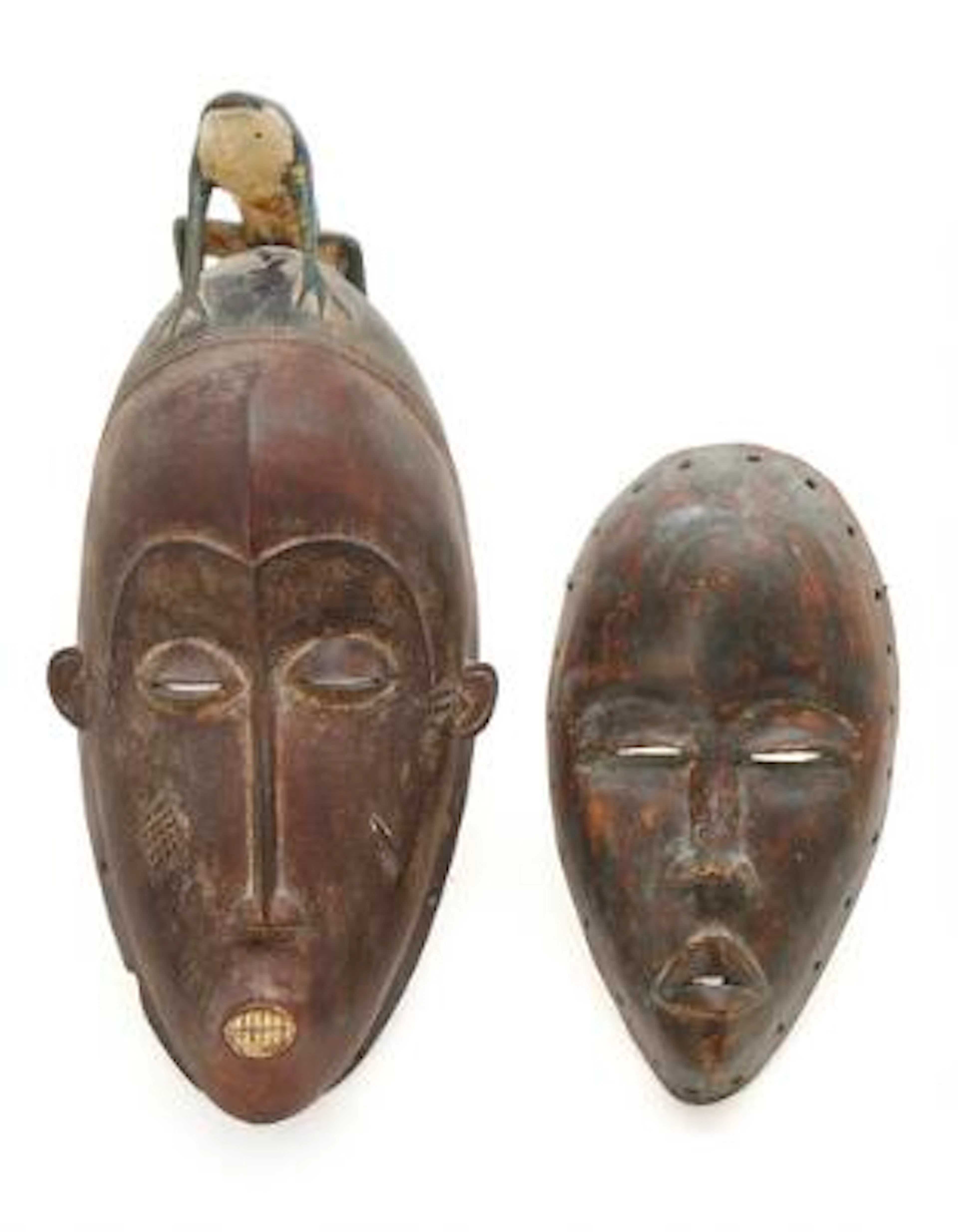
Two masks of carved patinated wood. Baoule and Dan style. H. 41 cm.
10/08/2026

€1,070.04
Stima: €535.08
Porta la tua asta ai collezionisti di tutto il mondo!
Pubblica ora